
Cameron ISD — C.H. YOE High School
Architect: Huckabee
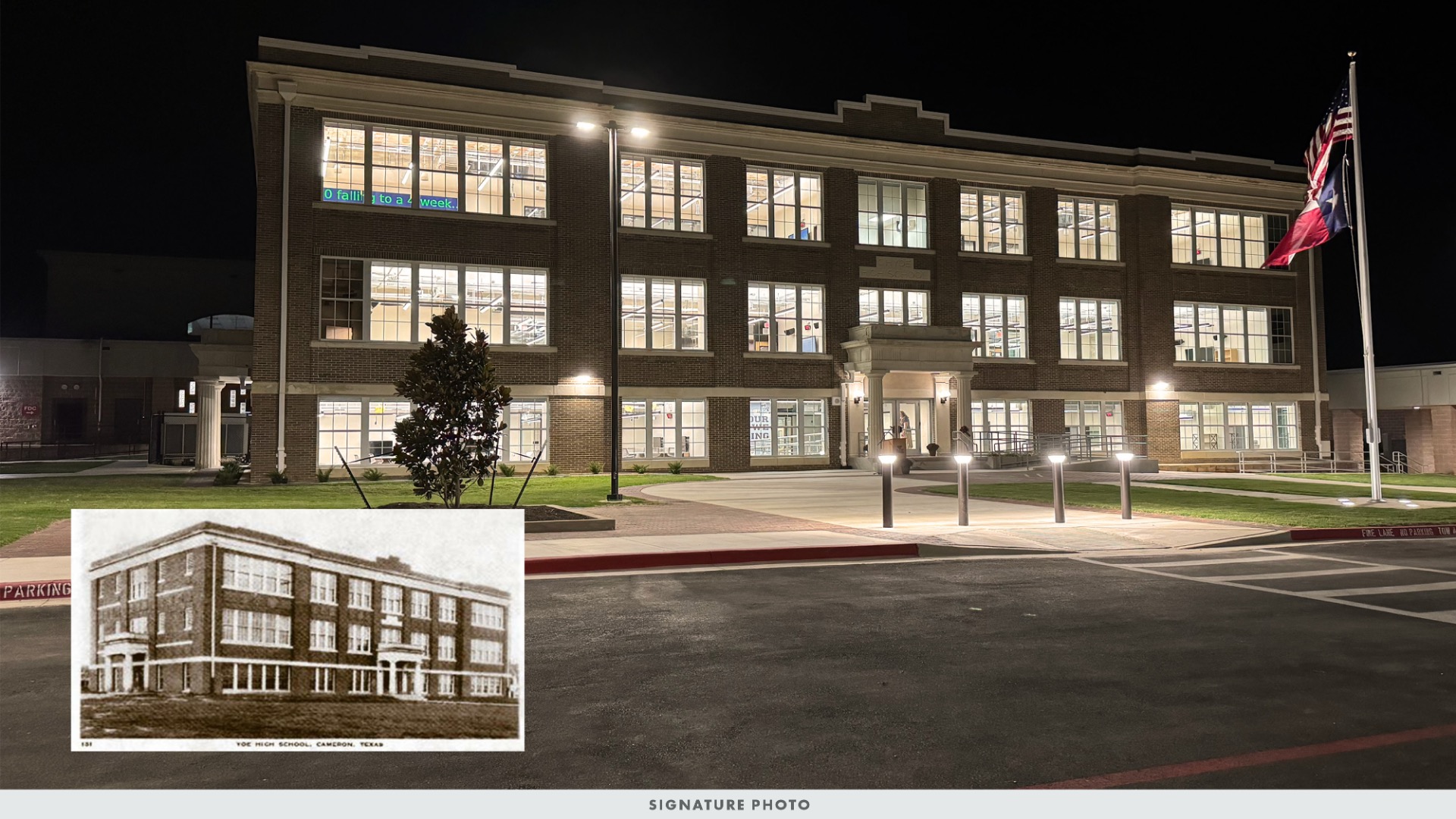
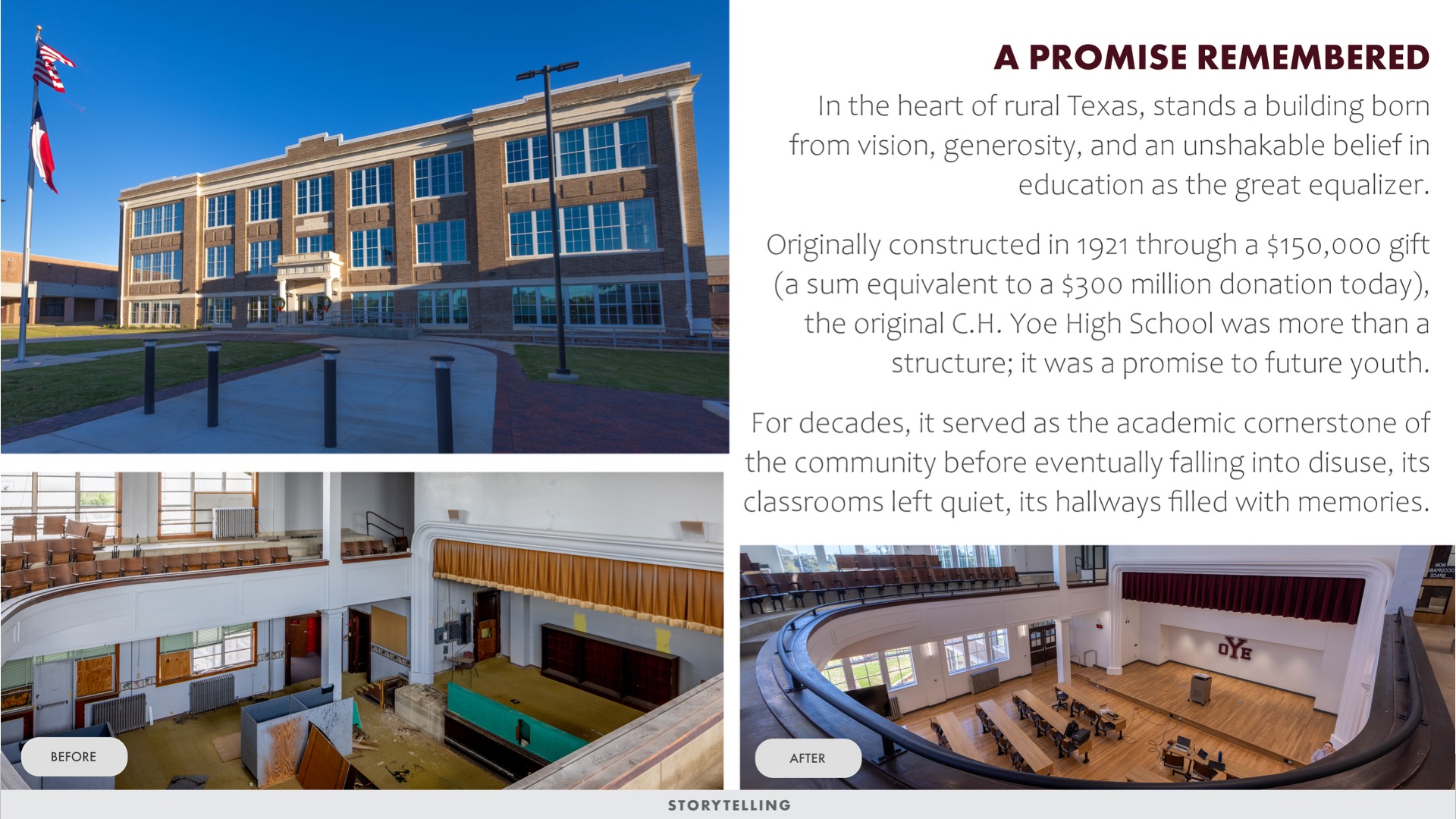
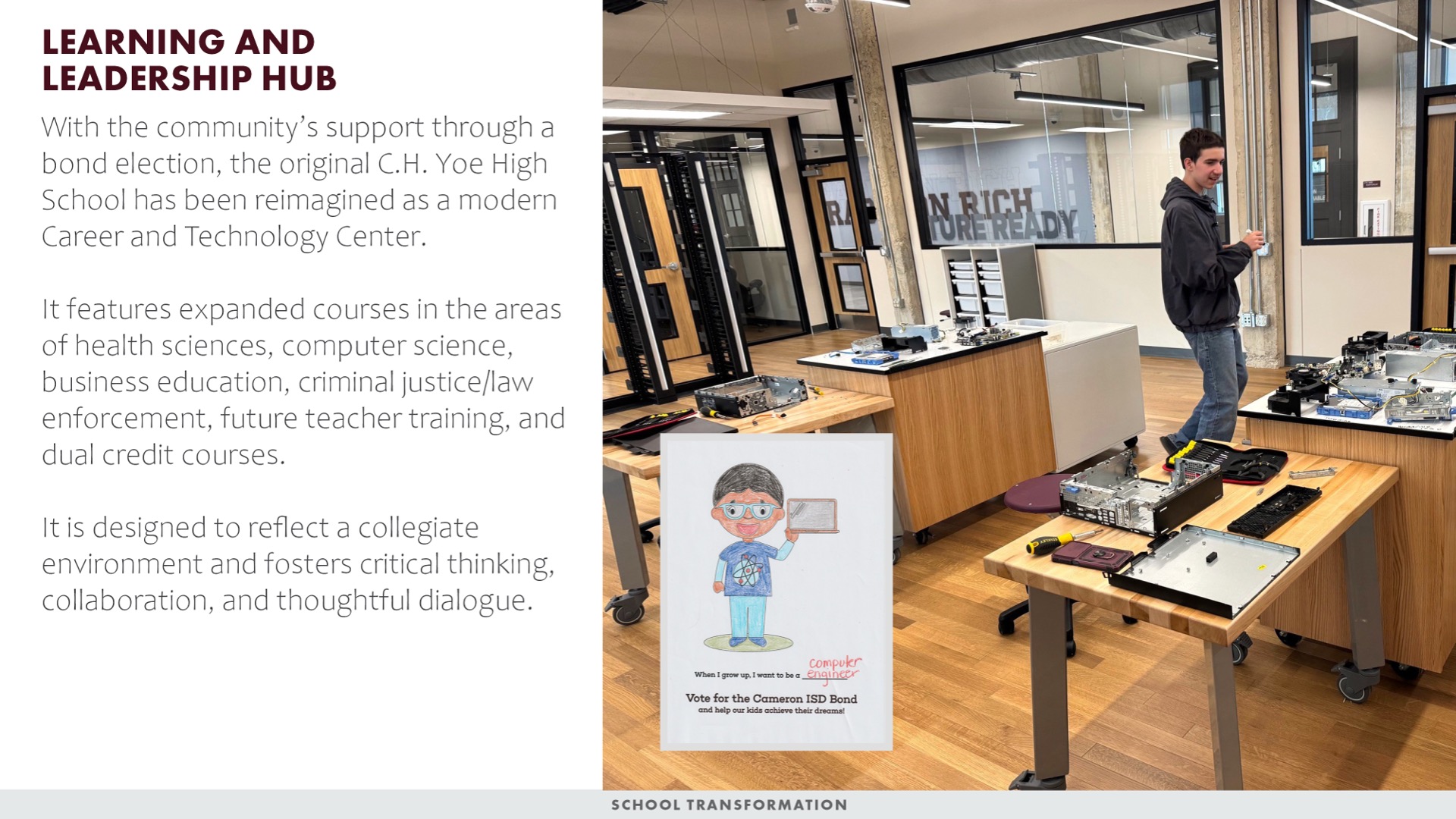
“Huckabee helped Cameron ISD revitalize the historic Old Yoe High School building—vacant for 20+ years—into a cutting-edge CTE, funded by a $15.9 million bond.
The three-story facility blends historic charm with modern upgrades, featuring a new auditorium constructed with salvaged wood from the original structure. The design focuses on hands-on, real-world learning environments tailored to prepare students for in-demand careers.”
Design
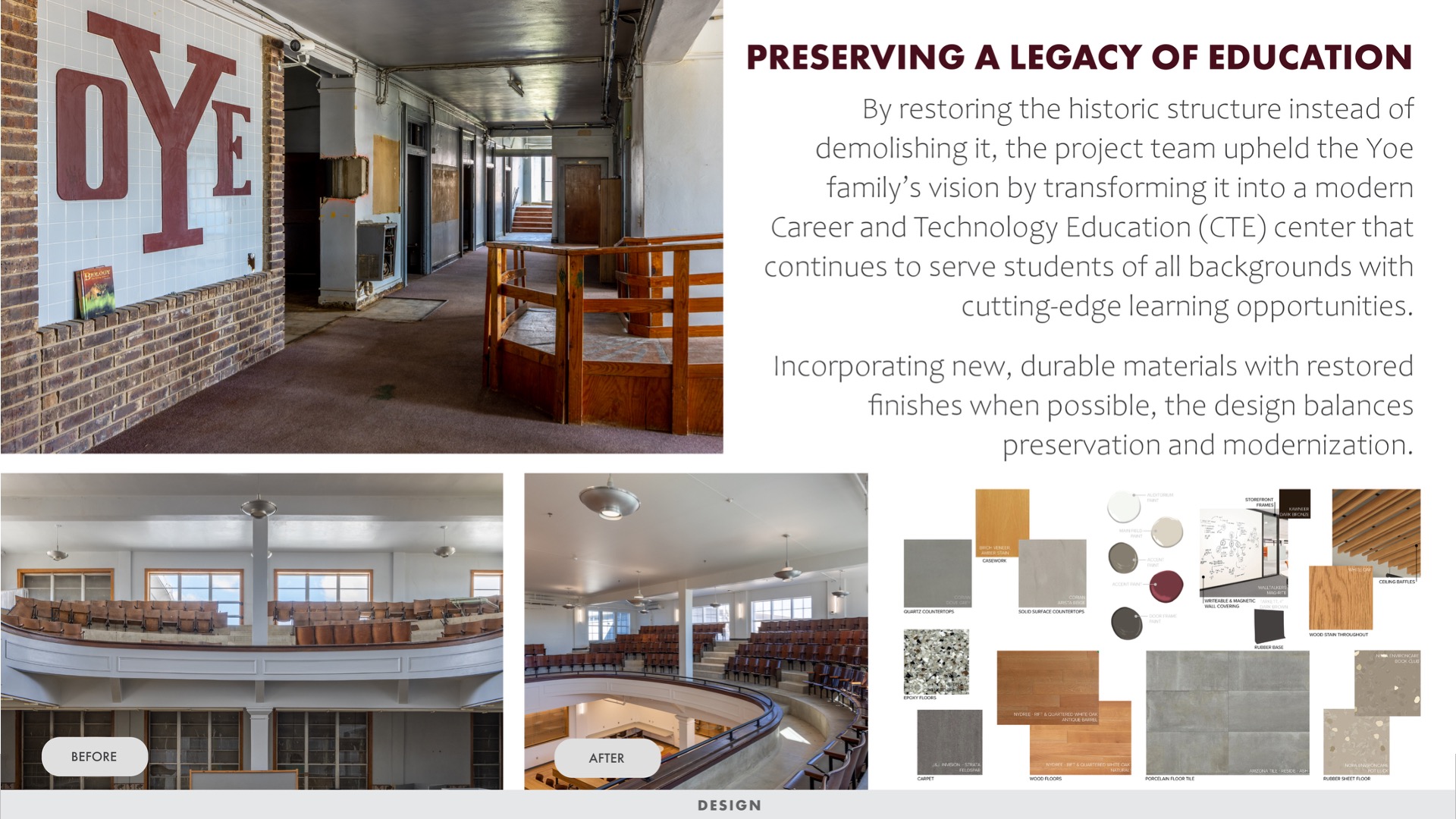
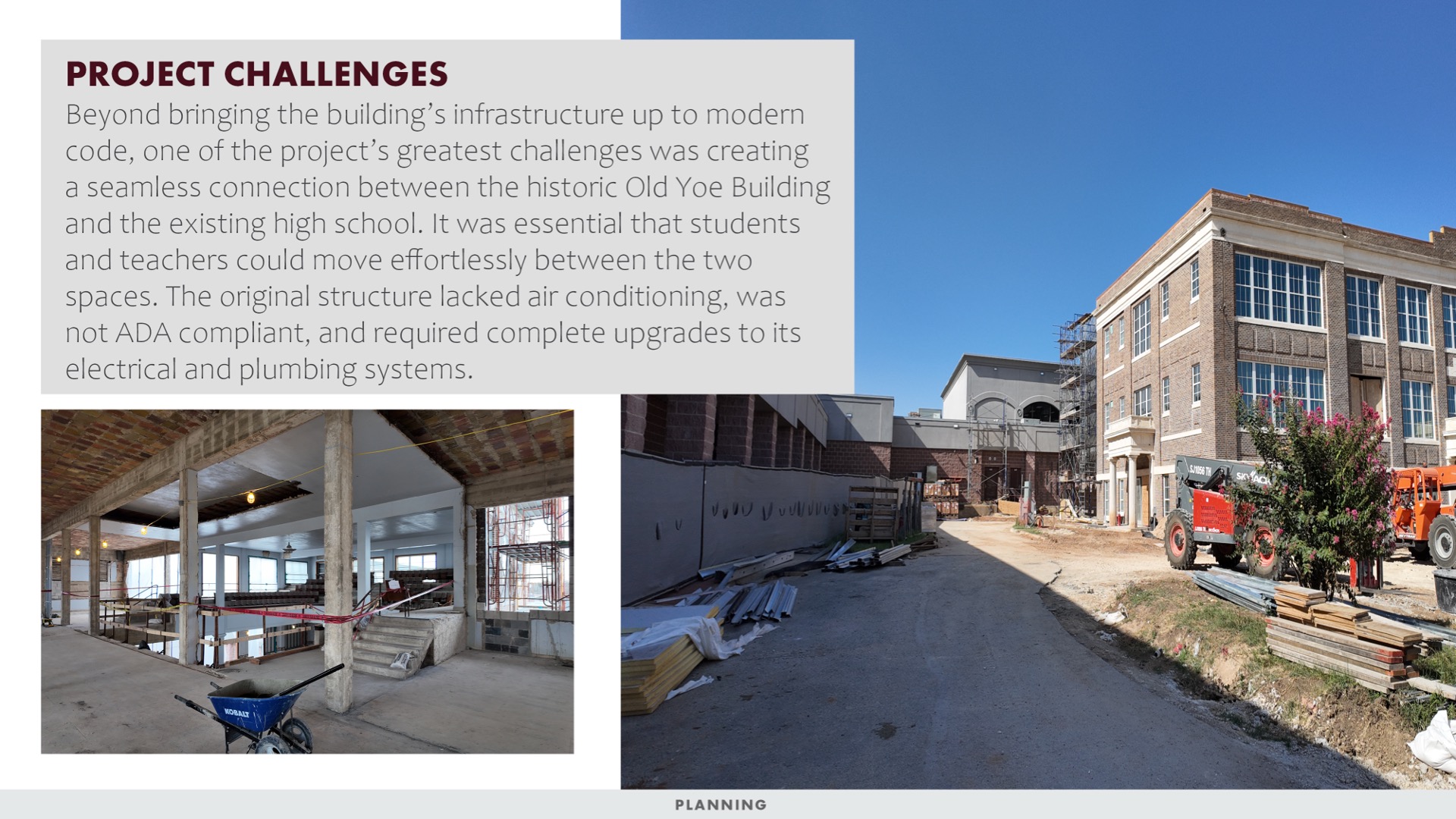
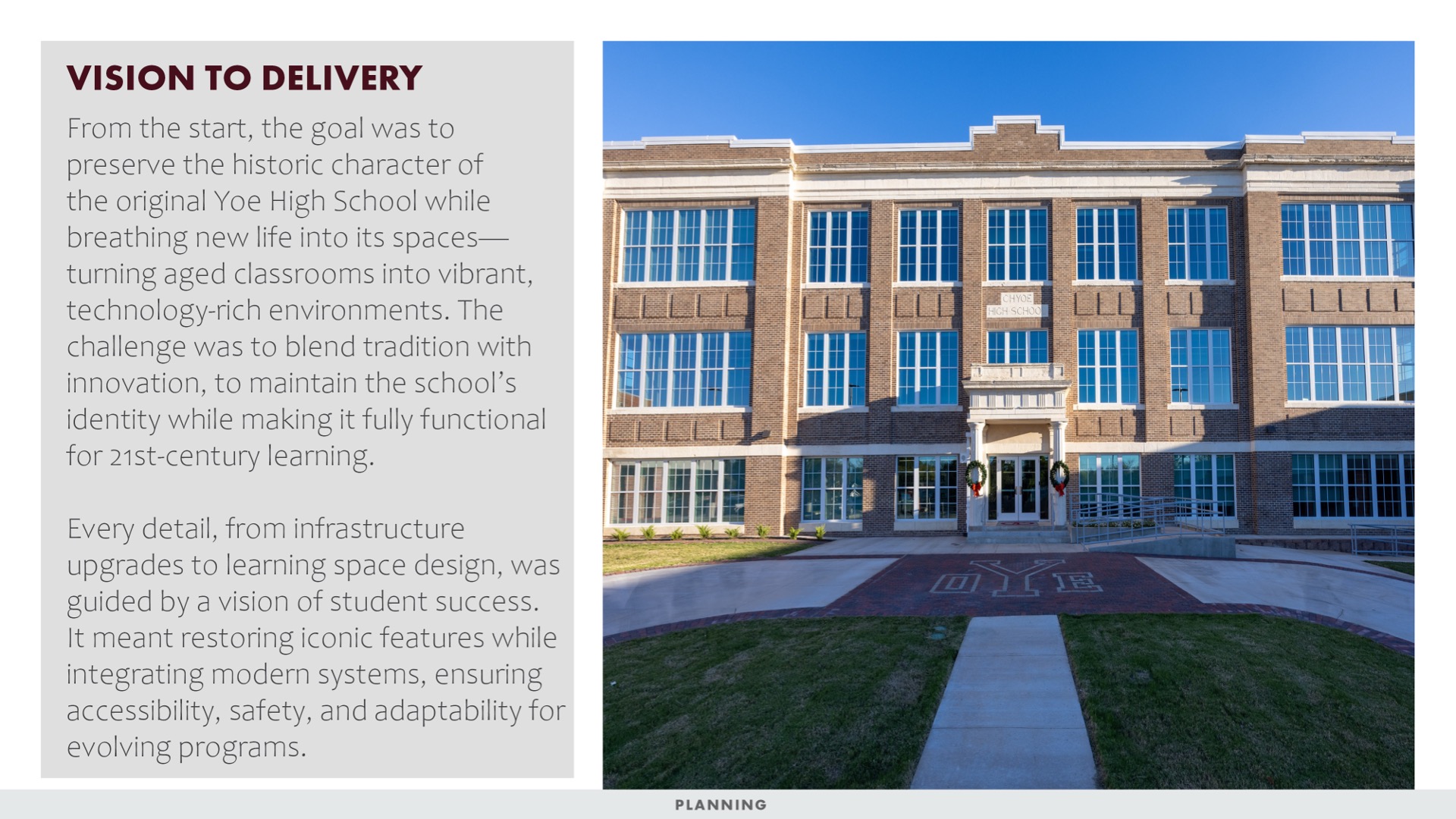
“The renovation of the historic Yoe High School building into a modern CTE center is a thoughtful blend of legacy with forward-thinking educational design. Originally built in 1919 and unused for 20 years, the building required full structural reinforcement, updated systems, and reconfiguration to meet today’s instructional and accessibility standards—all while preserving its character.
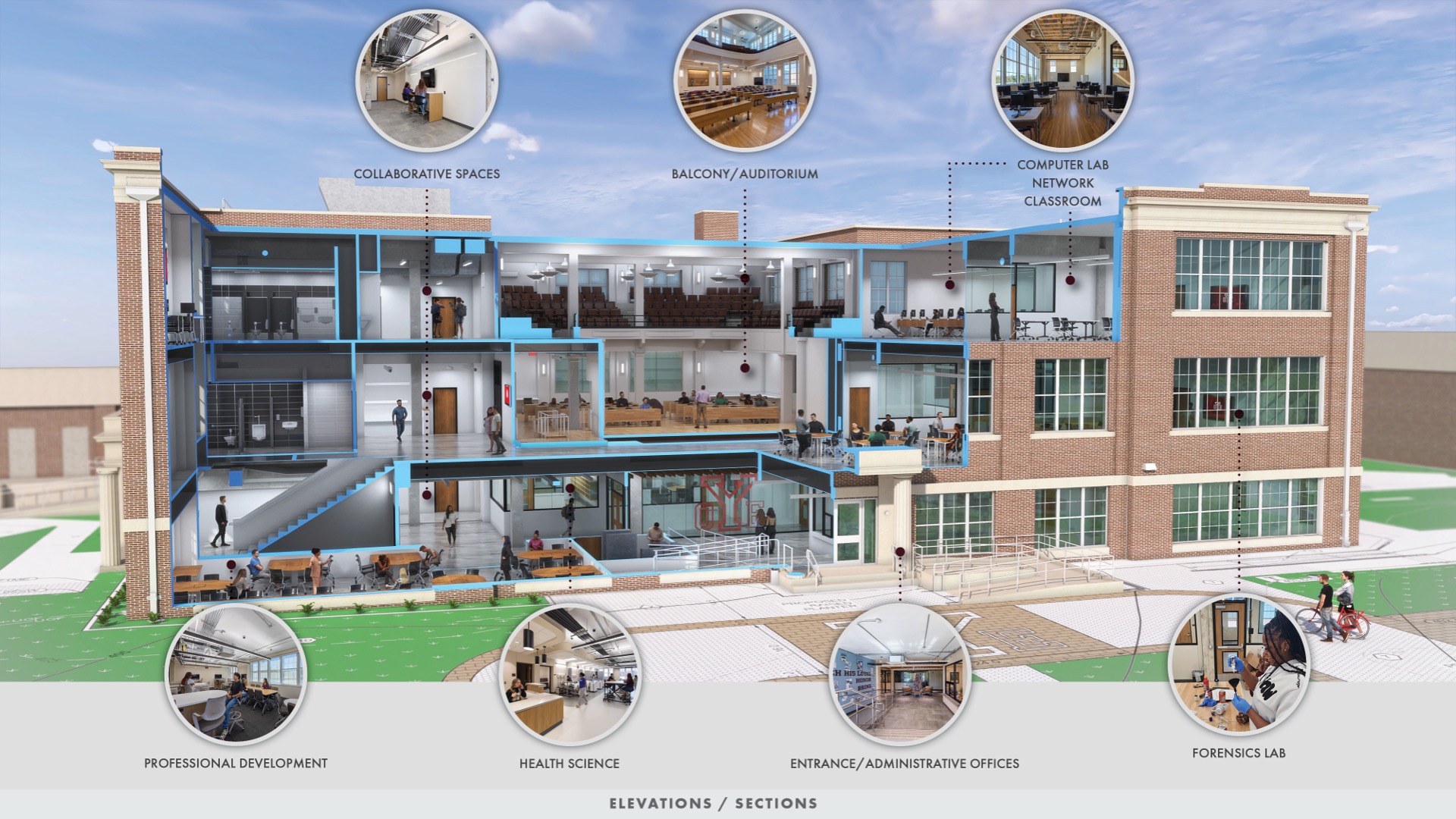
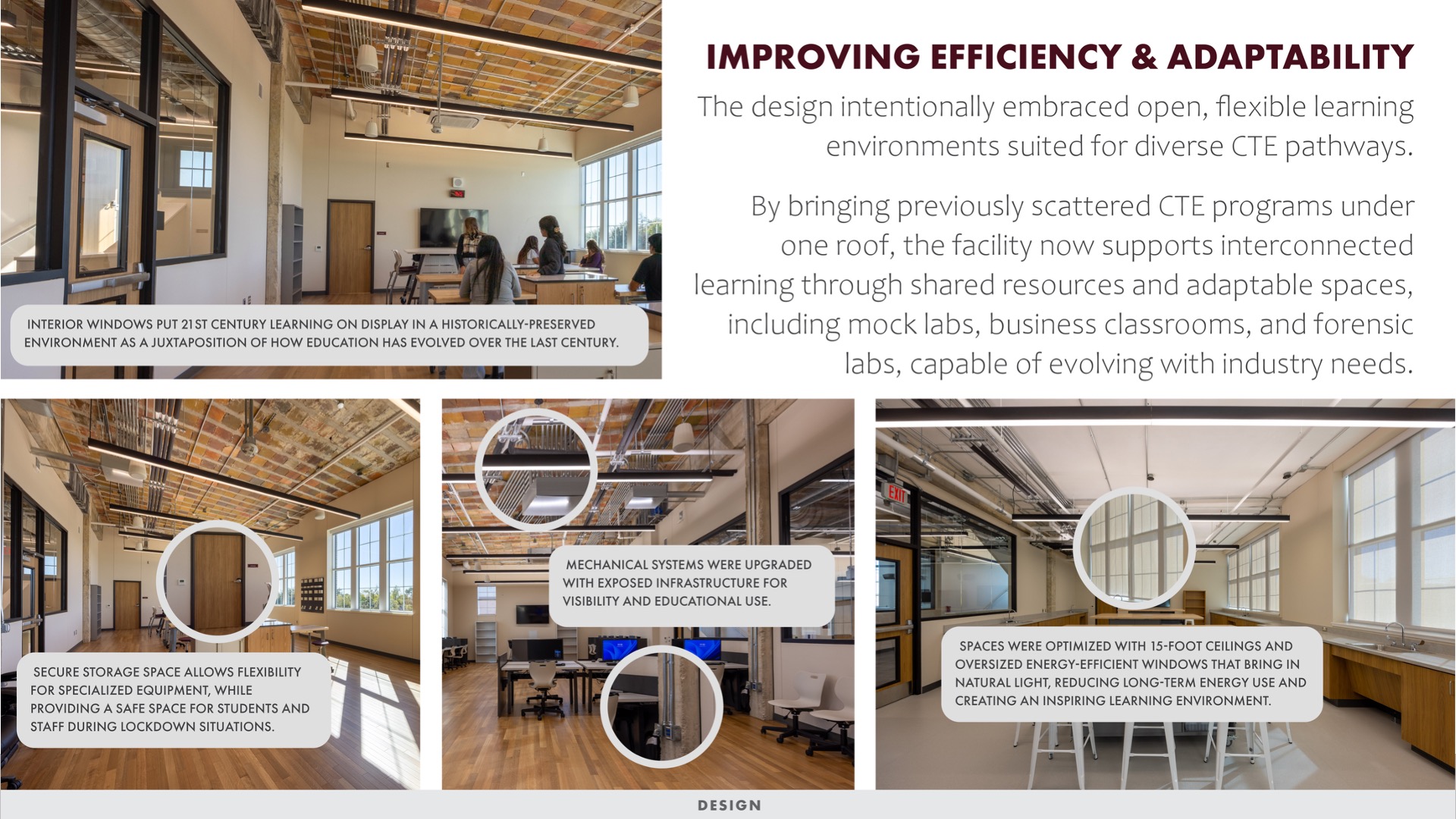
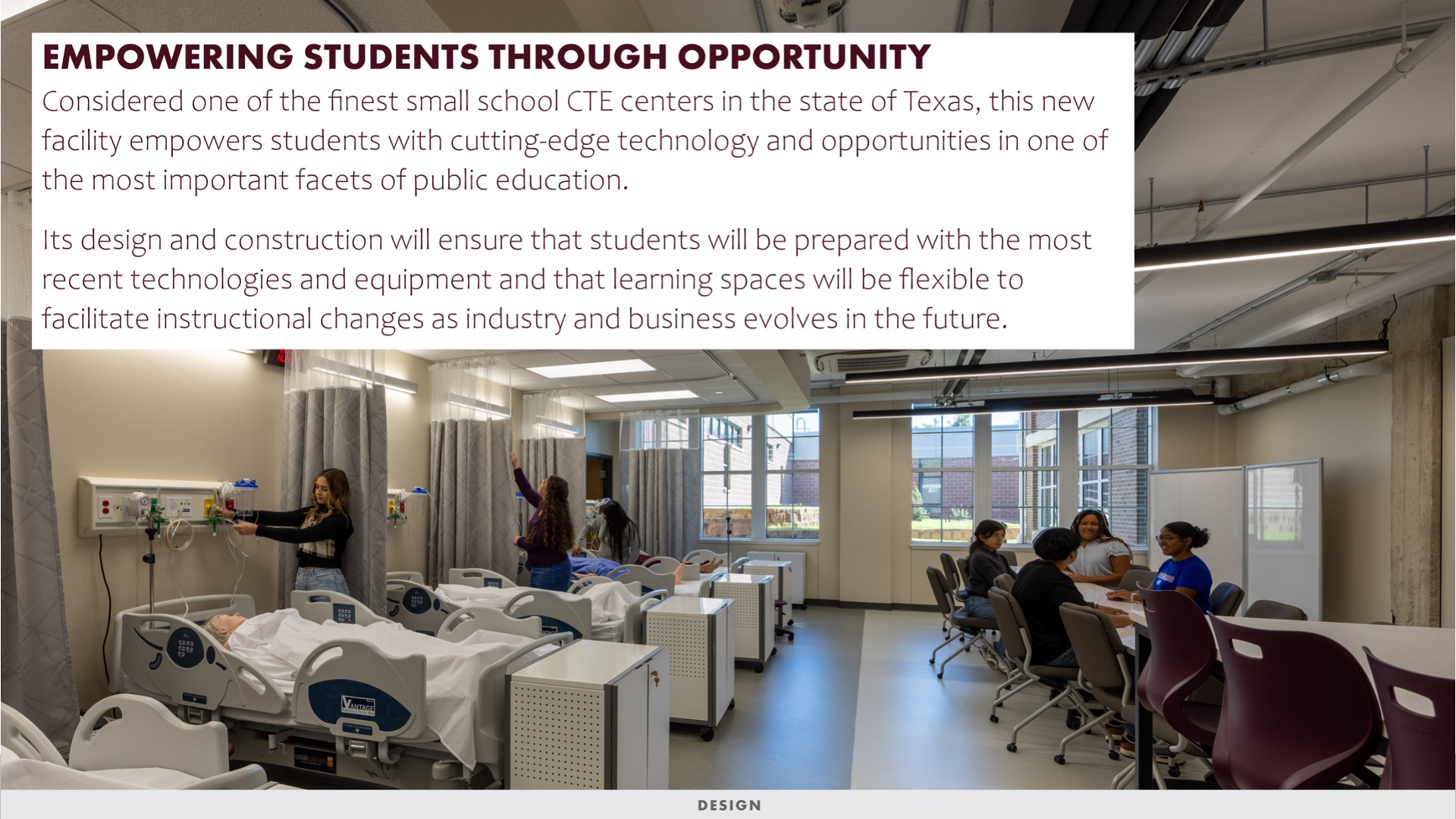
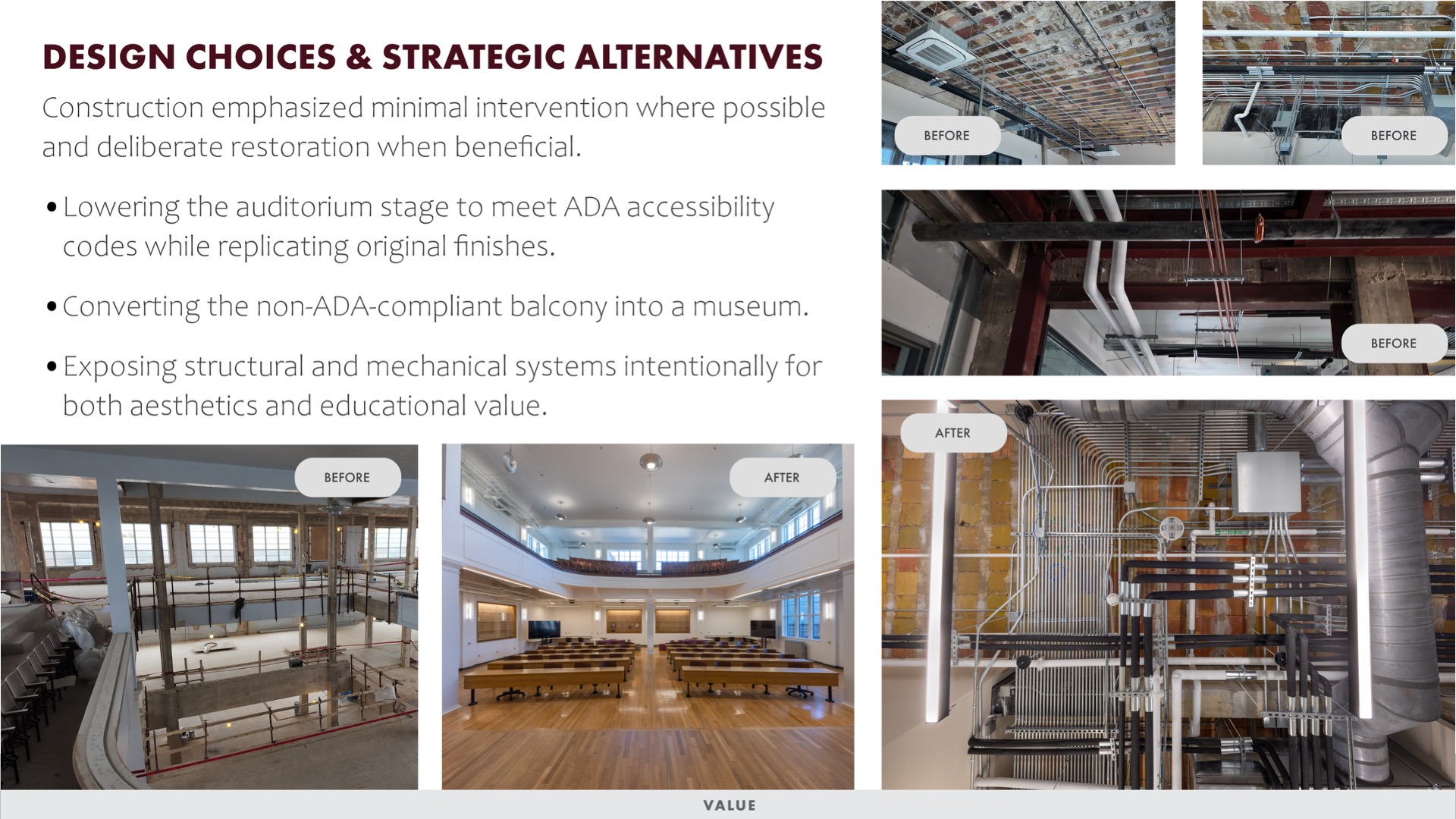
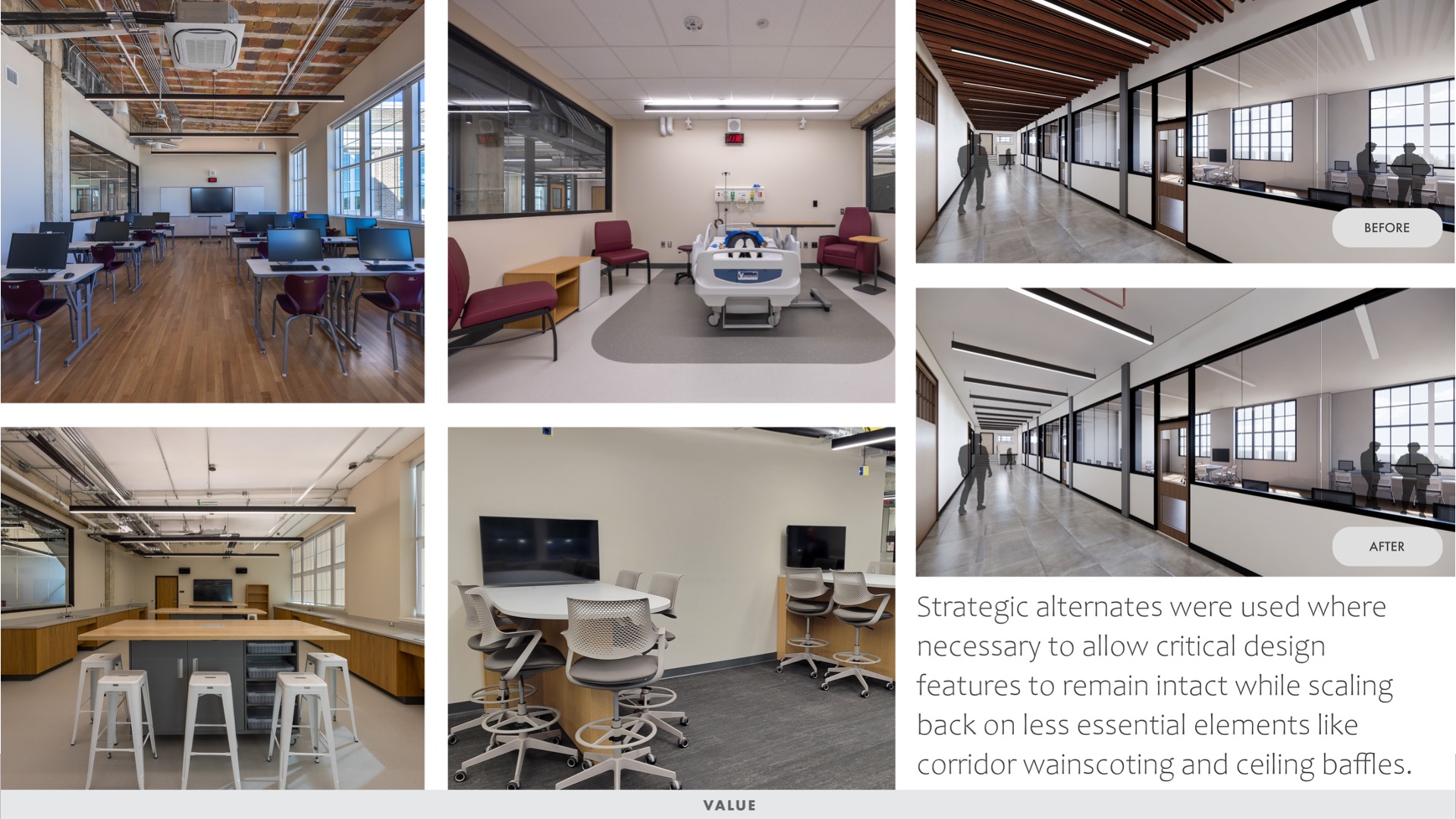
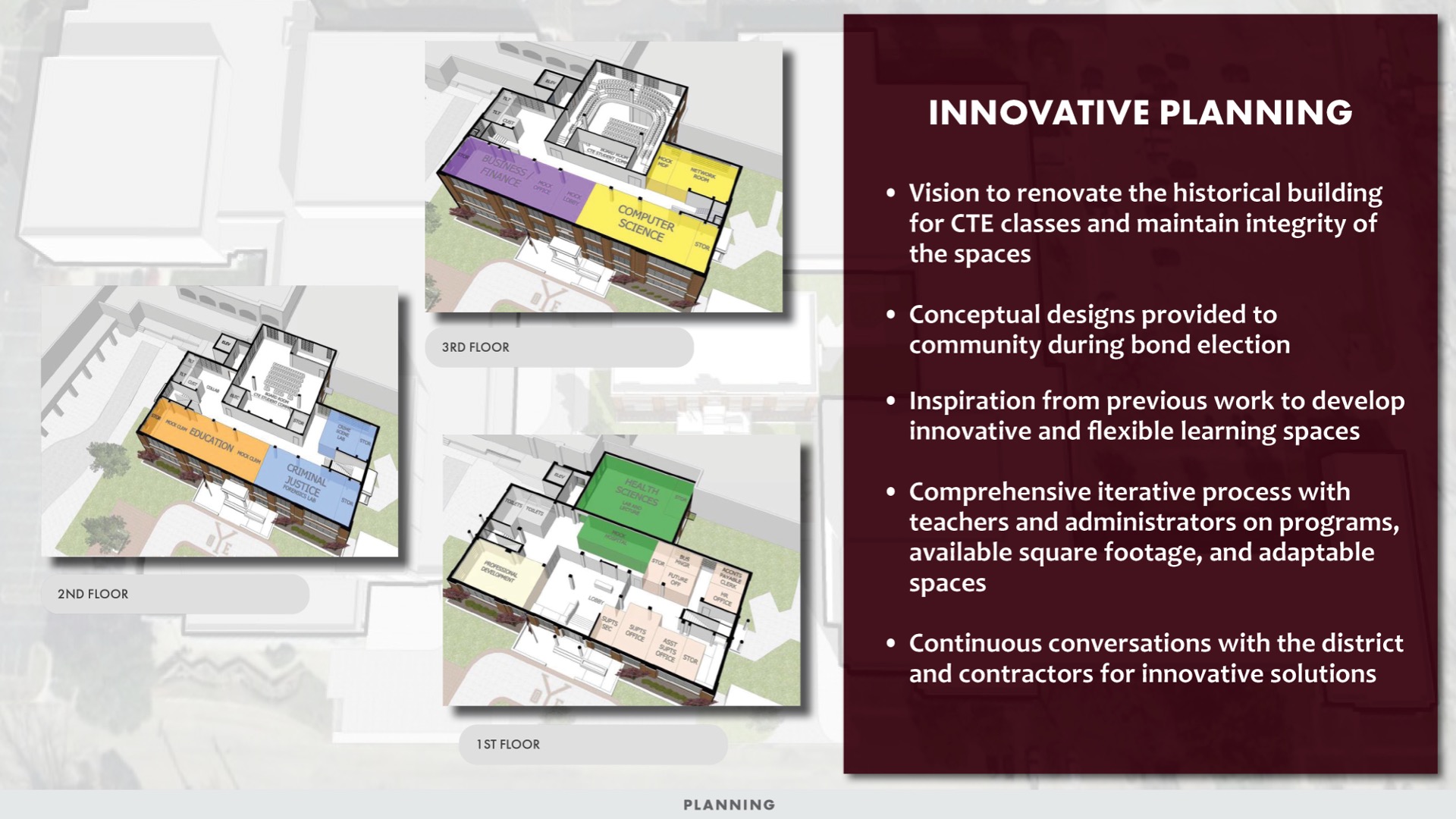
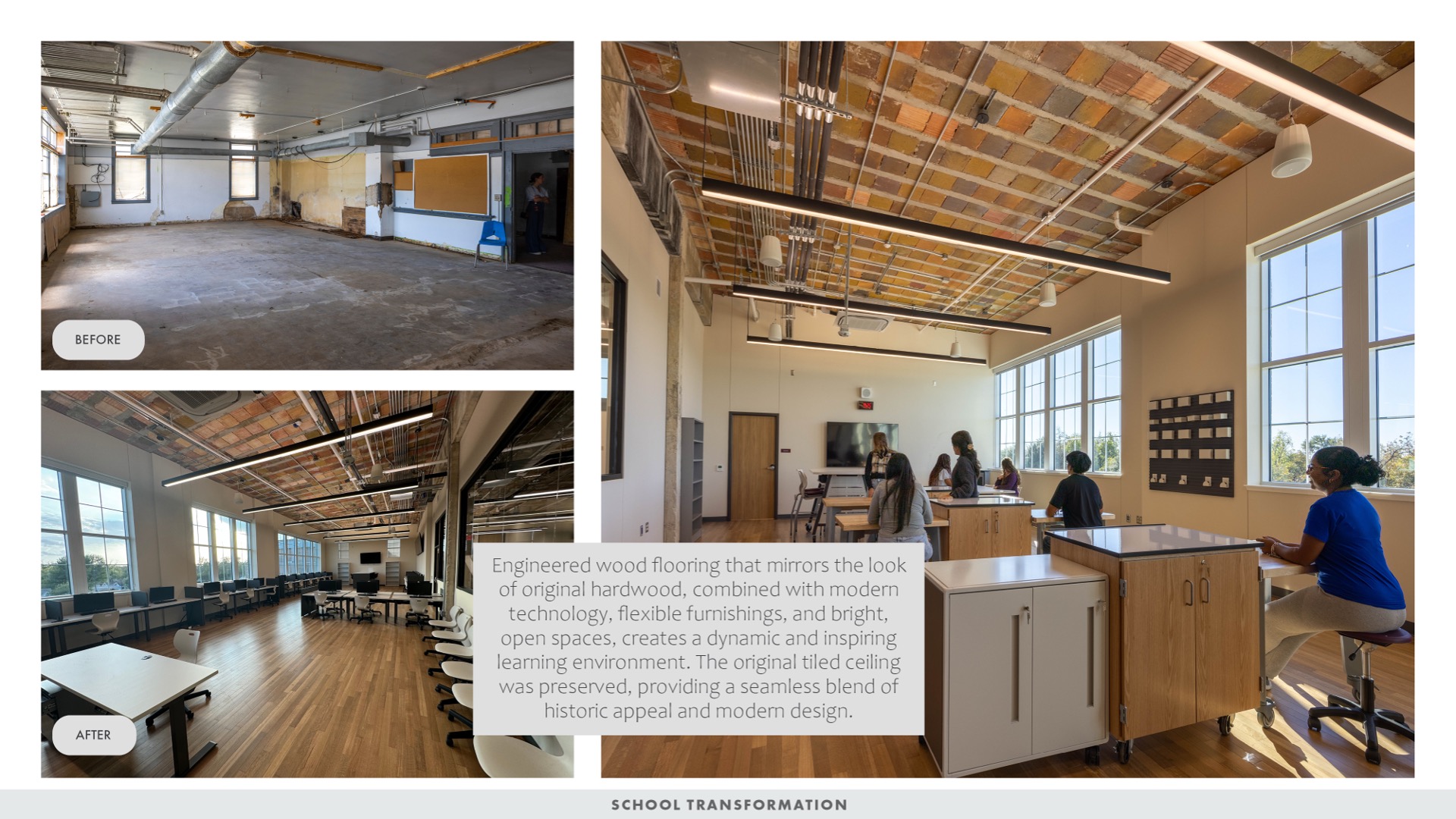
The design centers on flexibility and adaptability to support evolving CTE pathways. Each lab space is tailored to program needs and paired with support zones for storage and real-world application. The building layout encourages interdisciplinary collaboration while maintaining a clear and efficient flow. Exposed systems and materials (like VRF mechanicals and terracotta ceilings) make the infrastructure itself part of the learning experience.
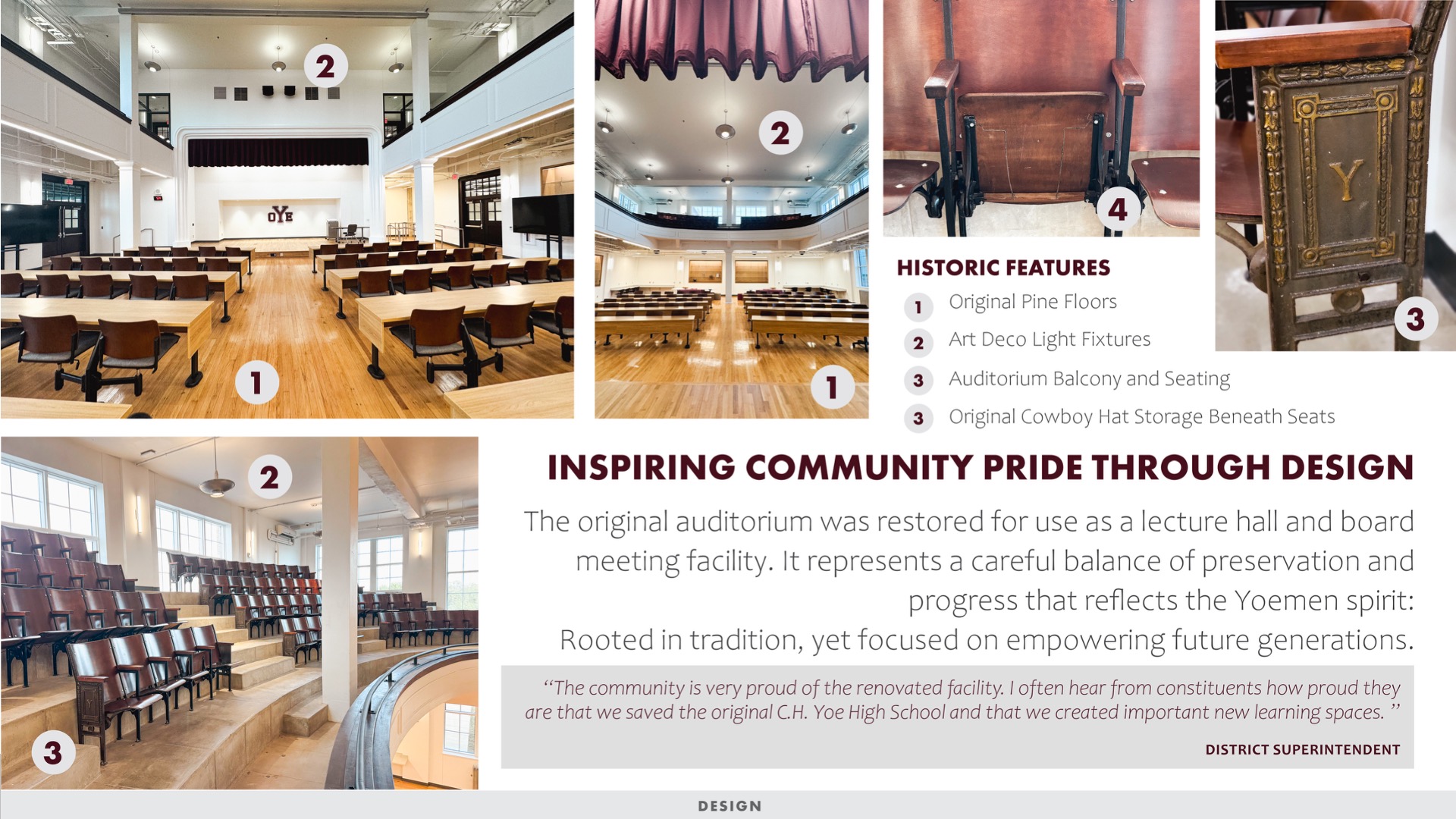
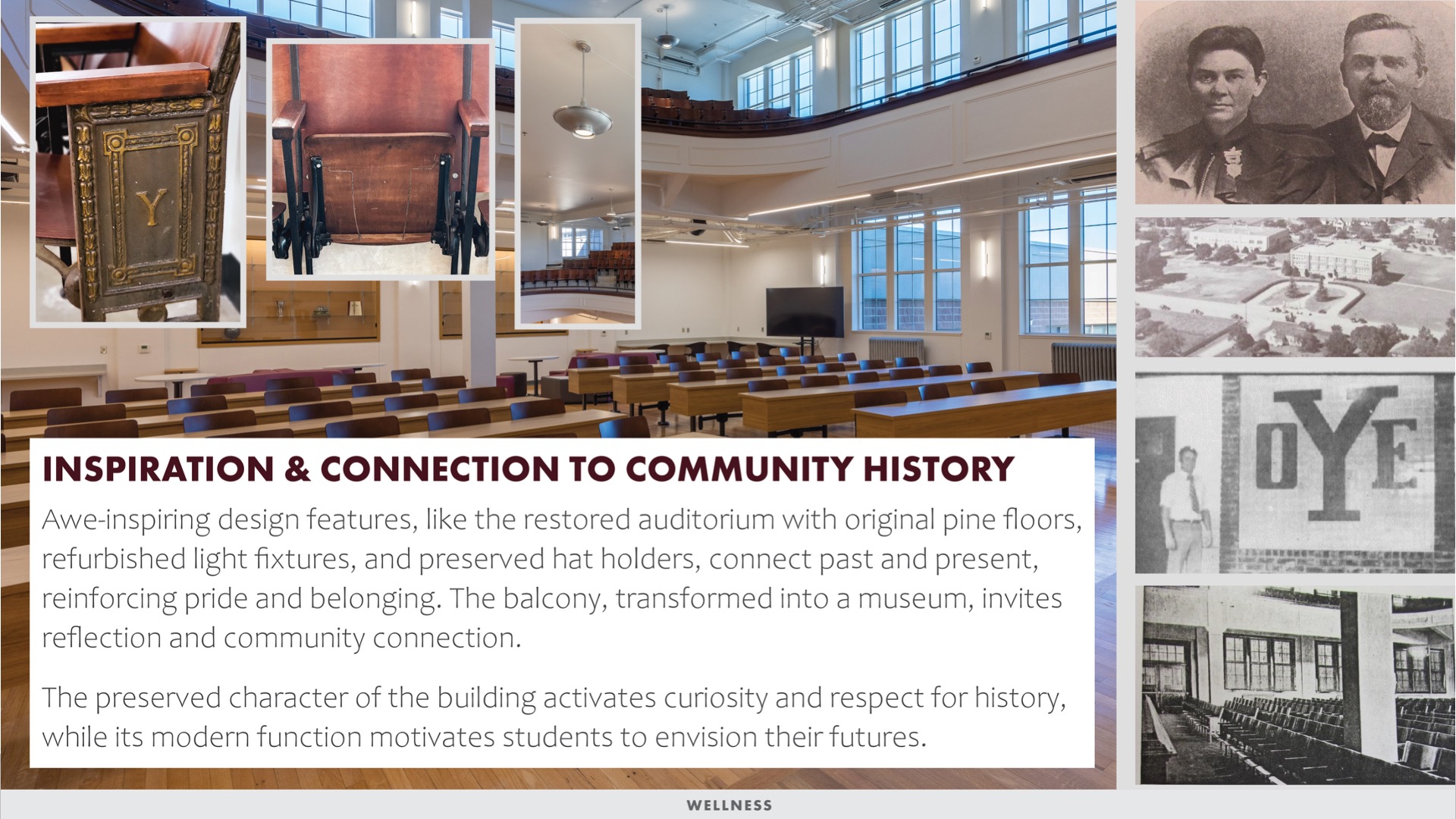
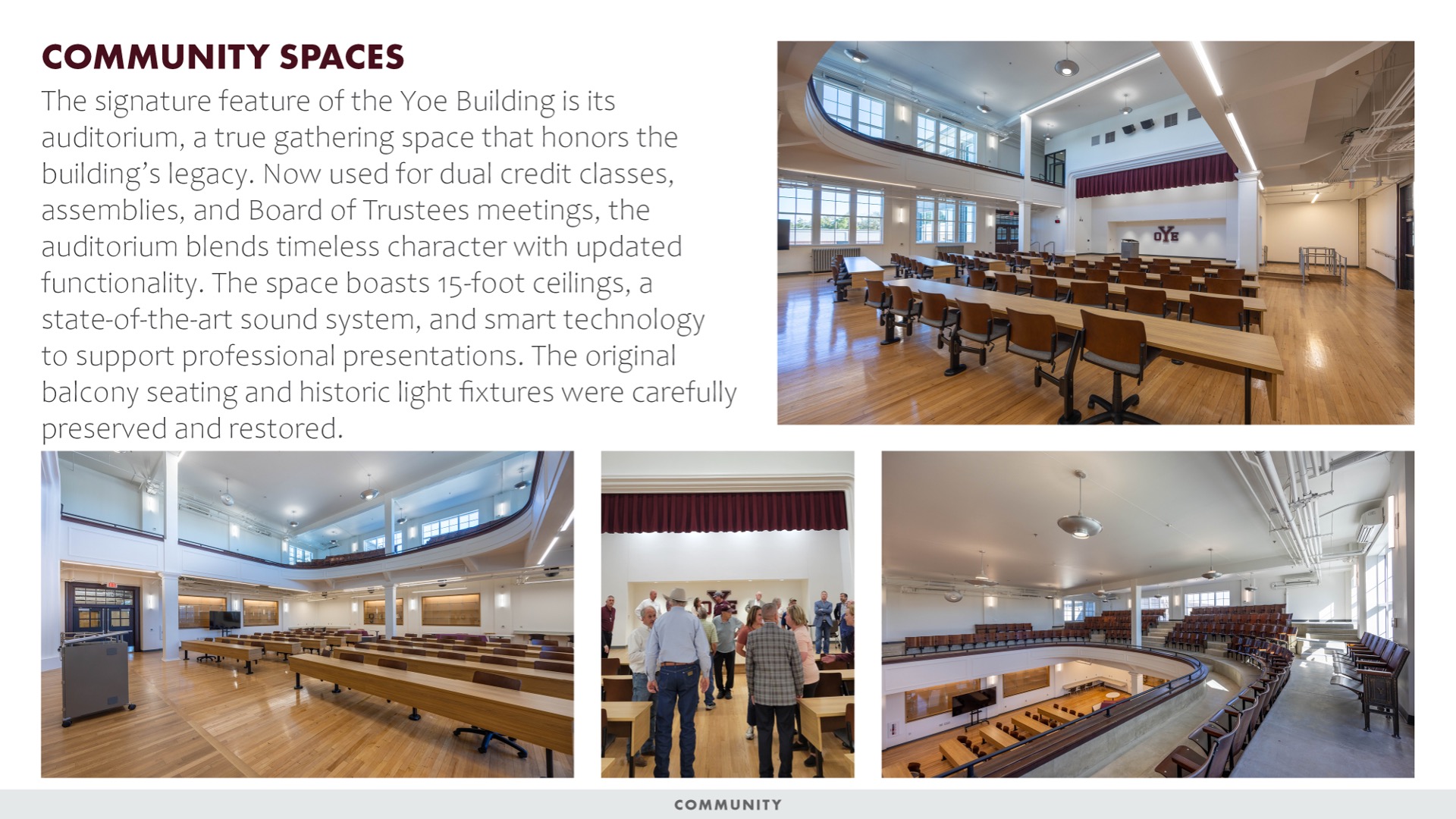
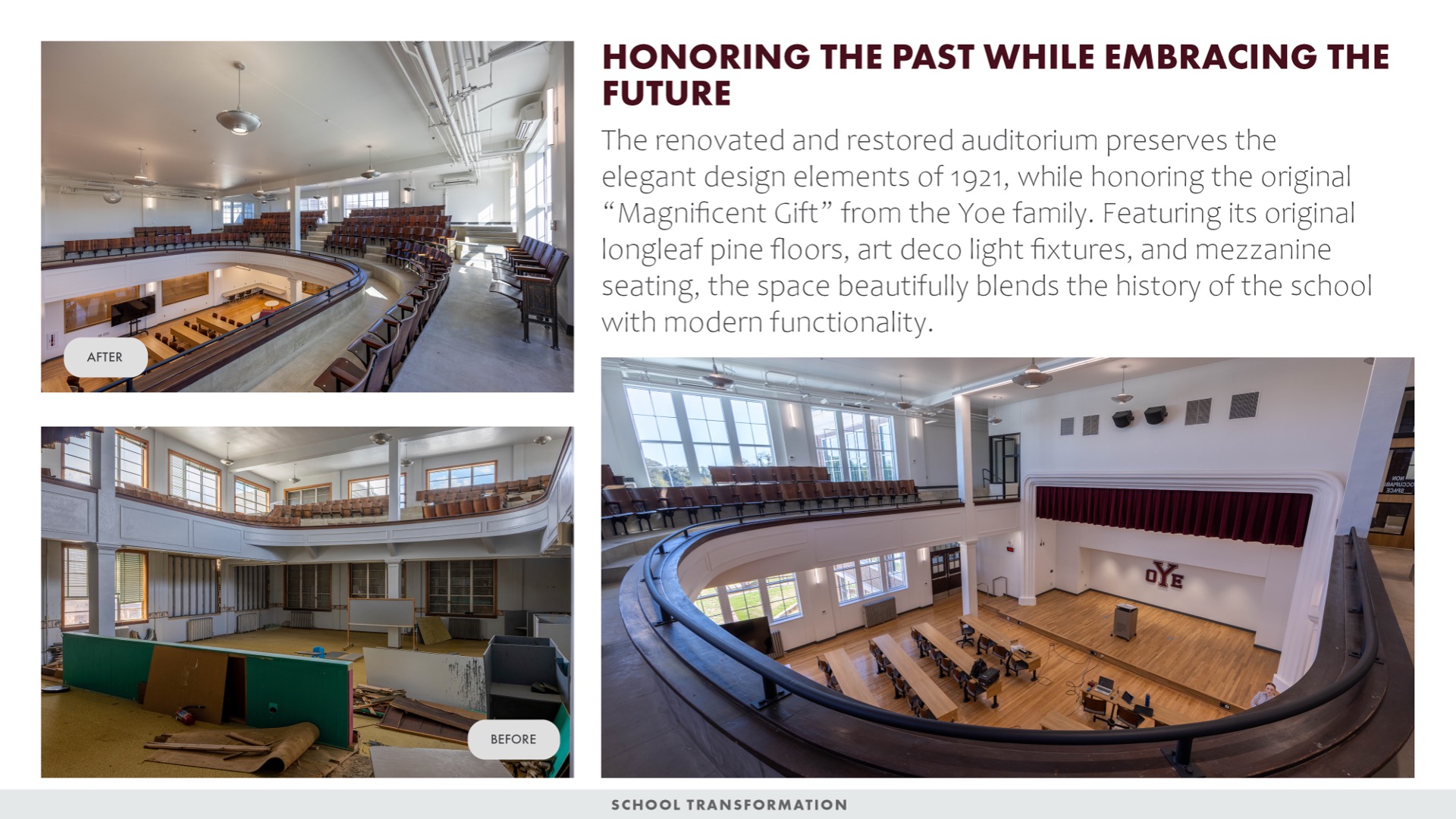
The auditorium was once unusable, but is now restored and serves as both a student lecture hall and community gathering space. Permanent seating, ADA upgrades, and updated lighting make it a functional, multipurpose environment that maintains its historic charm.
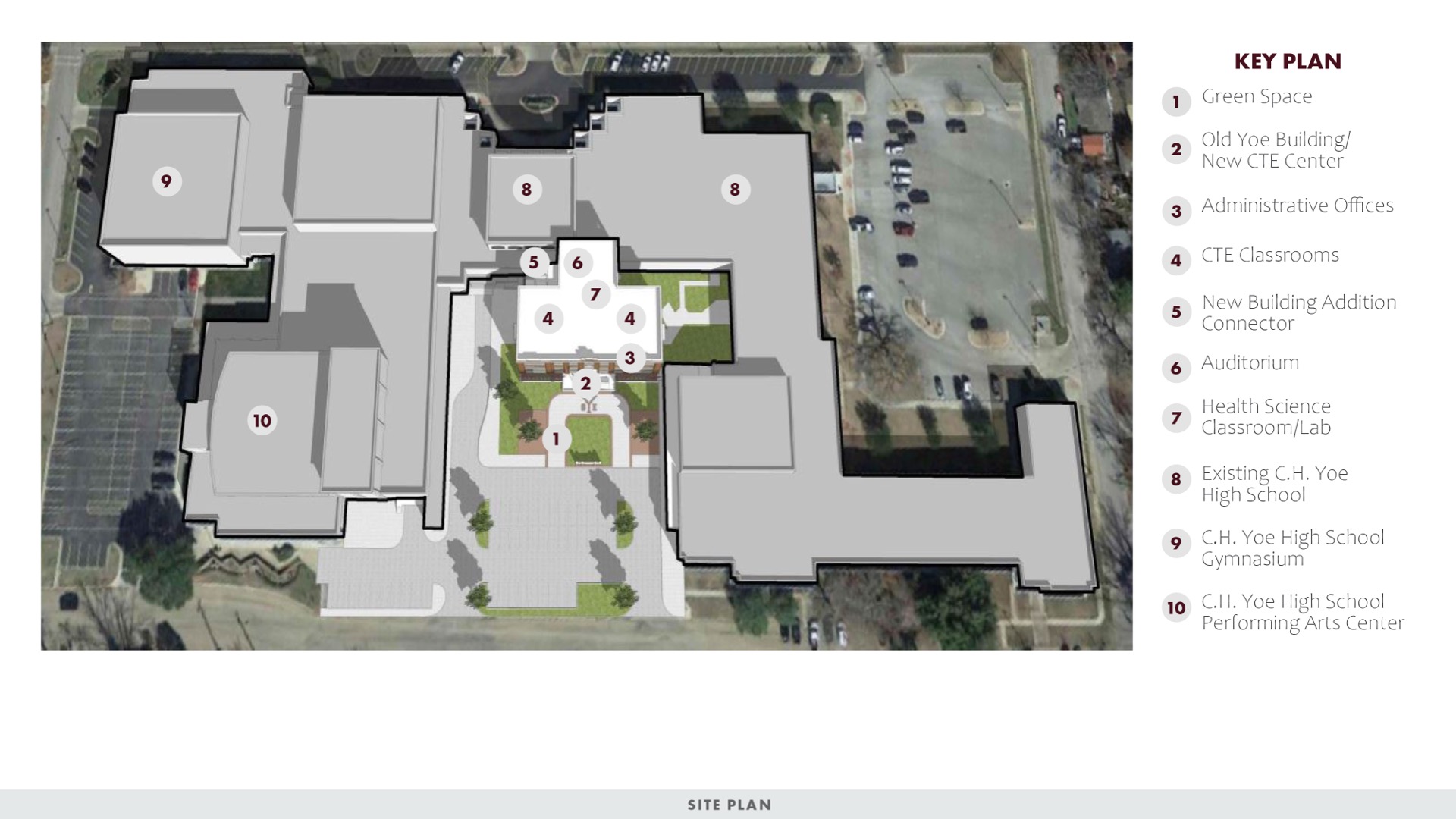
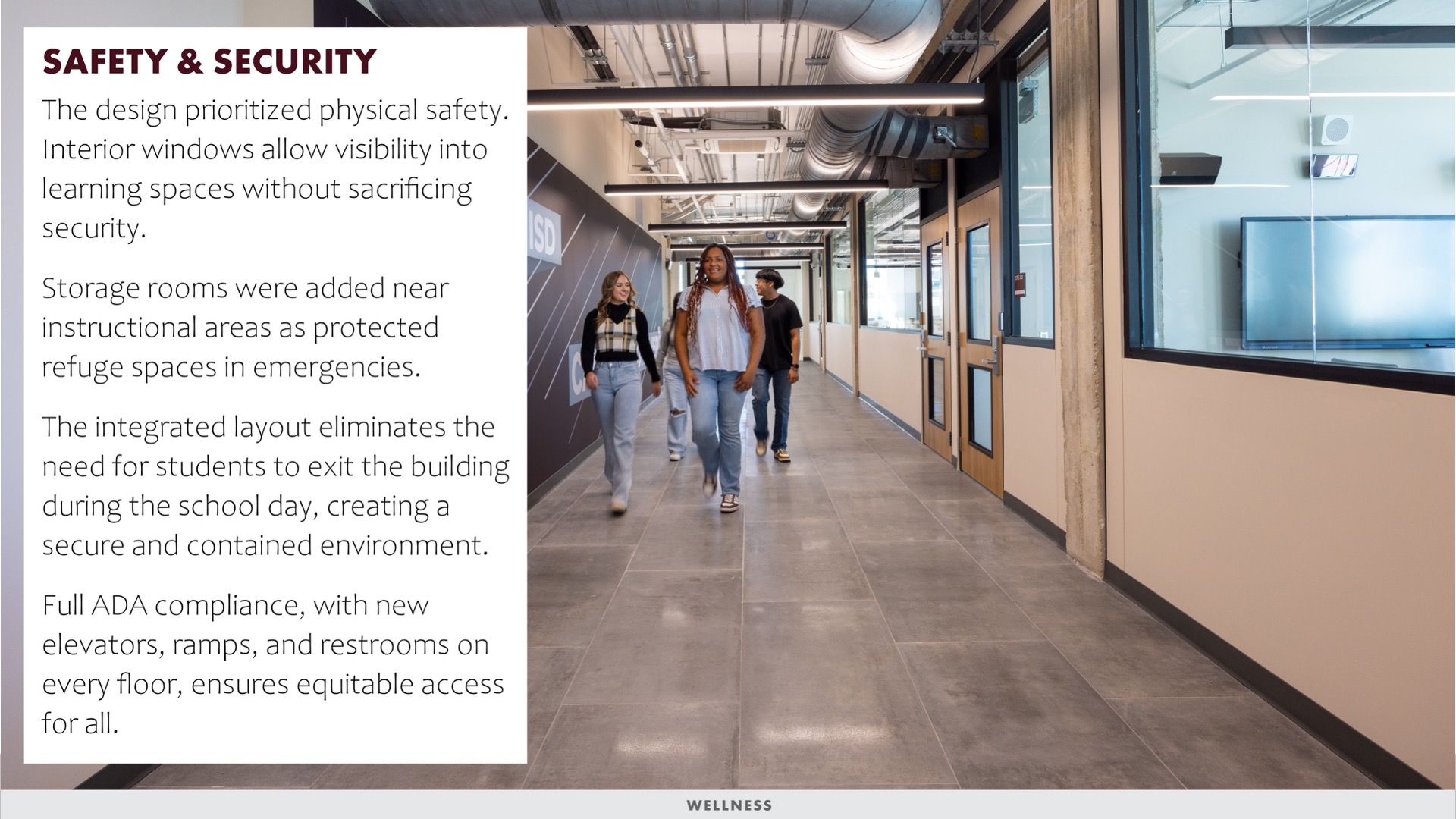
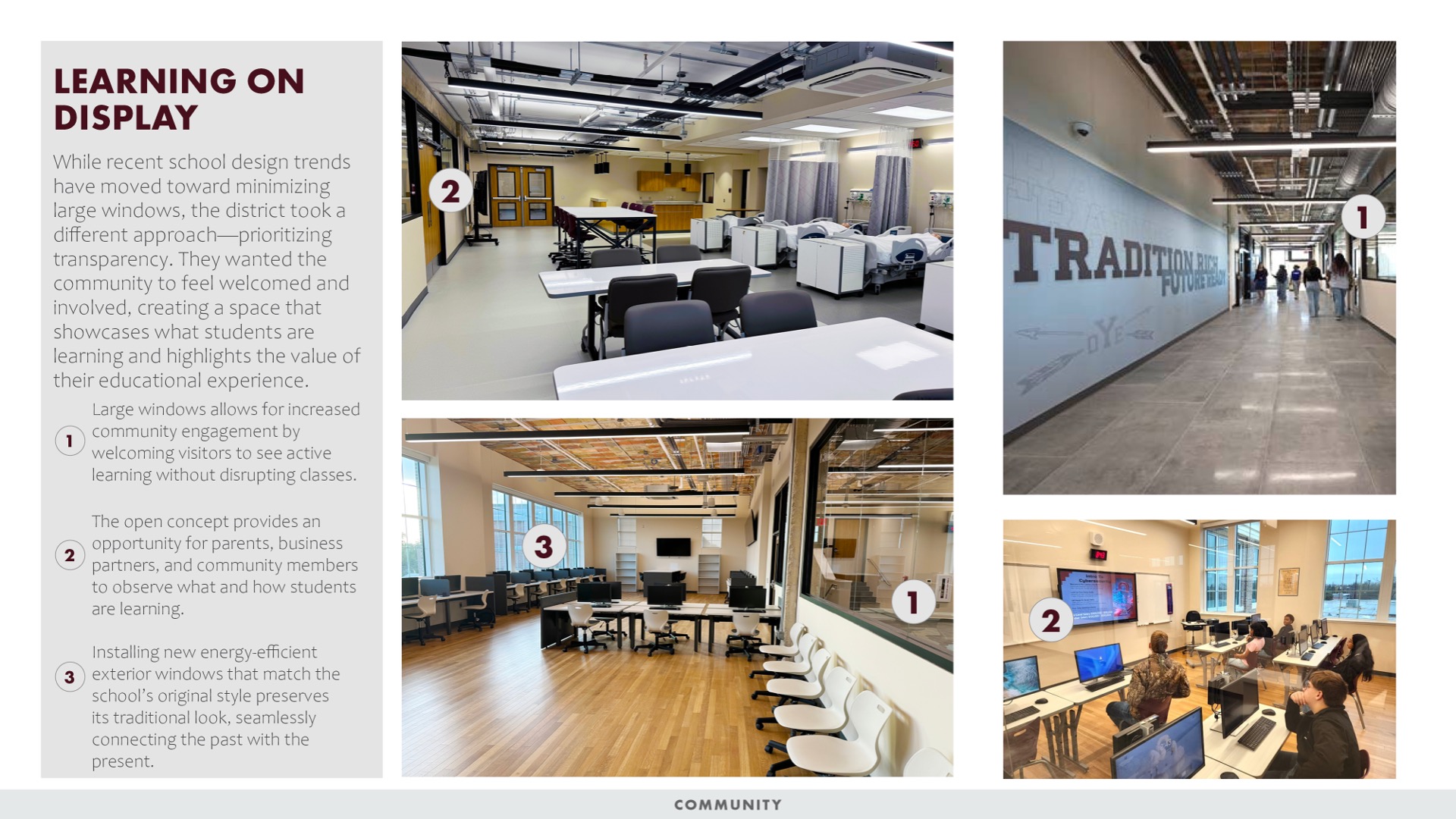
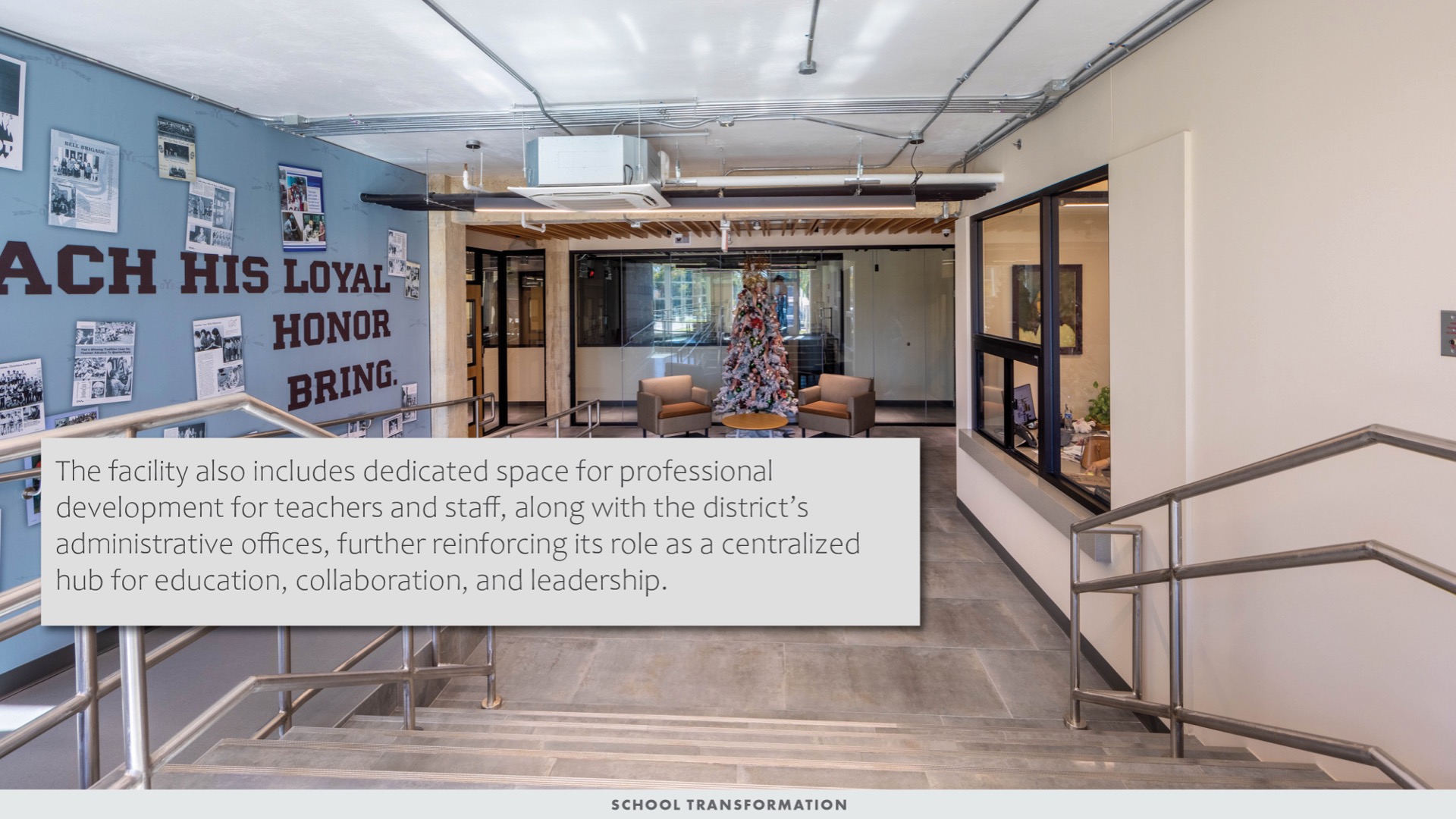
Additionally, transparency was key: glass-fronted classrooms and corridors keep learning visible, promoting safety and engagement. A new connector links the CTE center to the main high school, ensuring accessibility and continuity across programs.
The project transforms a dormant legacy space into a vibrant, flexible learning environment that meets today’s needs while honoring its past.”
 Value
Value
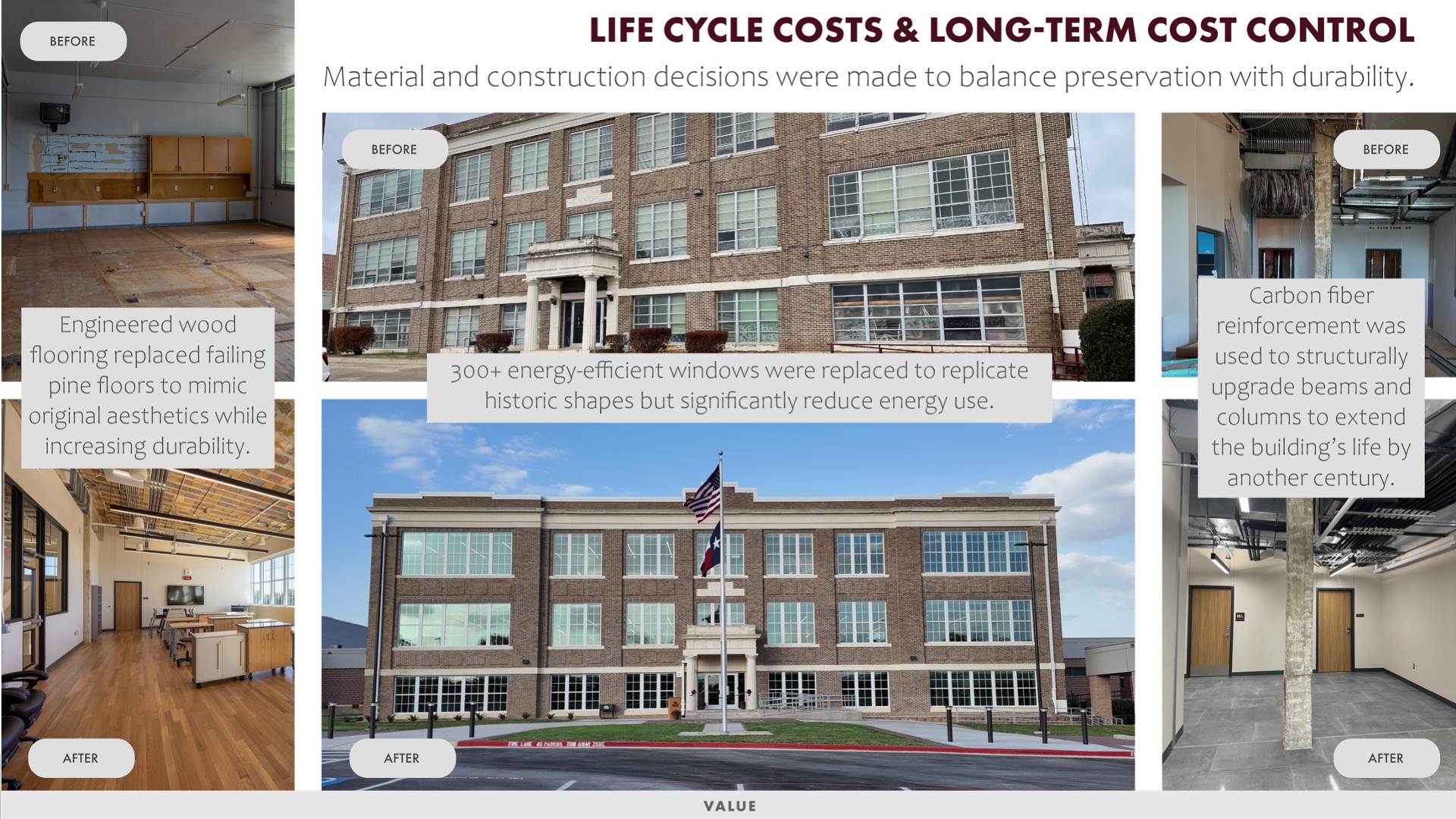
“Transforming the vacant 1919 Yoe High School building into a modern CTE center delivered significant value through adaptive reuse and preserving community heritage while maximizing district investment. Rather than demolishing and rebuilding, the project team reinforced the original structure with carbon fiber, replaced all mechanical, electrical, and plumbing systems, and integrated energy-efficient windows, lighting, and a VRF HVAC system to reduce long-term operating costs.
All materials were selected with durability and maintenance in mind—with exposed structural elements, polished concrete floors, and retained hardwood support longevity while aligning with the industrial aesthetic. The decision to reuse the auditorium and upgrade it with ADA access, permanent seating, and modern lighting created a multipurpose venue for student lectures and community events at a fraction of the cost of building new.
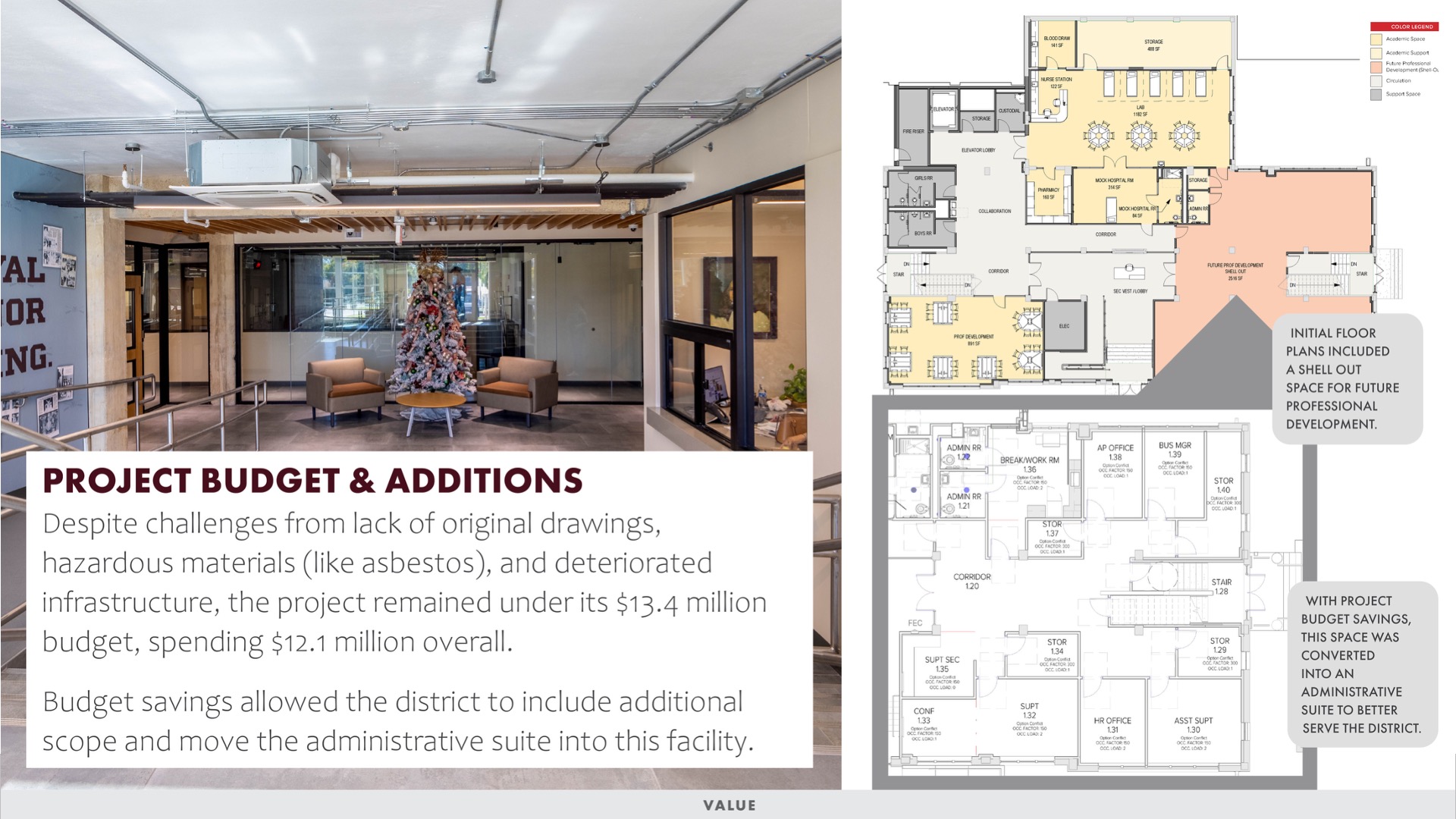
Flexibility was built into every CTE space, allowing for program changes without major renovations. The addition of a connector between the historic facility and the main campus eliminated inefficiencies in circulation and improved overall site functionality.
The renovation preserved the cultural and emotional value of a beloved local landmark—strengthening community ties and reducing the carbon footprint of new construction. By aligning design decisions with cost of ownership, programming flexibility, and legacy preservation, the project delivers long-term value for students, educators, and the wider community.”
Wellness
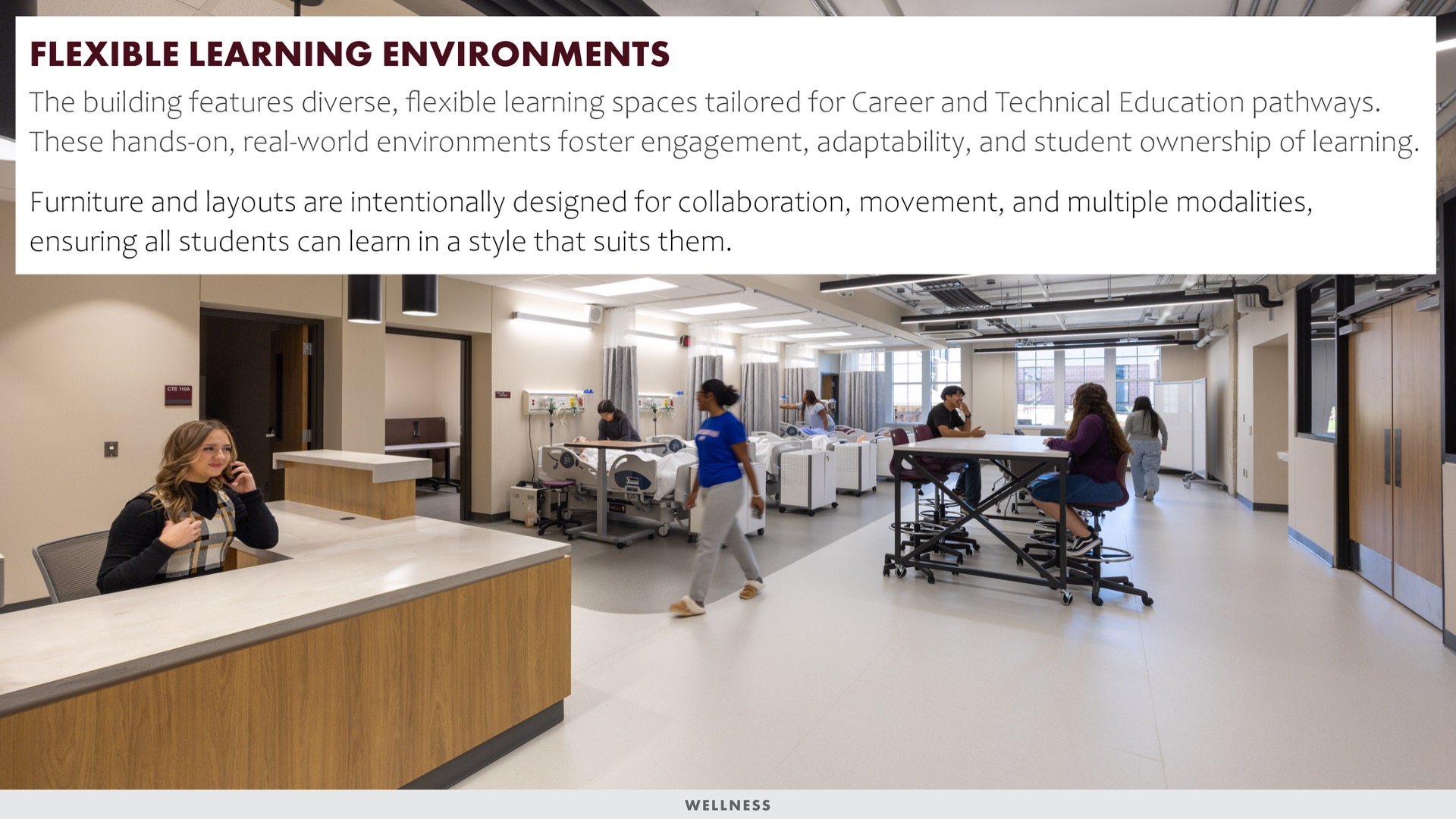
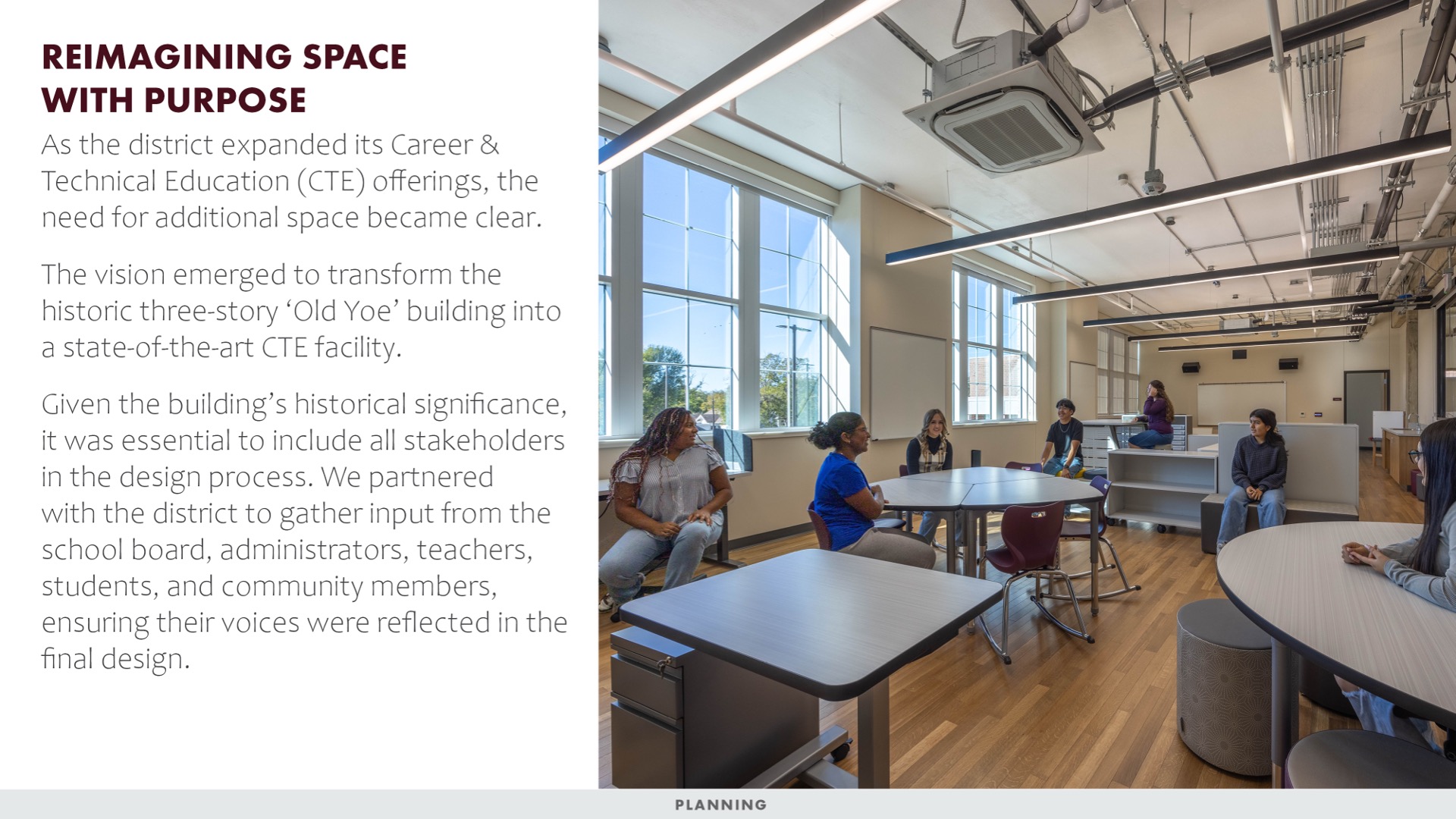
“Renovations thoughtfully integrated wellness strategies that support diverse learning styles and create a healthy, inclusive environment. Flexible furnishings and adaptable spaces allow students to engage in individual work, collaboration, and hands-on learning—critical for CTE pathways that require varied instructional approaches.
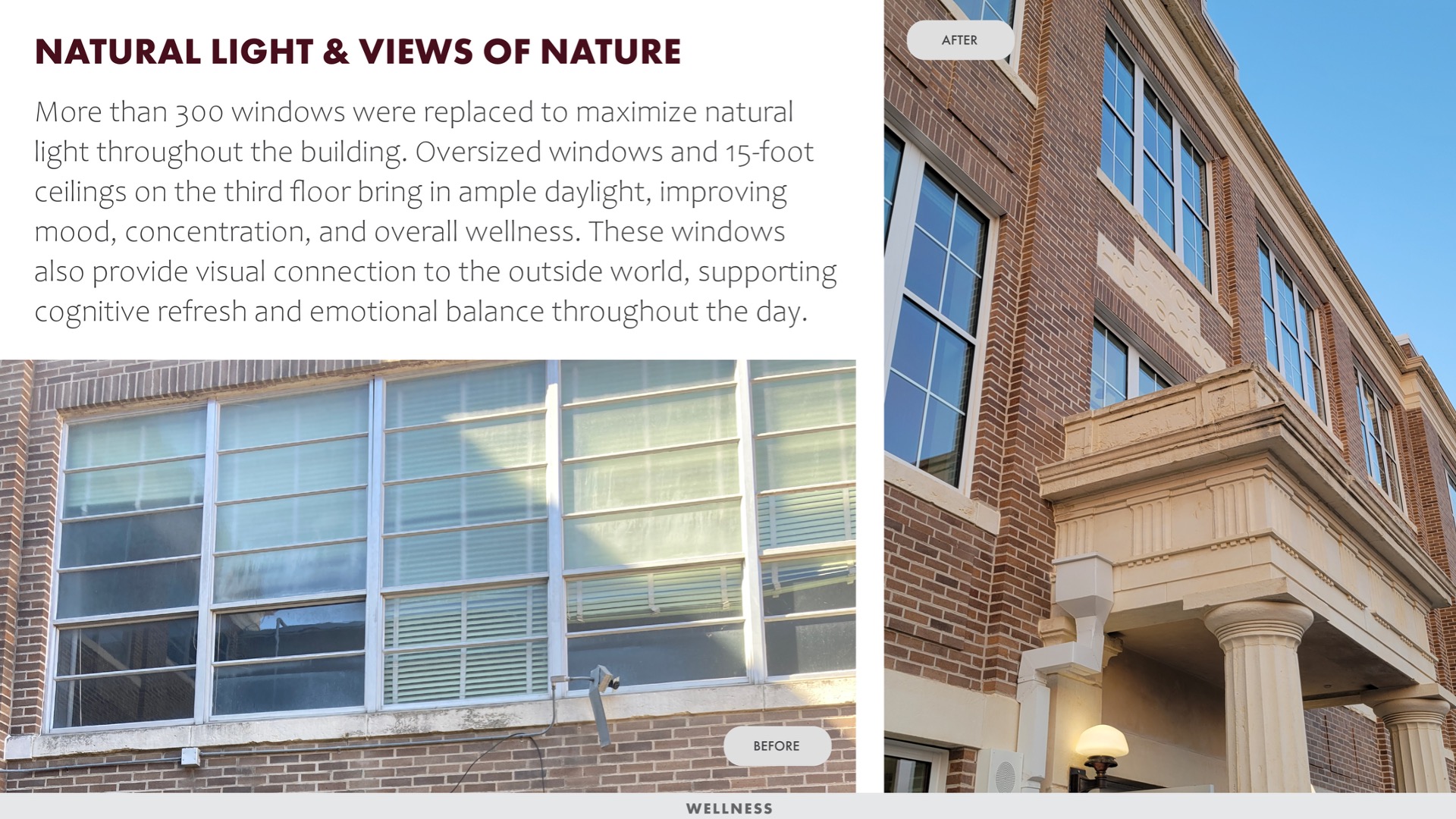
Large, operable windows and the building’s original south-facing orientation bring abundant natural light and views of nature inside, and enhance mood and focus. The exposed brick and masonry ceilings create a tactile, authentic environment that connects students to the building’s history while promoting sensory engagement.
Movement is encouraged through open circulation, wide corridors, and accessible ramps. A carefully designed 30-foot ADA ramp in the auditorium supports physical activity and universal access that wasn’t available in the past.
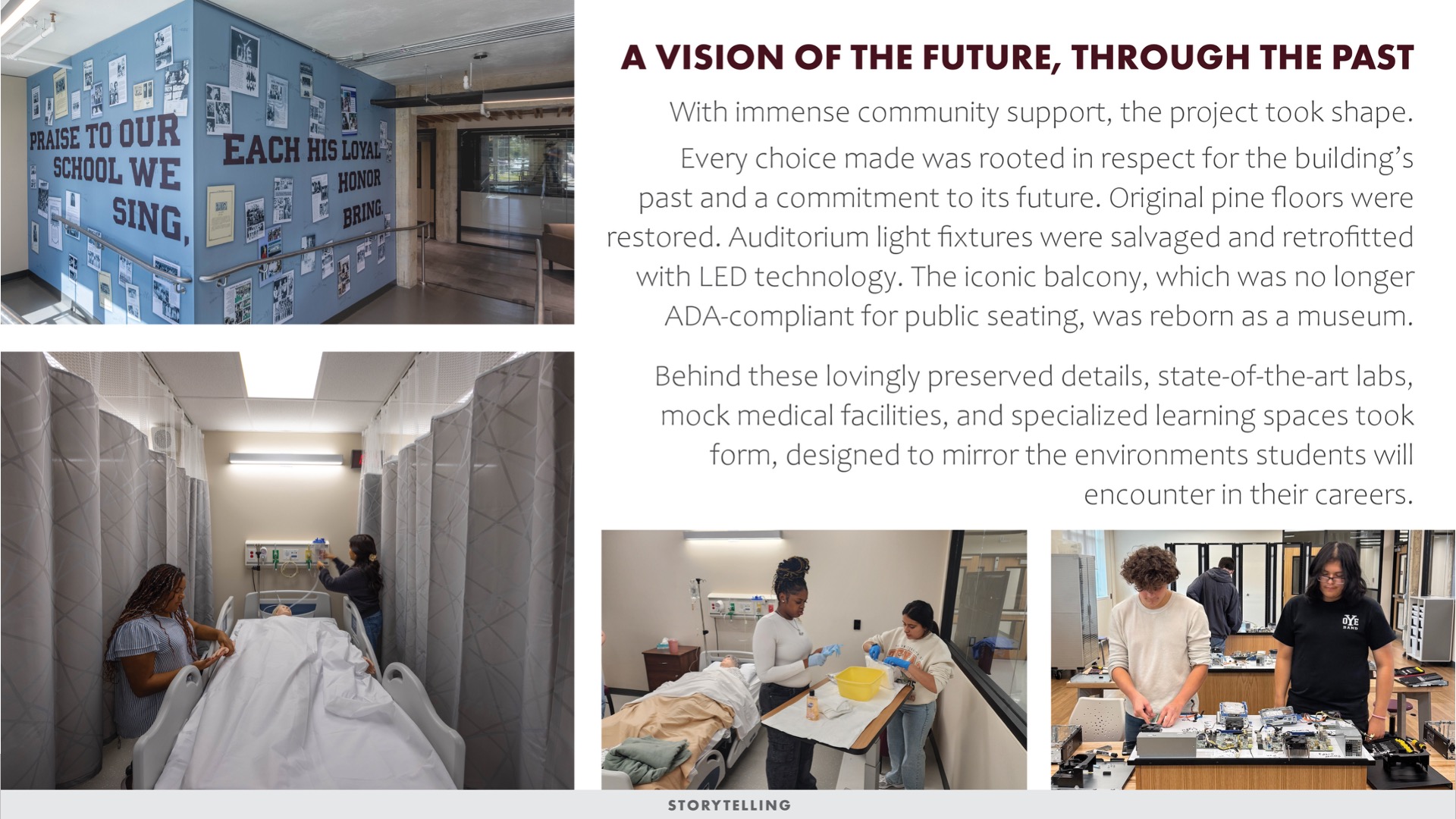
Safety upgrades, such as a new sprinkler system and improved connectivity to the main campus, ensure secure, resilient spaces. Technology-rich classrooms incorporate visible mechanical systems and transparent partitions, fostering curiosity and allowing students to observe building operations firsthand.
Equity and inclusivity are central, with flexible spaces designed for varied programs and community use, reflecting local industry partnerships and diverse student needs. This approach aligns with the project’s educational goal of preparing students for the workforce while focusing on well-being, engagement, and community connection.
The design balances historic preservation with modern wellness principles, creating inspiring environments that activate learning, play, and reflection throughout the school day—both inside and out.”
 Community
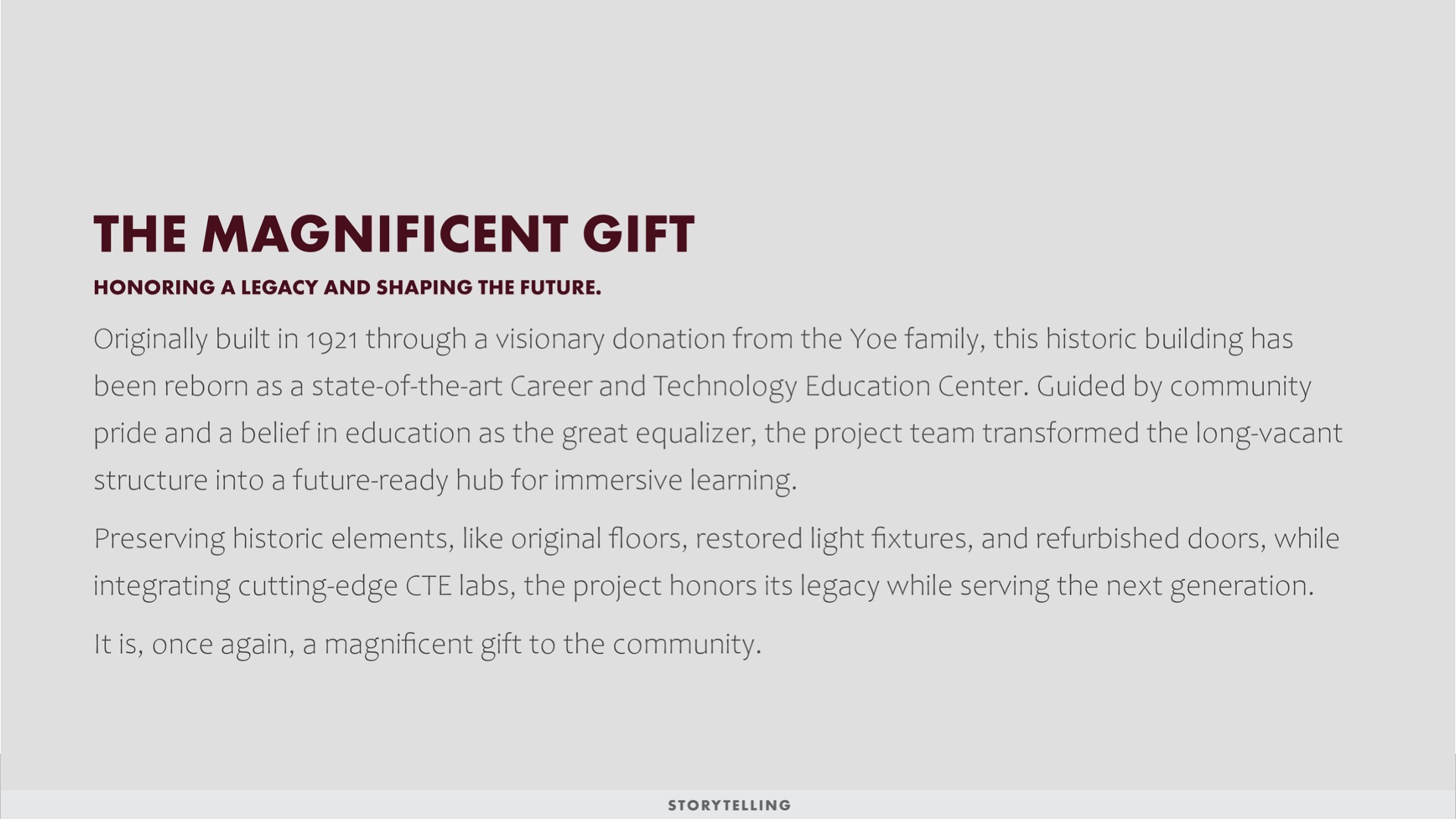
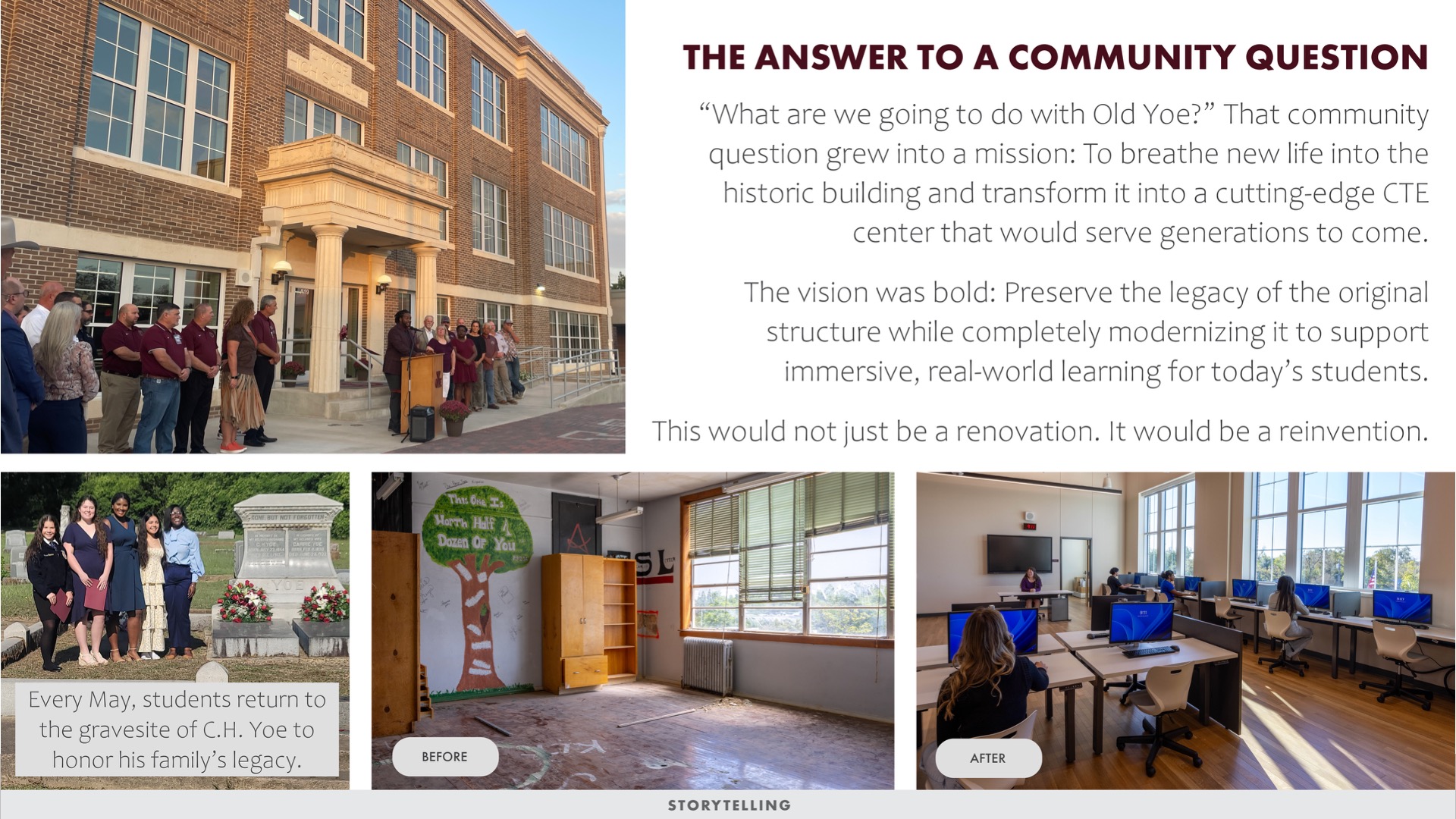
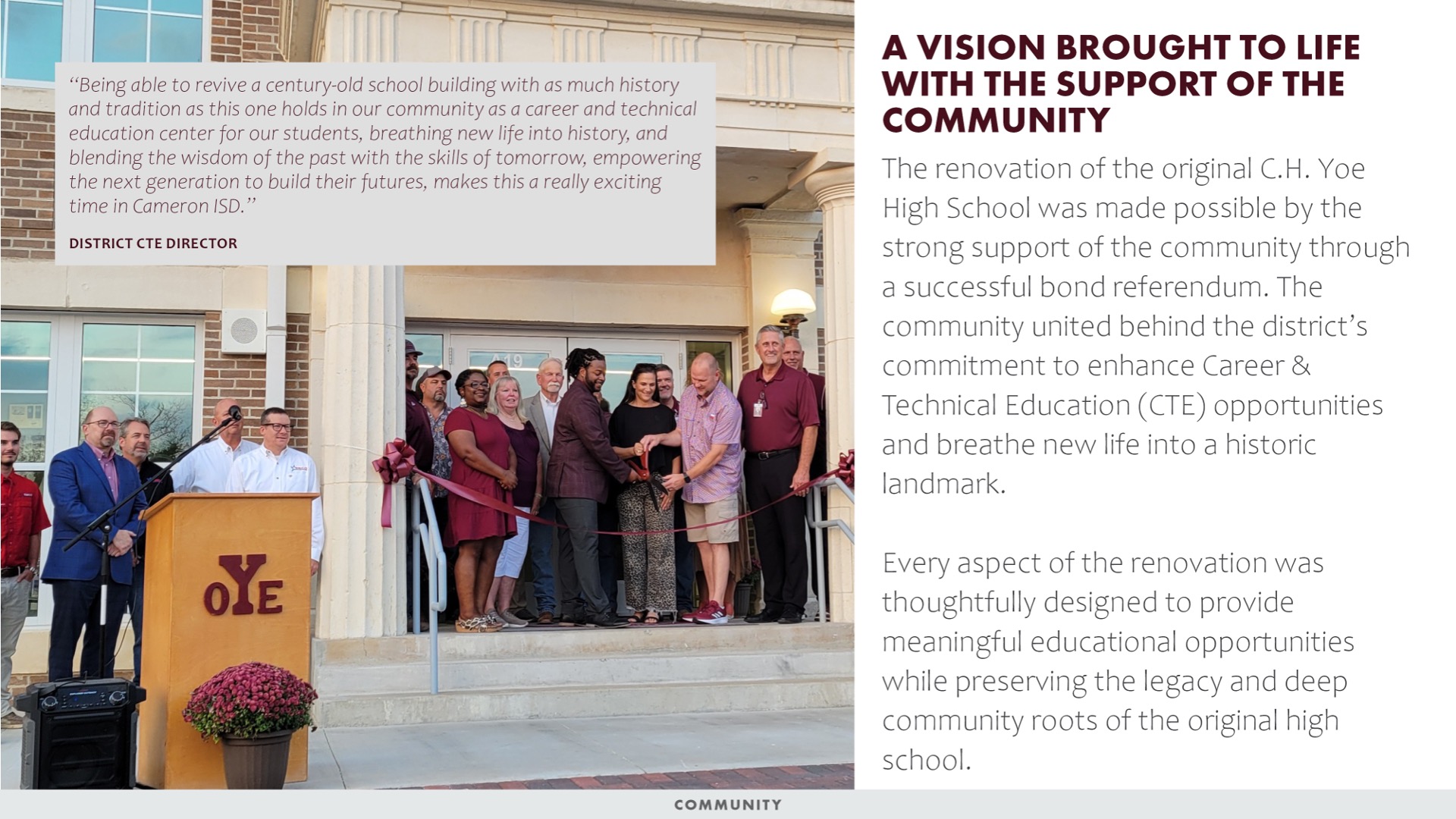
“The Yoe CTE Center renovation is rooted in the community’s history and identity, honoring a building gifted by the Yoe family nearly a century ago. This connection creates a powerful sense of continuity and pride, reinforcing the facility’s role as a cultural landmark.
By preserving key architectural features and integrating thoughtful restoration, the design respects the community’s heritage while adapting to modern educational needs. The building’s presence is prominently set apart from parking and connected carefully to the main campus. This location signals its importance and invites both students and residents to engage with the space.
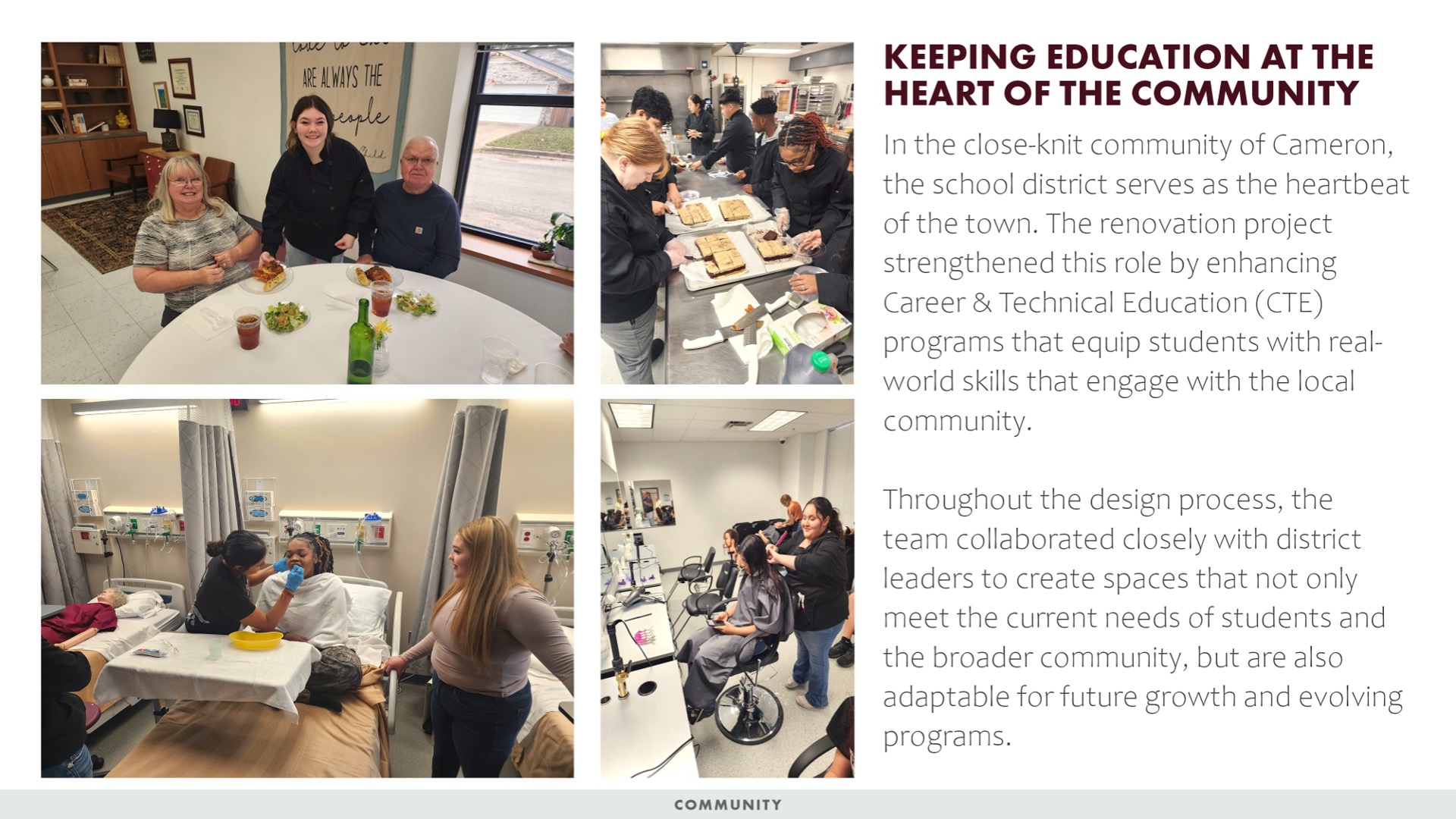
Community involvement was integral throughout, with local business owners, educators, and leaders actively shaping program pathways that reflect regional industries and workforce needs. This collaboration fosters a sense of ownership and relevance, ensuring the center serves as both an educational hub and a community resource.
The auditorium, a beloved space for generations, continues to function as a gathering place for events, lectures, and meetings, further strengthening communal ties. Traditions like the annual remembrance of the Yoe family connect the school to the town’s ongoing story, making the facility a living emblem of local values and aspirations.
The facility is a vital cultural anchor that celebrates the community’s diversity and fuels its future.”
 Planning
“The planning of the Yoe CTE Center was a collaborative, deeply intentional process focused in the project’s mission to honor history while advancing modern career and technical education. Early on, key stakeholders, including district leaders, instructors, local business owners, and community members, engaged in thorough discussions to shape the program and design goals.
The team prioritized flexibility to accommodate evolving CTE pathways, ensuring spaces could adapt to new technologies and modern interdisciplinary learning. Conversations with instructors defined specific needs for classrooms, labs, and support areas, balancing hands-on learning with collaboration and community engagement.
Historic preservation was a core goal, guiding decisions that maintained the building’s character while integrating code compliance, accessibility, and updated infrastructure. Continuous communication with district representatives ensured that every design element aligned with educational priorities and community values.
The planning also addressed practical challenges—like creating an accessible connector to the main campus and fitting in modern mechanical systems without compromising aesthetics. This comprehensive approach allowed the design to support diverse teaching styles, active learning, and community use, ultimately achieving a facility that serves both current and future educational goals for the district and town.”
 School Transformation
“The Yoe CTE Center transformed a historic landmark into a future-focused learning environment that merges tradition with innovation. By preserving the building’s original character while integrating modern CTE labs, flexible learning spaces, and advanced technology, the project is the perfect representation today’s CTE spaces.
Students and staff experience a setting that inspires pride and connection, all while learning amid century-old wood floors, exposed brick, and restored masonry. Transparent classrooms that showcase hands-on projects, and the auditorium serves as a multiuse hub for lectures, community events, and distance learning, enabling collaboration and engagement beyond the typical classroom.
This transformation activates the space as a living classroom itself, where exposed mechanical systems become teaching tools and adaptable rooms accommodate diverse pathways and evolving industry demands. The project motivates educators and learners by honoring the past while embracing the future, setting a new standard for educational environments that are both rooted in community and poised for ongoing growth and innovation.”
 Star of Distinction Category Winner