






Humble ISD — Kingwood Middle School
Architect: Kirksey Architecture
 Design
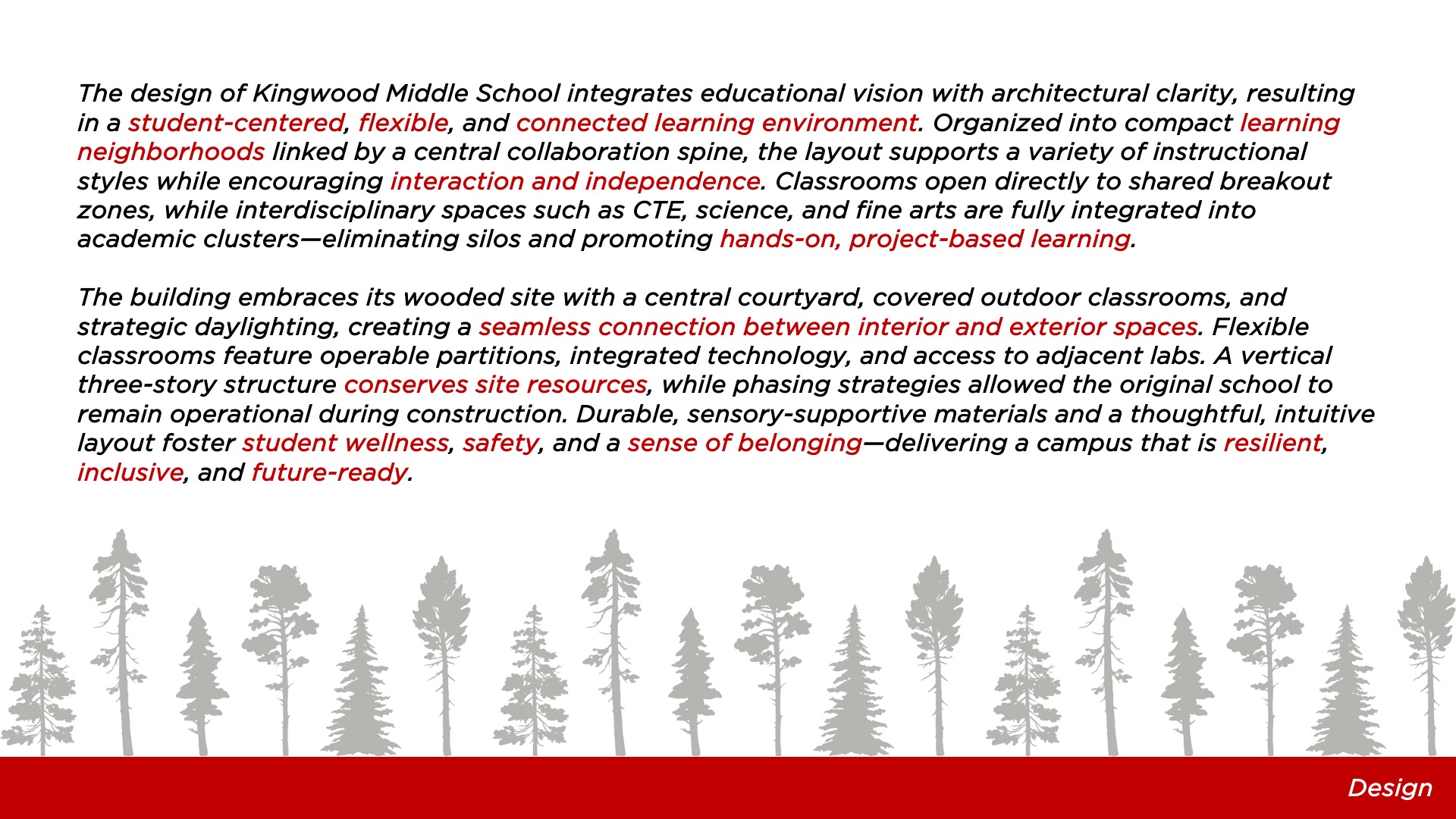
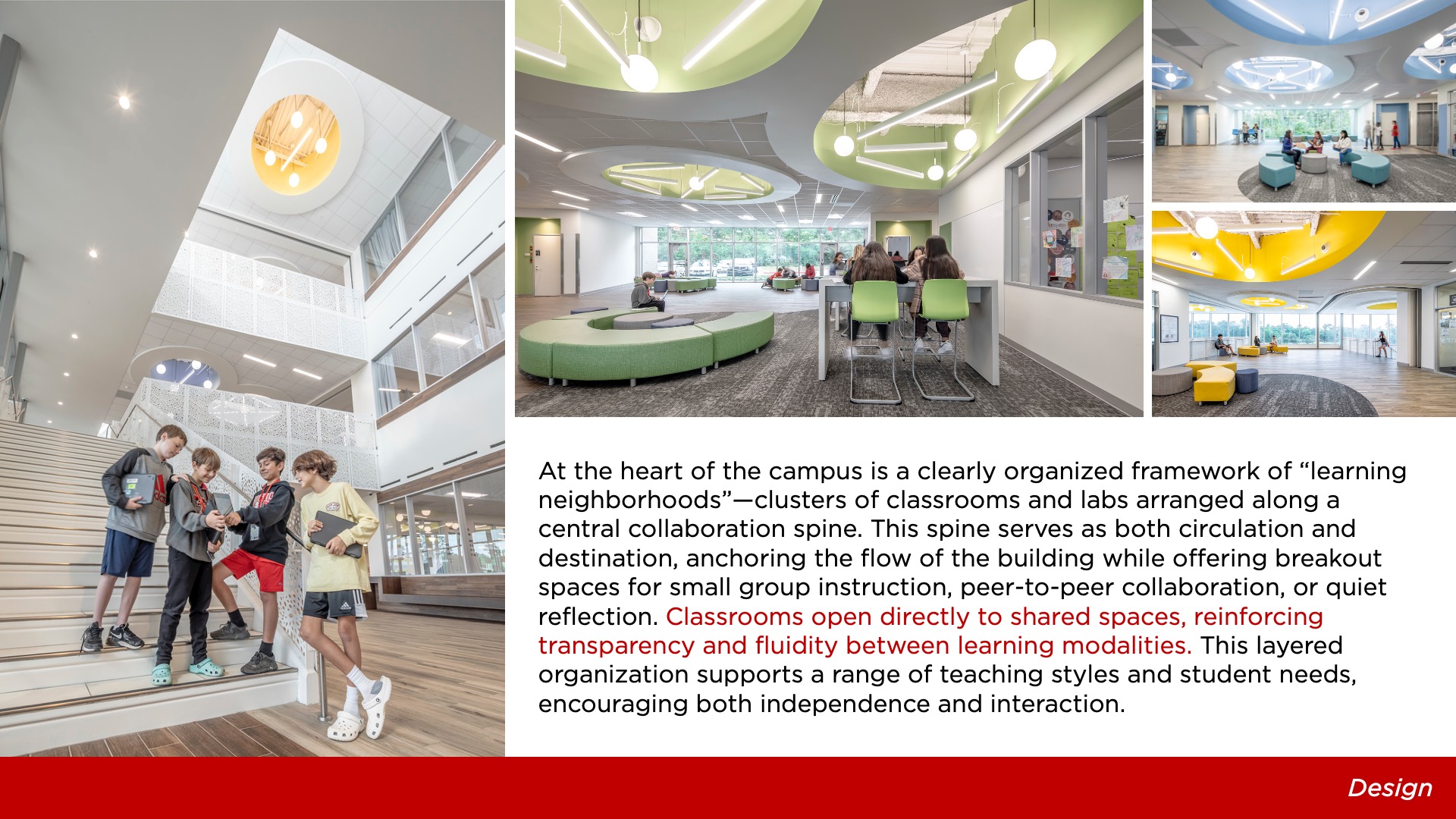
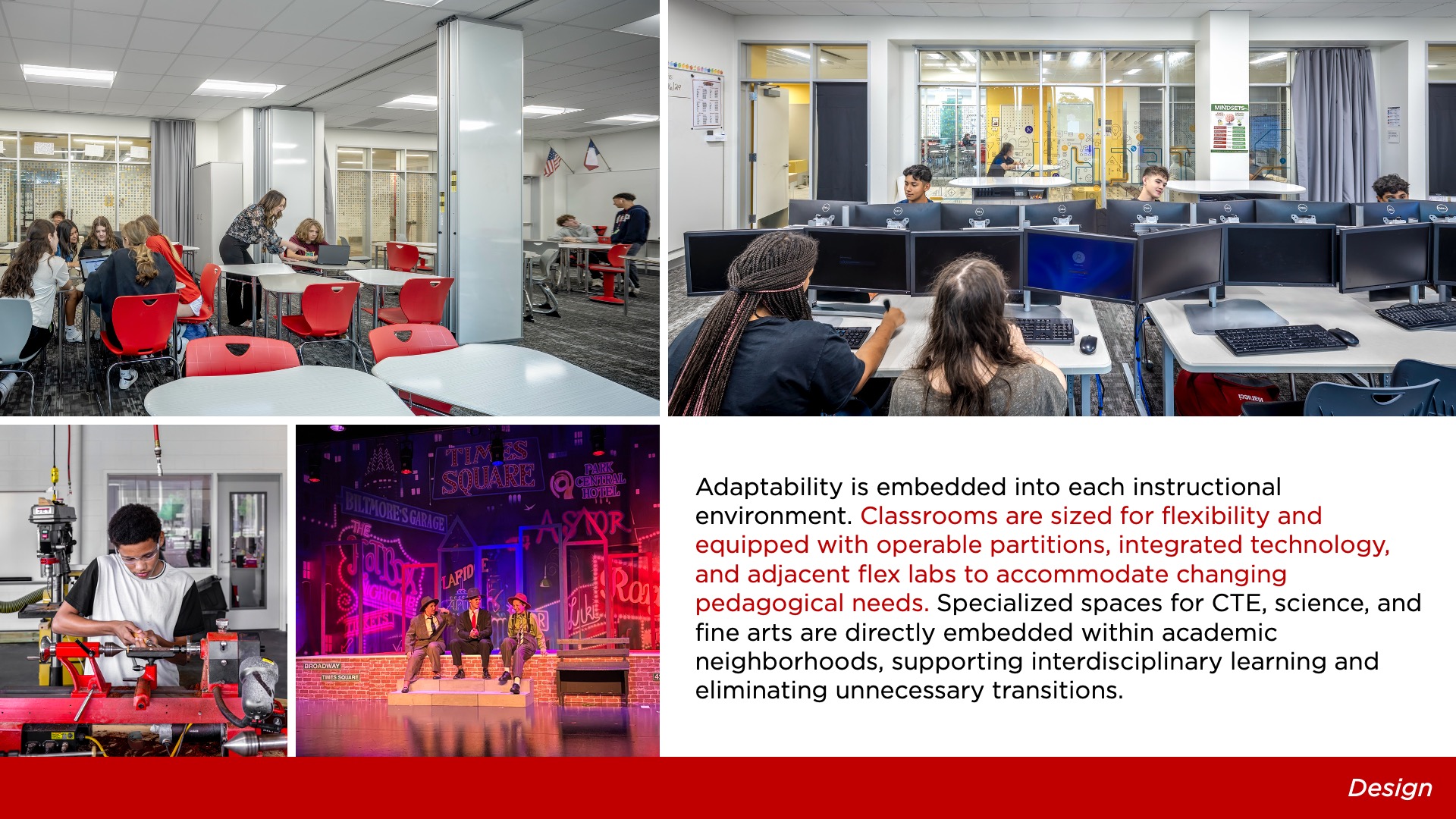
“The design of Kingwood Middle School integrates educational vision with architectural clarity, resulting in a student-centered, flexible, and connected learning environment. Organized into compact learning neighborhoods linked by a central collaboration spine, the layout supports a variety of instructional styles while encouraging interaction and independence. Classrooms open directly to shared breakout zones, while interdisciplinary spaces such as CTE, science, and fine arts are fully integrated into academic clusters—eliminating silos and promoting hands-on, project-based learning.
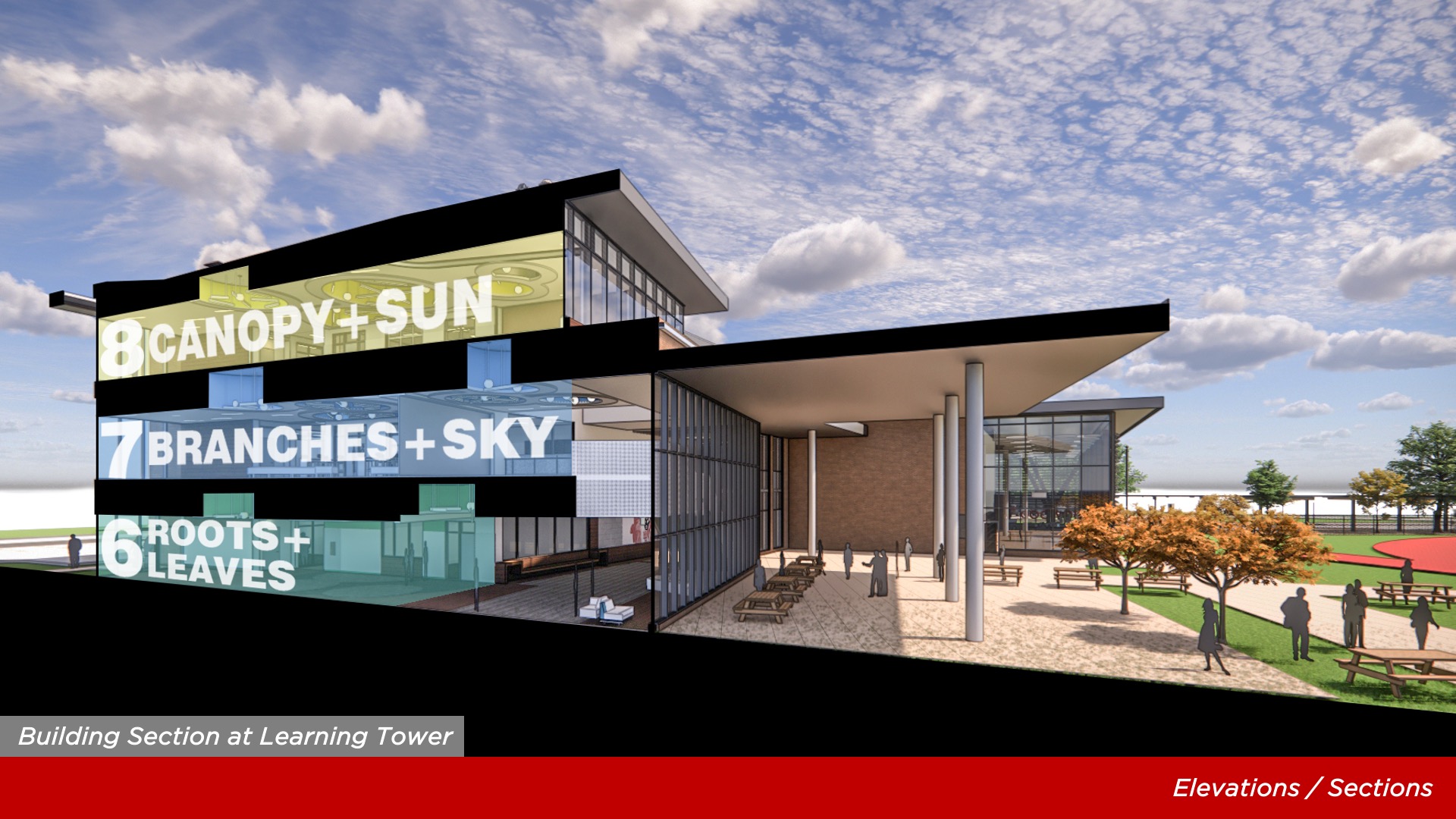
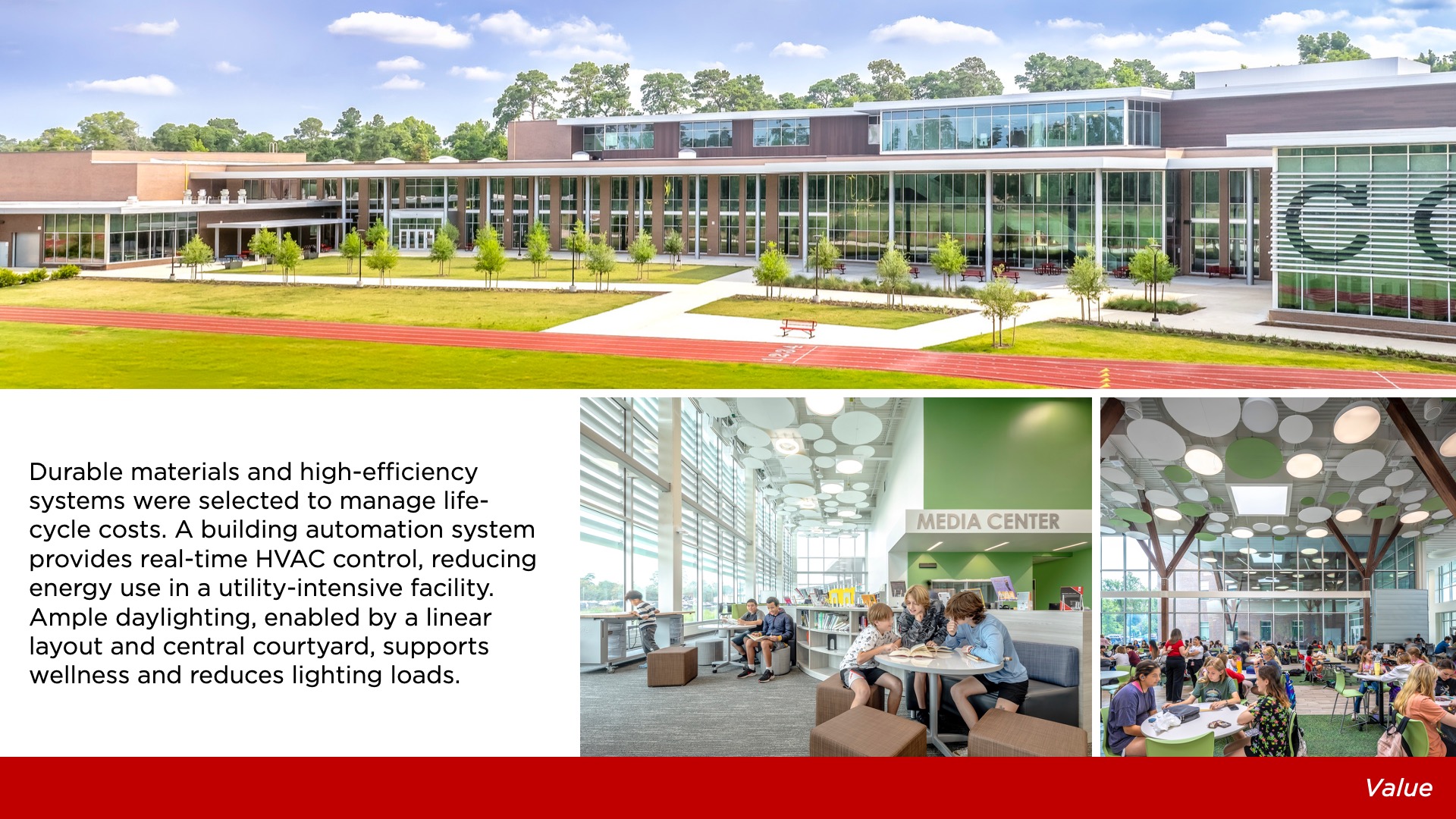
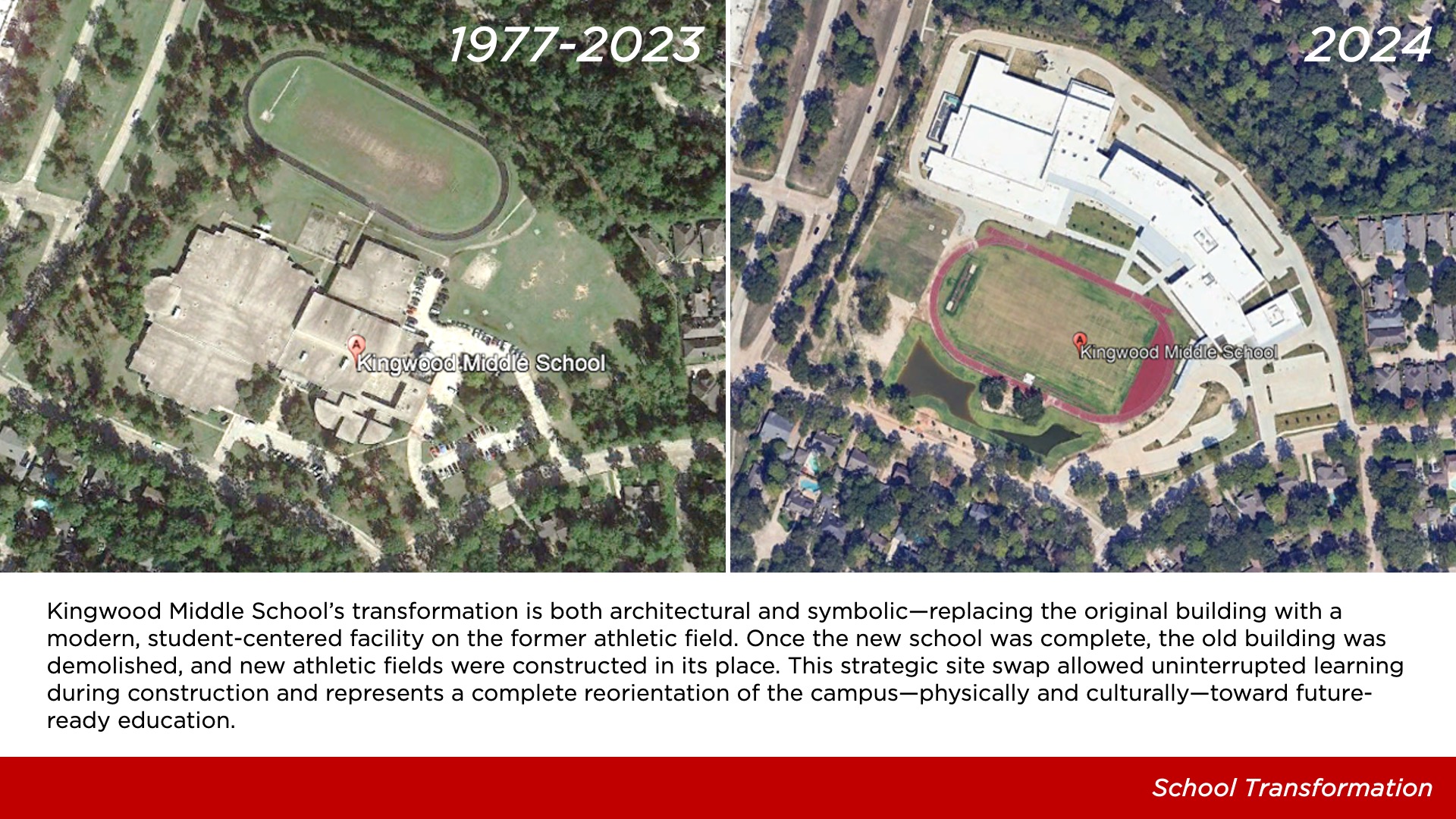
The building embraces its wooded site with a central courtyard, covered outdoor classrooms, and strategic daylighting, creating a seamless connection between interior and exterior spaces. Flexible classrooms feature operable partitions, integrated technology, and access to adjacent labs. A vertical three-story structure conserves site resources, while phasing strategies allowed the original school to remain operational during construction. Durable, sensory-supportive materials and a thoughtful, intuitive layout foster student wellness, safety, and a sense of belonging—delivering a campus that is resilient, inclusive, and future-ready.”
 Value
Value
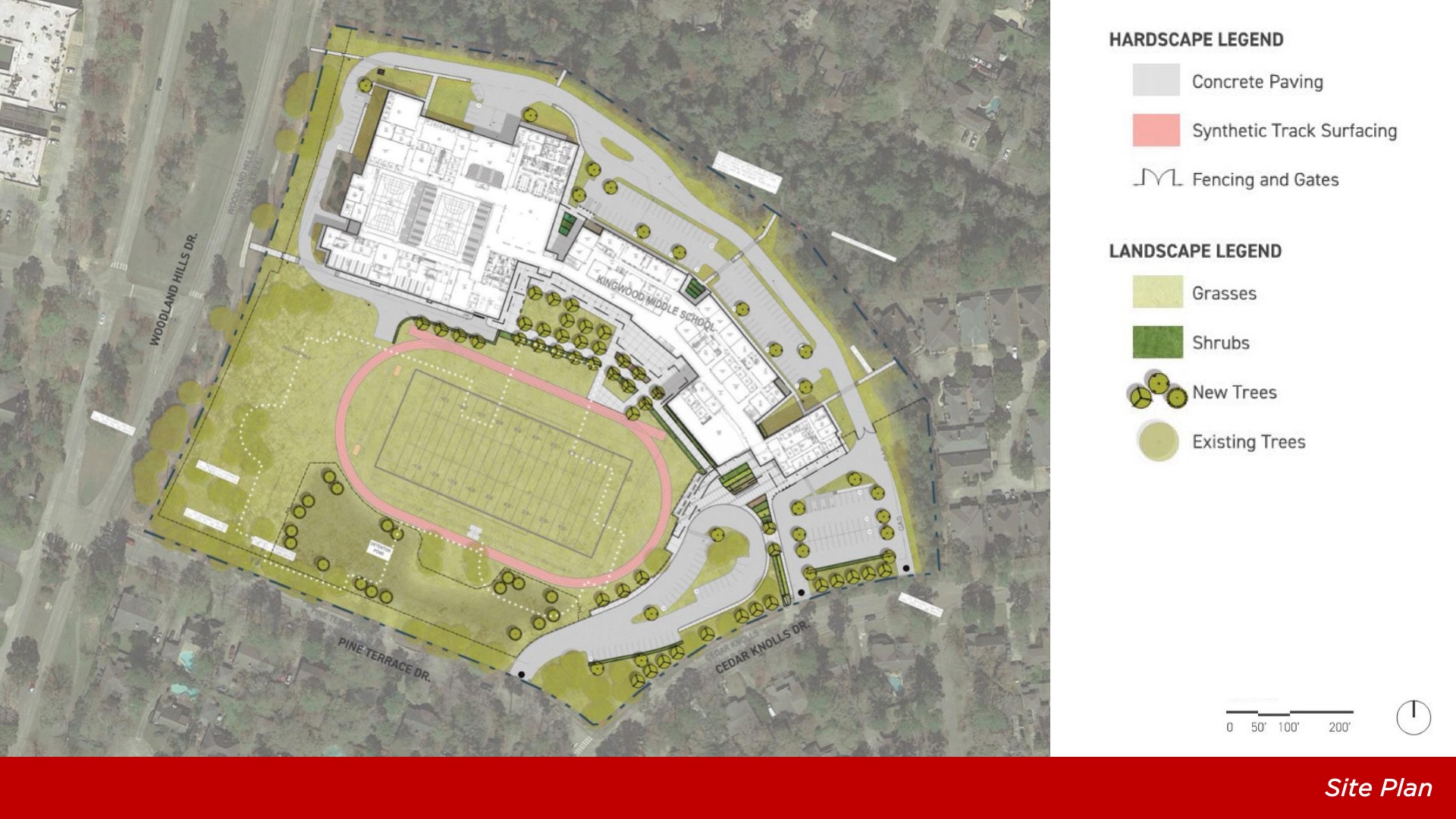
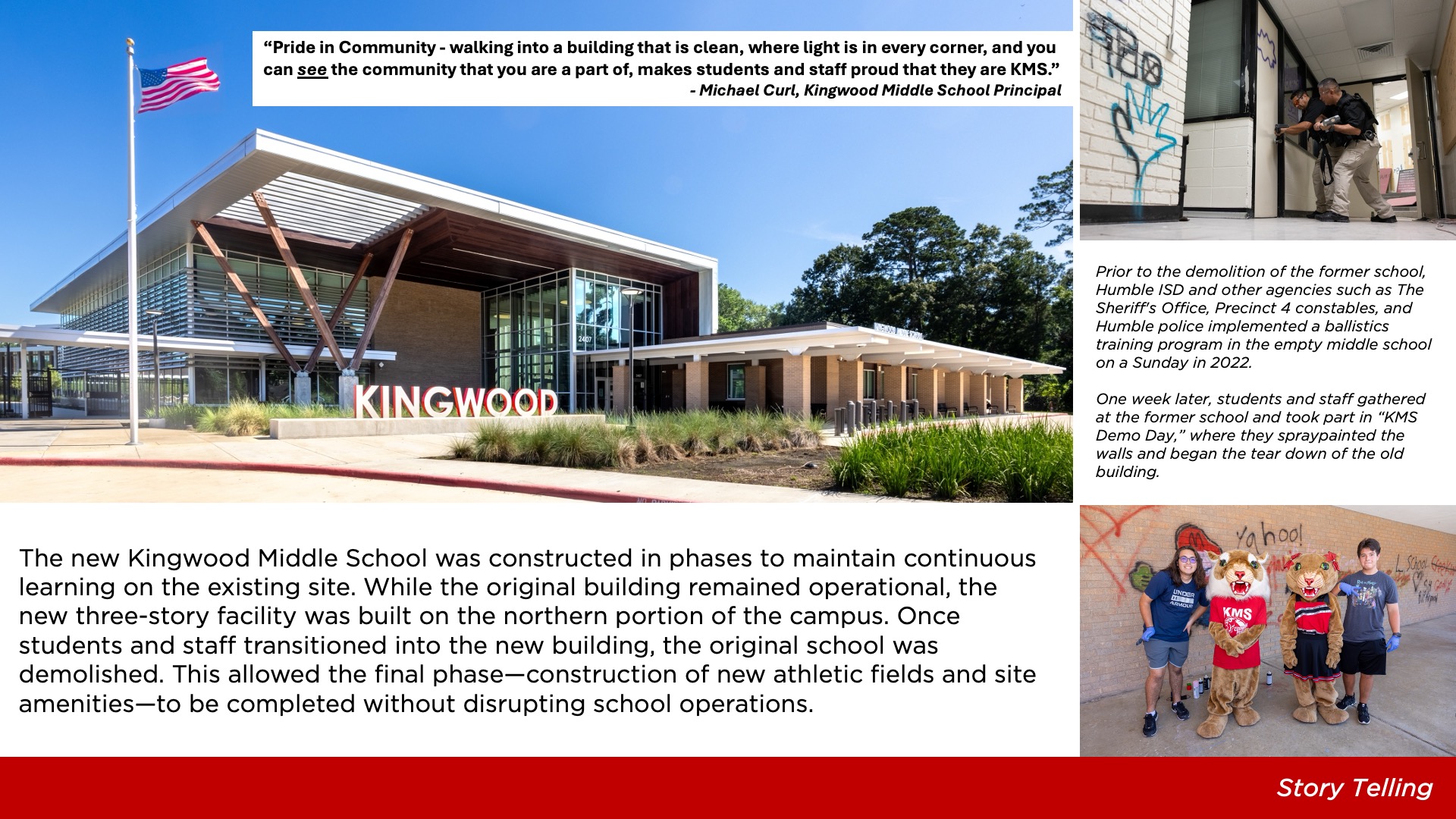
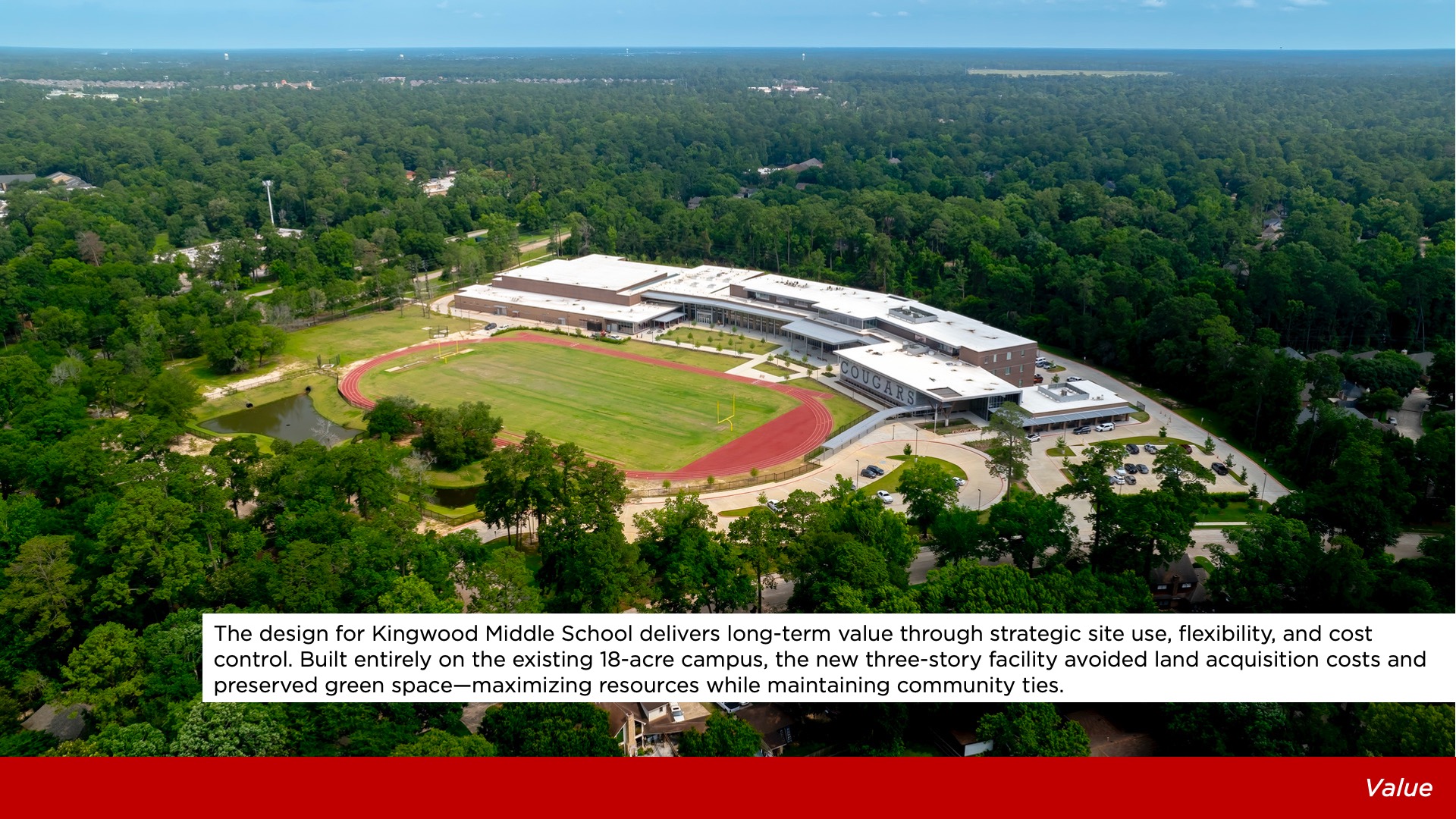
“The design of Kingwood Middle School reflects a value-driven approach focused on stewardship, adaptability, and long-term community benefit. Built entirely within the existing 18-acre site, the three-story structure preserved green space and eliminated land acquisition costs, reinforcing a commitment to sustainable development. Phased construction allowed the original school to remain operational throughout, minimizing disruption on a flood-prone site. Instructional neighborhoods were strategically arranged to streamline movement, improve supervision, and support efficient daily operations.
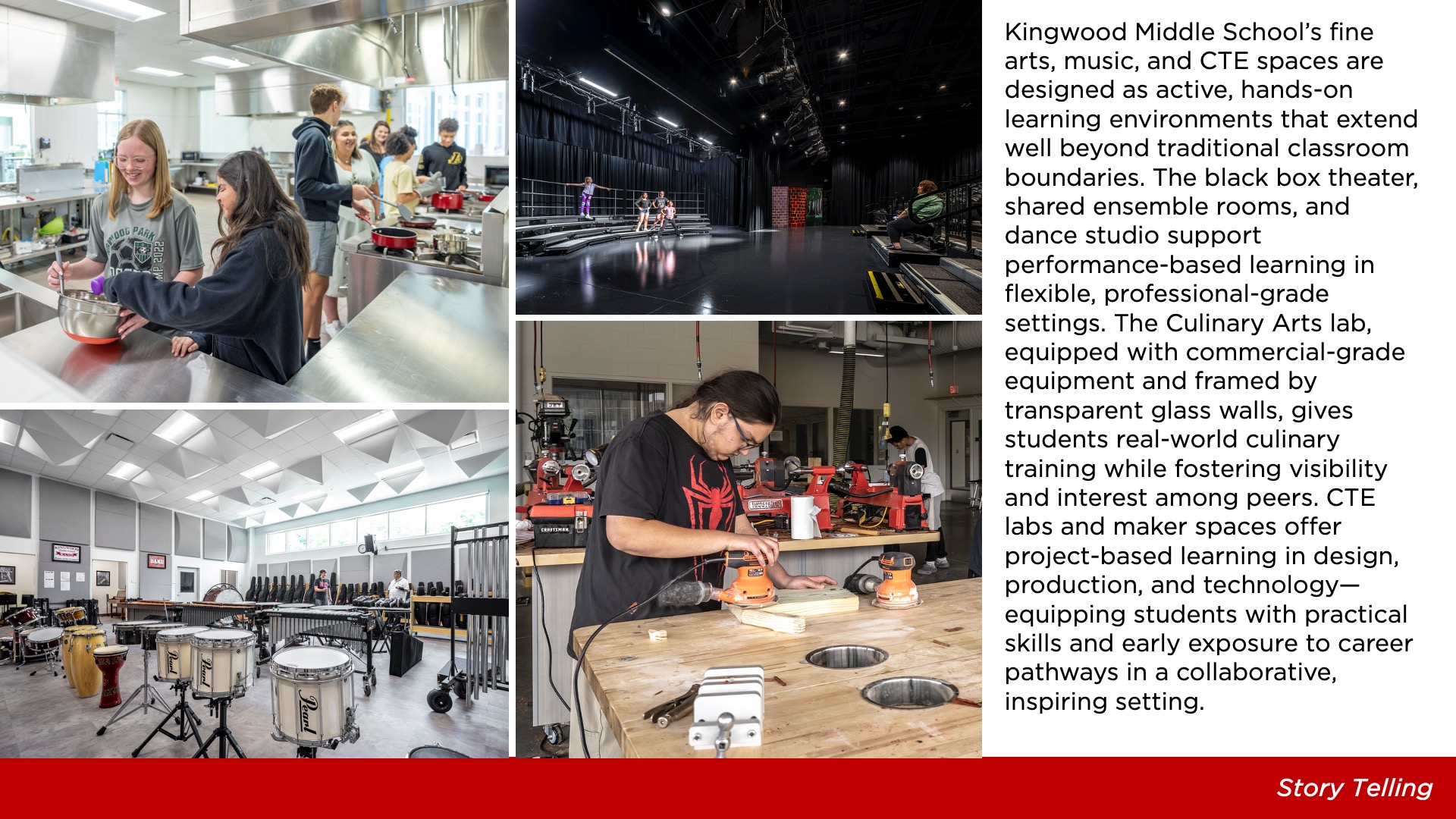
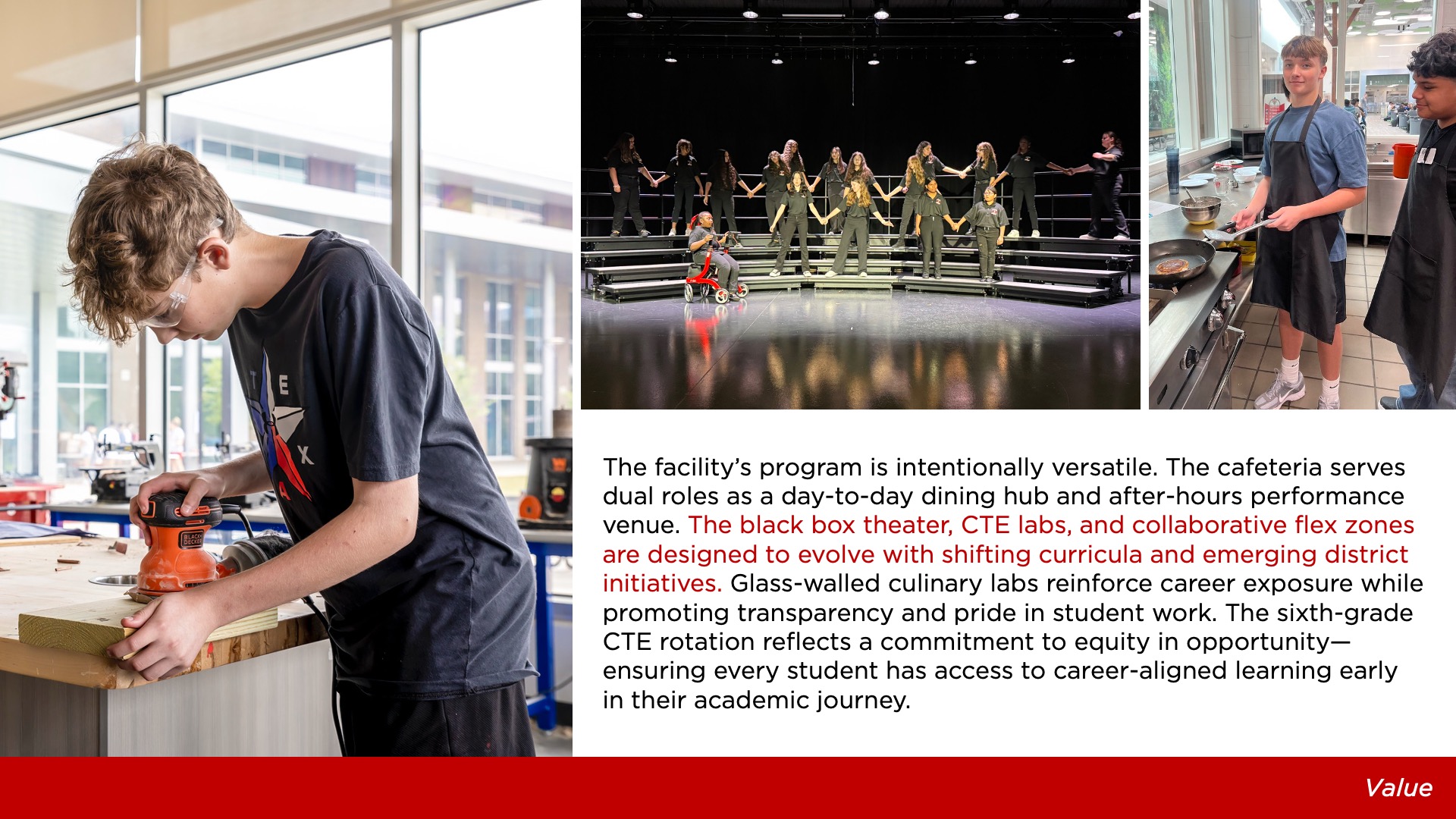
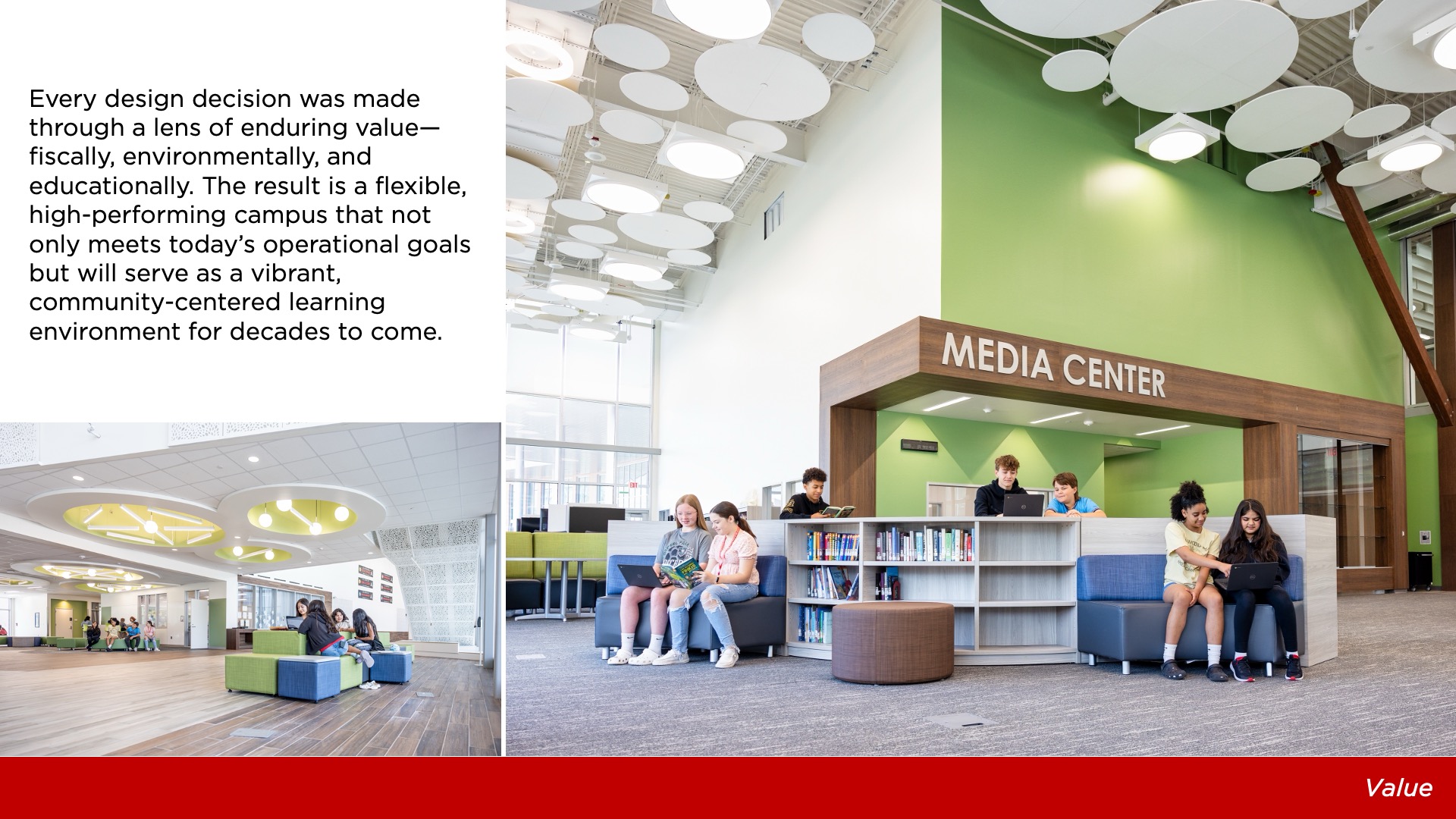
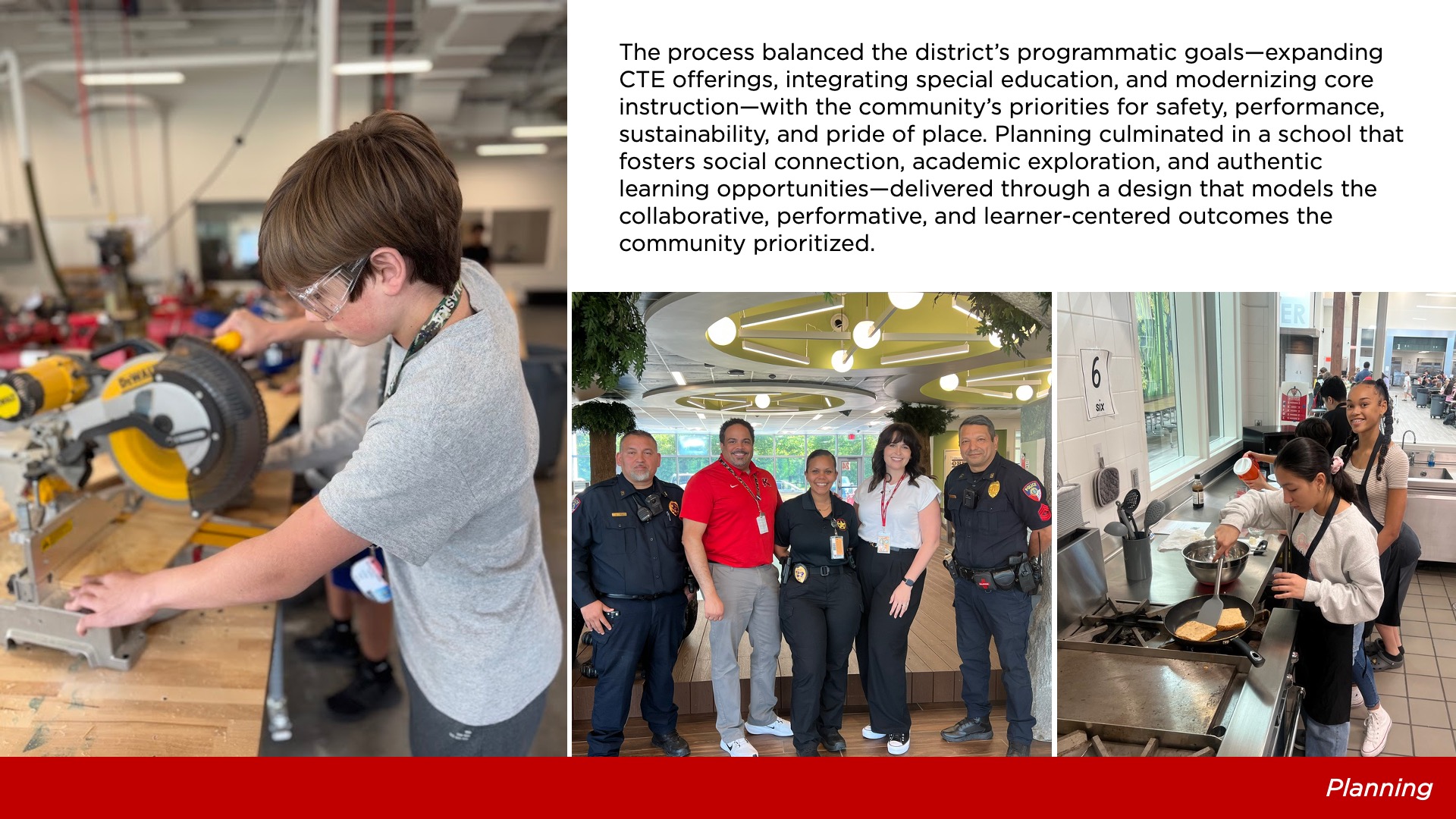
Versatility defines the program, with multipurpose spaces like a dual-use cafeteria, black box theater, and flexible CTE labs designed to evolve with changing curricular needs. A sixth-grade CTE rotation ensures early exposure to career pathways, supporting equity and engagement. Systems and materials were selected for durability, efficiency, and long-term cost control, including real-time building automation and strategic daylighting. The result is a future-ready, high-performing campus that delivers lasting educational, operational, and environmental value.”
 Wellness
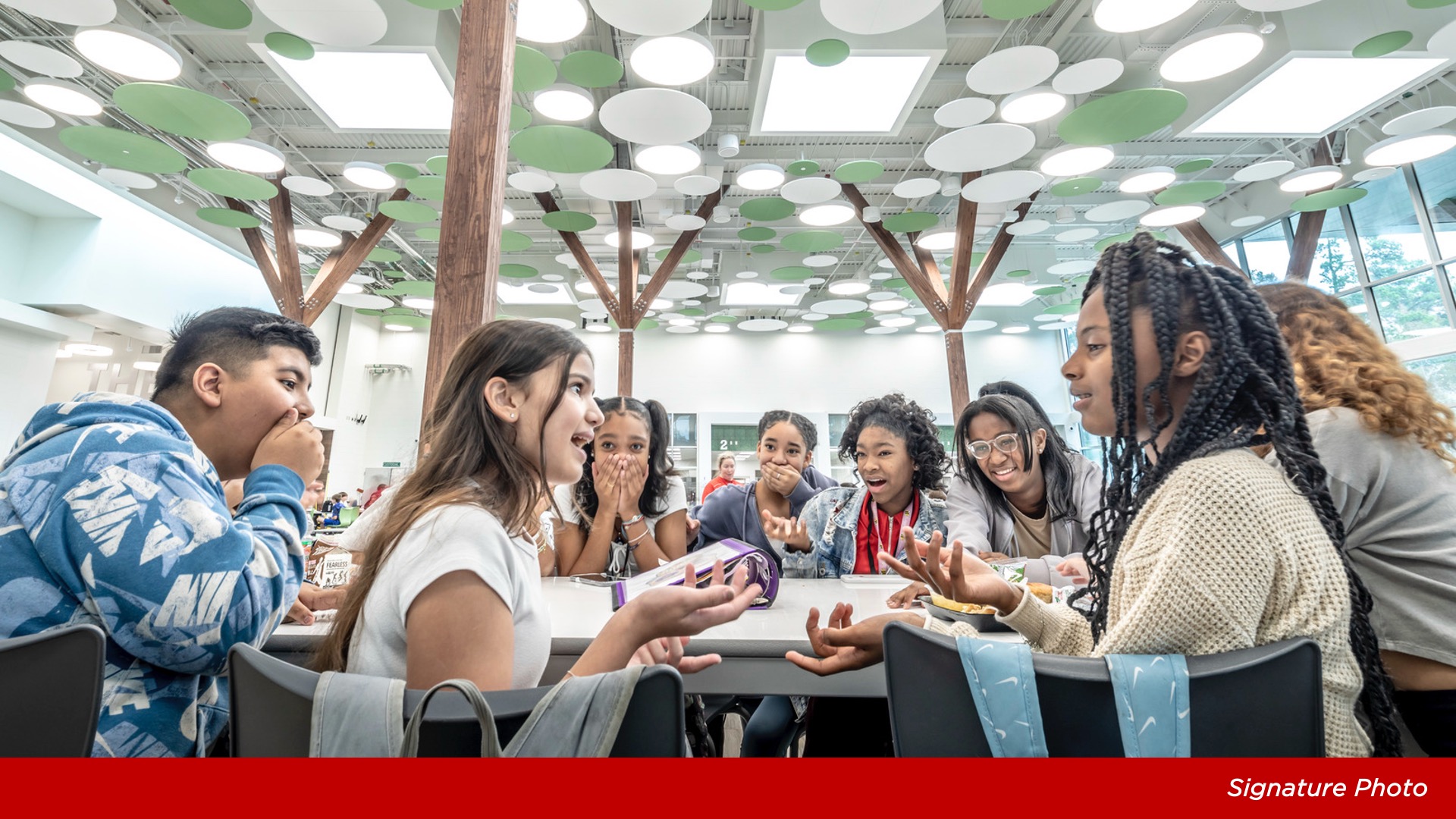
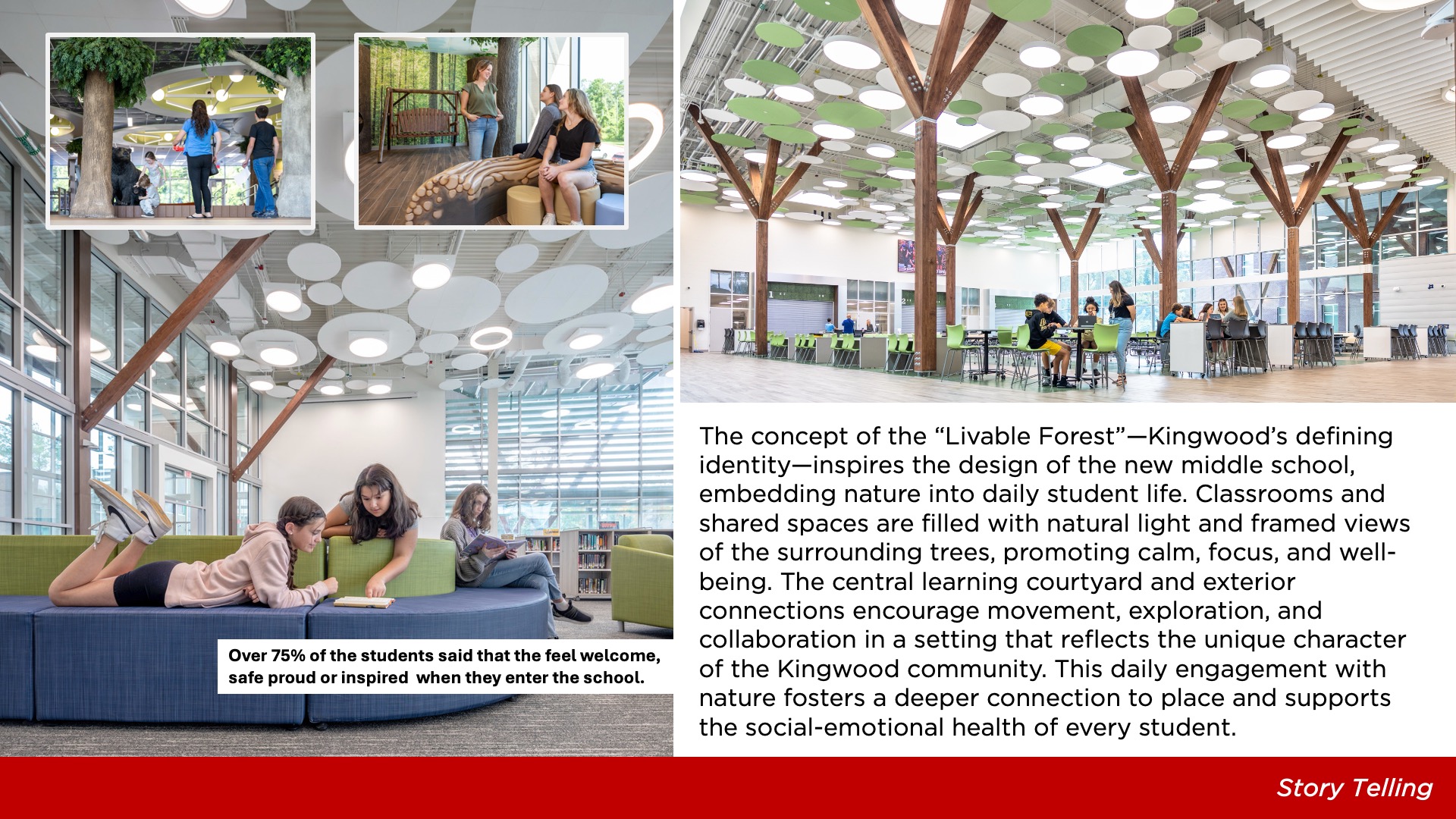
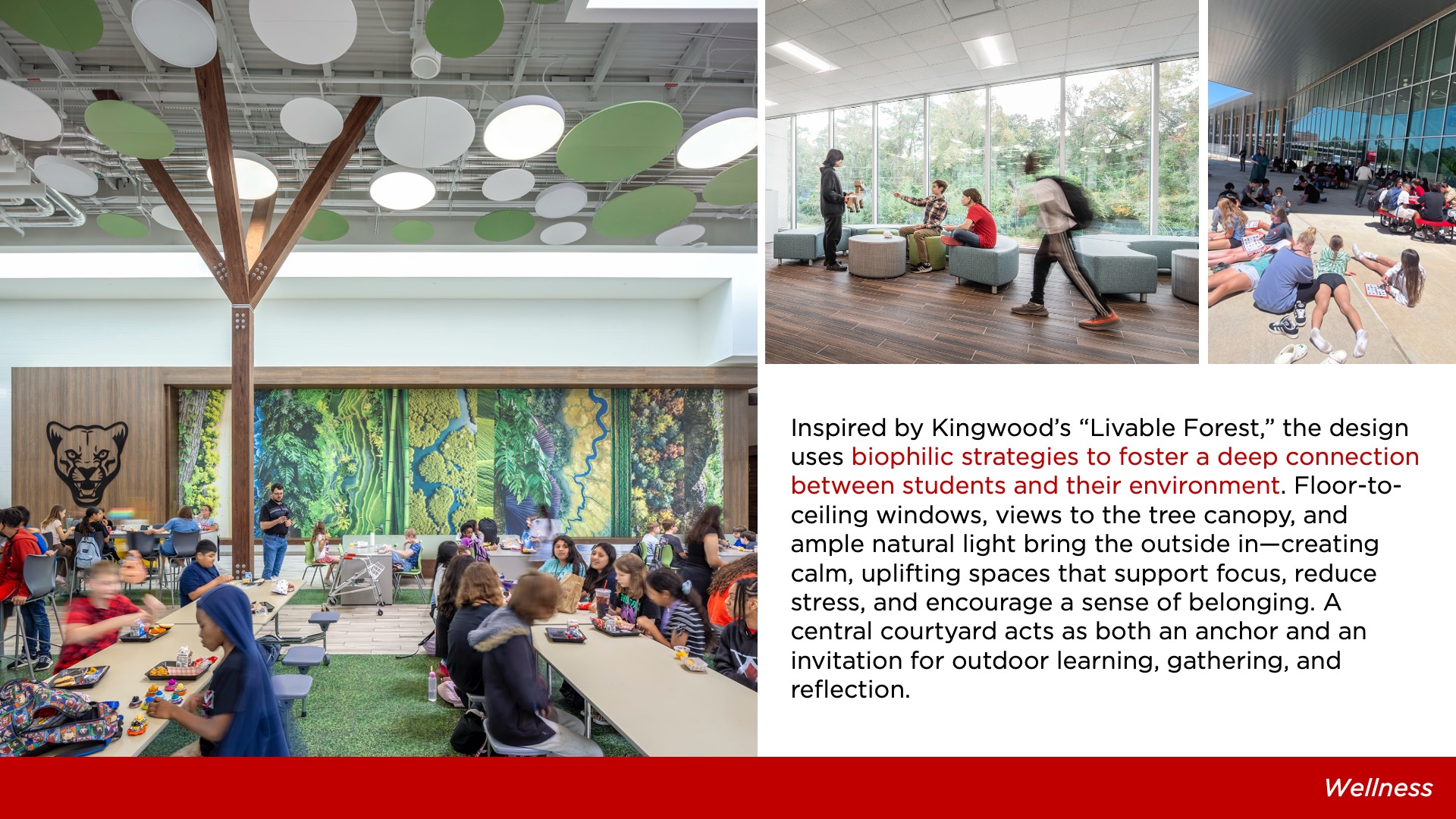
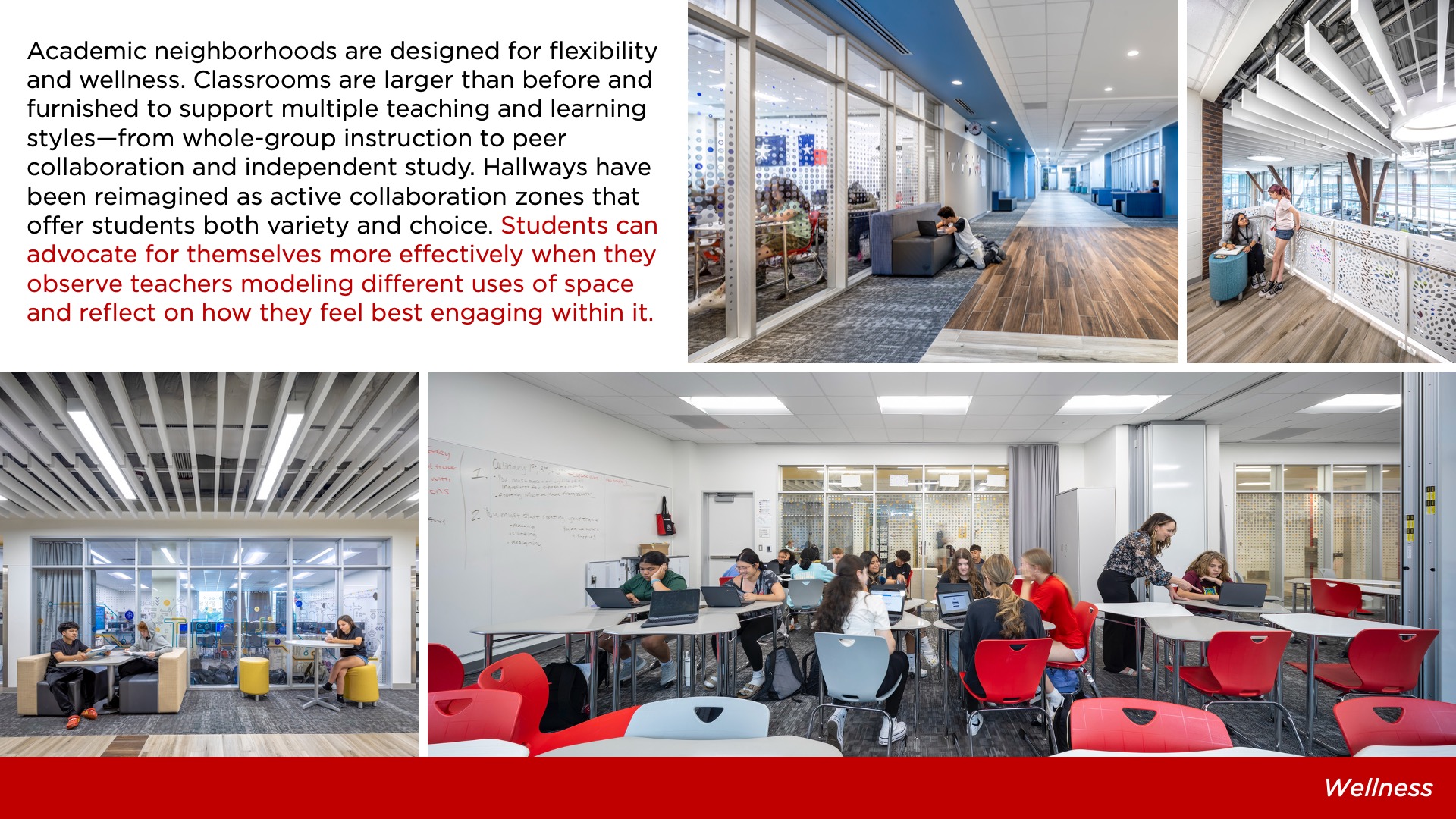
“Wellness at Kingwood Middle School is embedded in every aspect of the campus, supporting the whole child through environmental, physical, emotional, and cognitive design strategies. Inspired by the surrounding “Livable Forest,” the building uses biophilic design—natural light, tree canopy views, and a central courtyard—to create calming, connected learning environments. Classrooms are spacious and flexible, and hallways double as collaboration zones, offering choice and comfort throughout the school day.
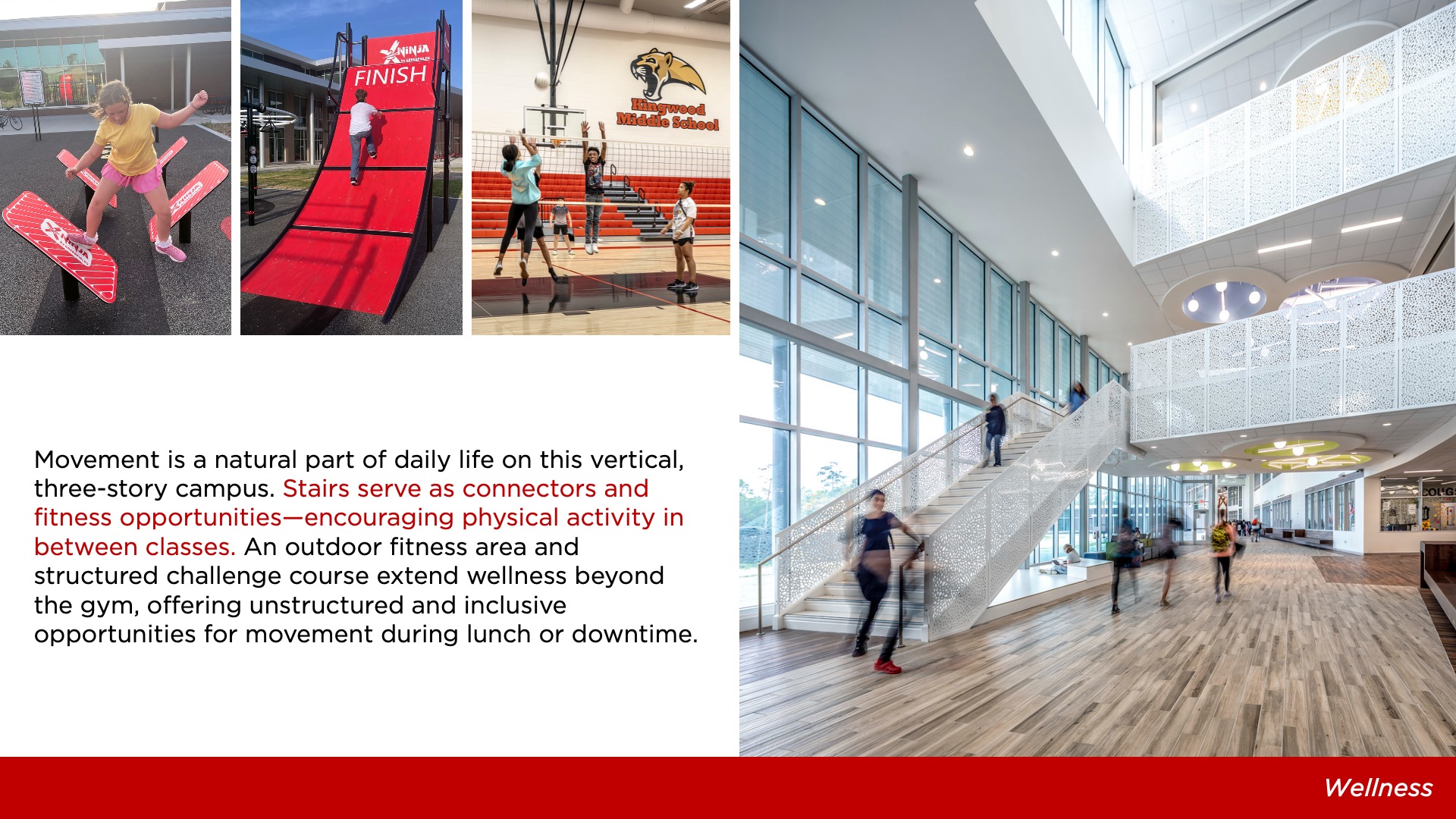
Movement and nourishment are seamlessly integrated into the student experience. The three-story layout encourages physical activity, supported by an outdoor fitness zone and challenge course. The centrally located dining commons doubles as a performance space, reinforcing positive social experiences, while glass-front Culinary Arts labs showcase hands-on, career-connected learning. Inclusive by design, the school weaves AVID, Special Education, and CTE programs into its core—creating a supportive, accessible, and tech-rich environment where all students can thrive.”
Community
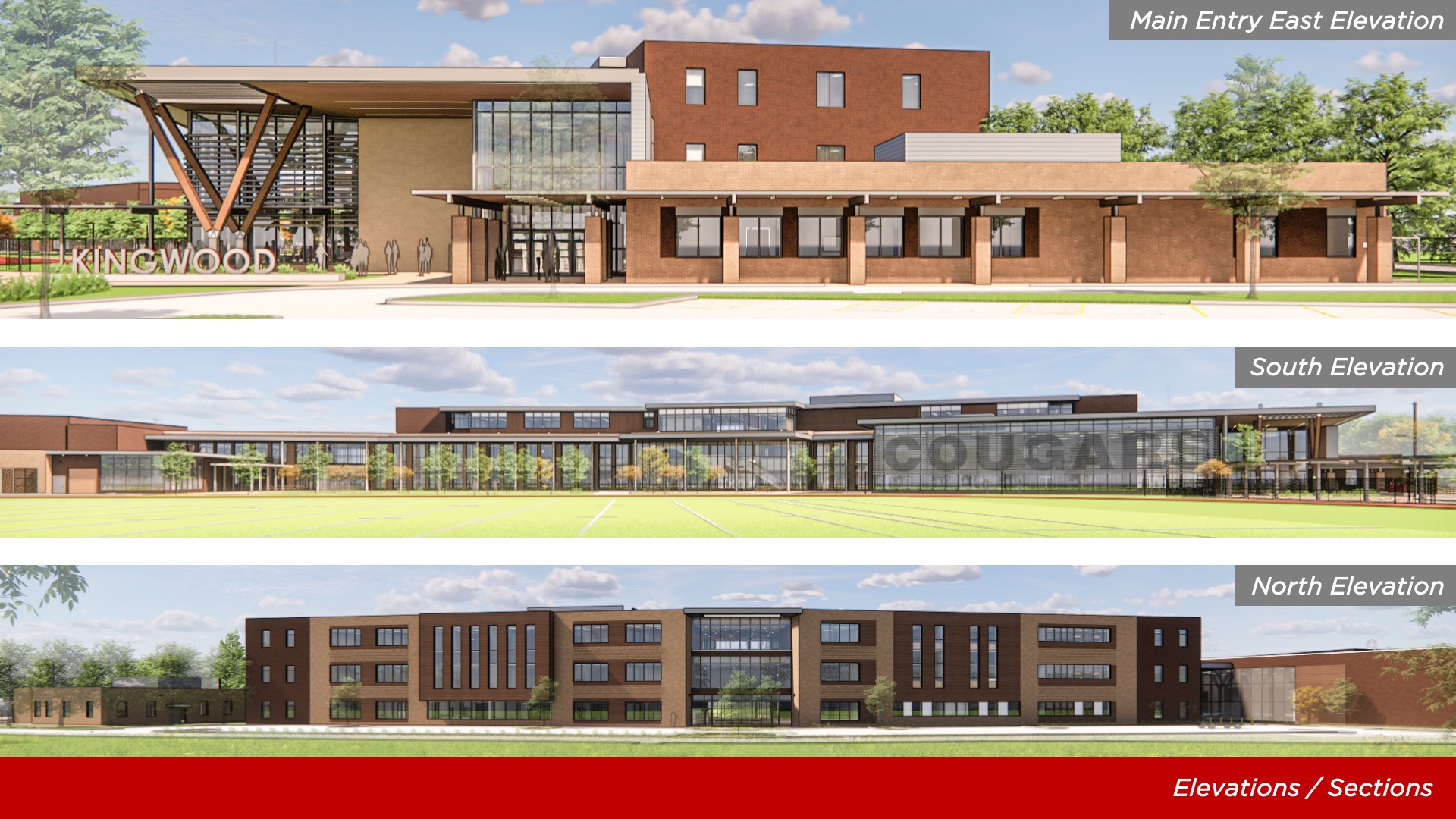
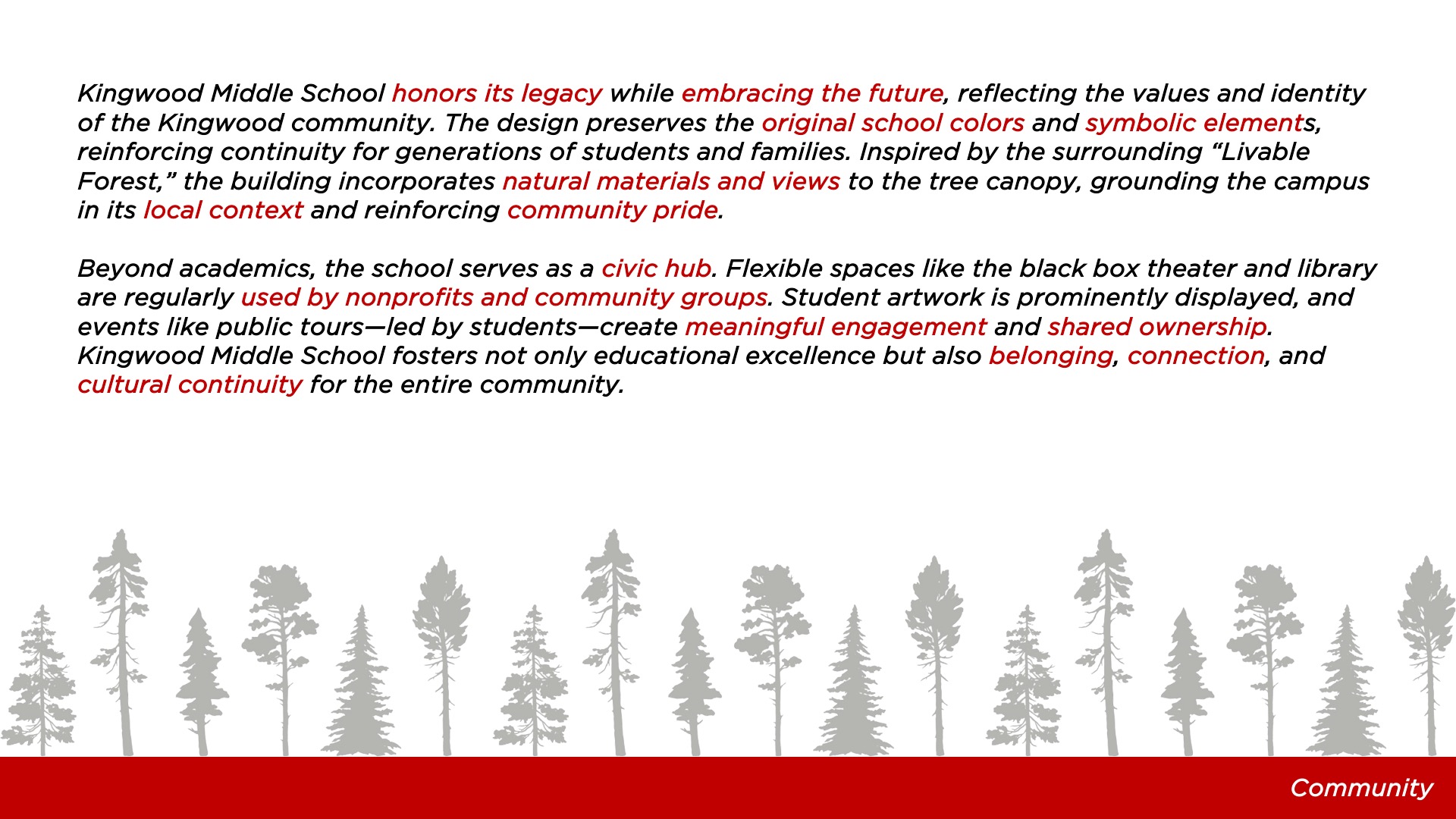
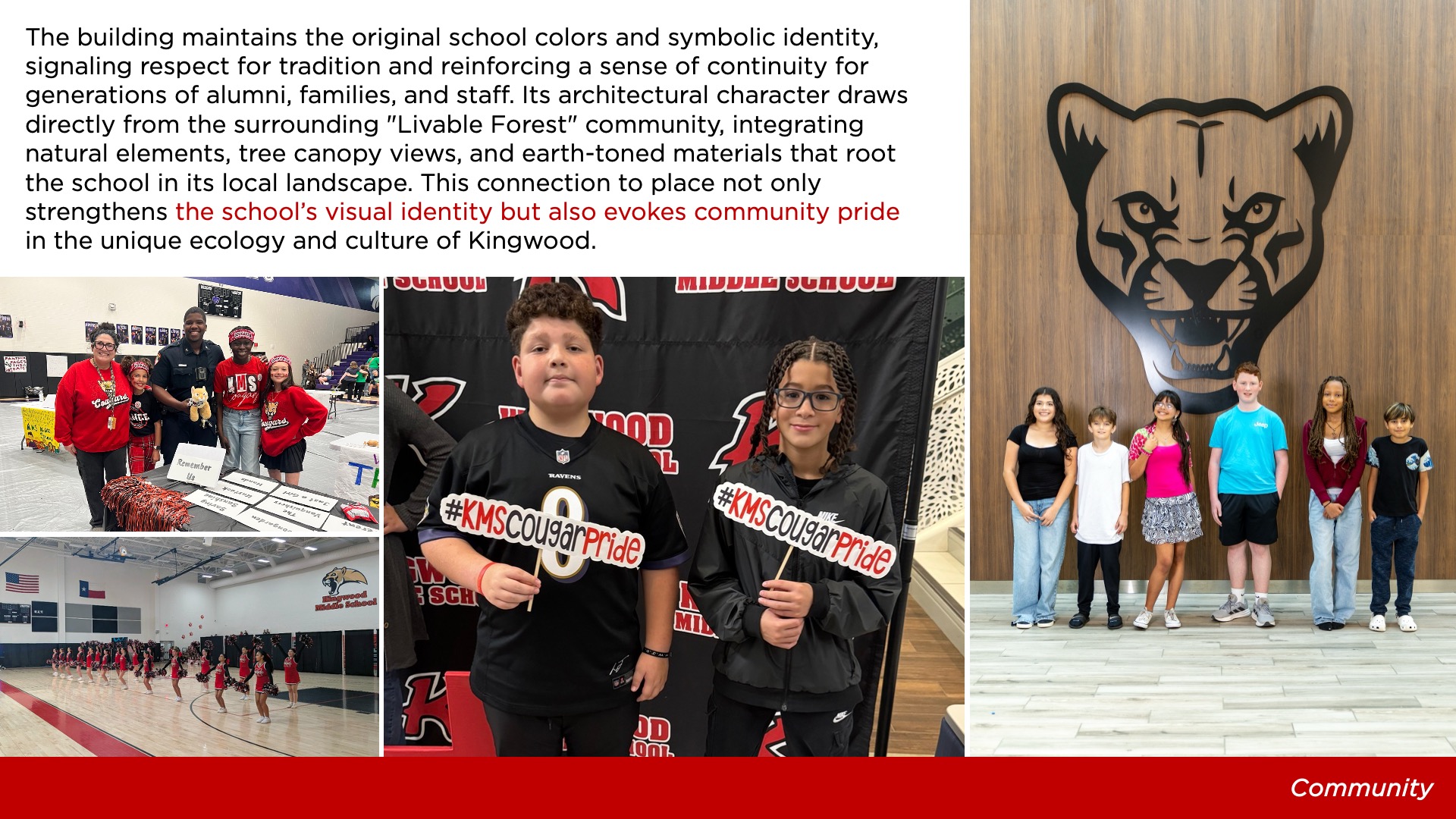
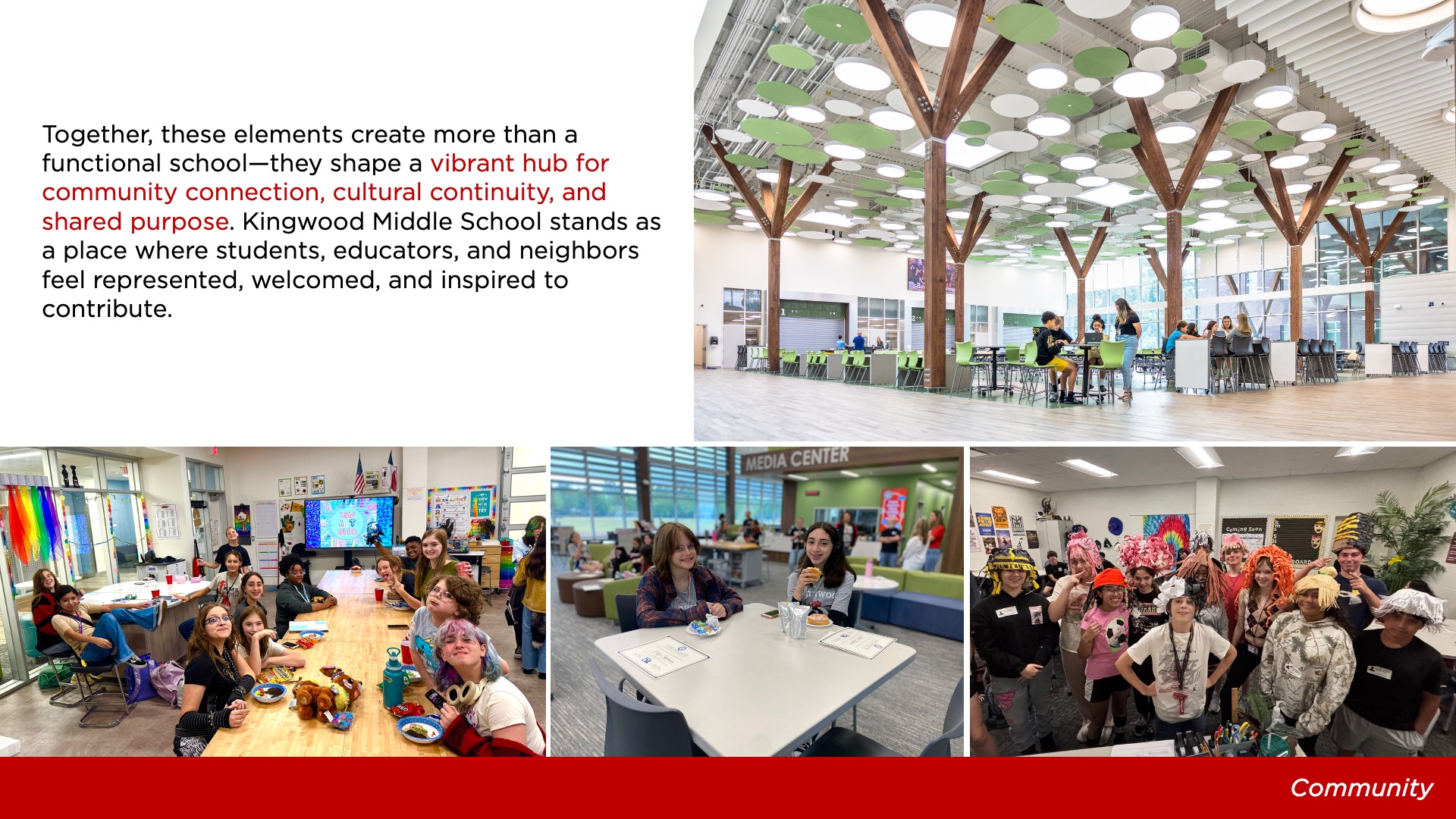
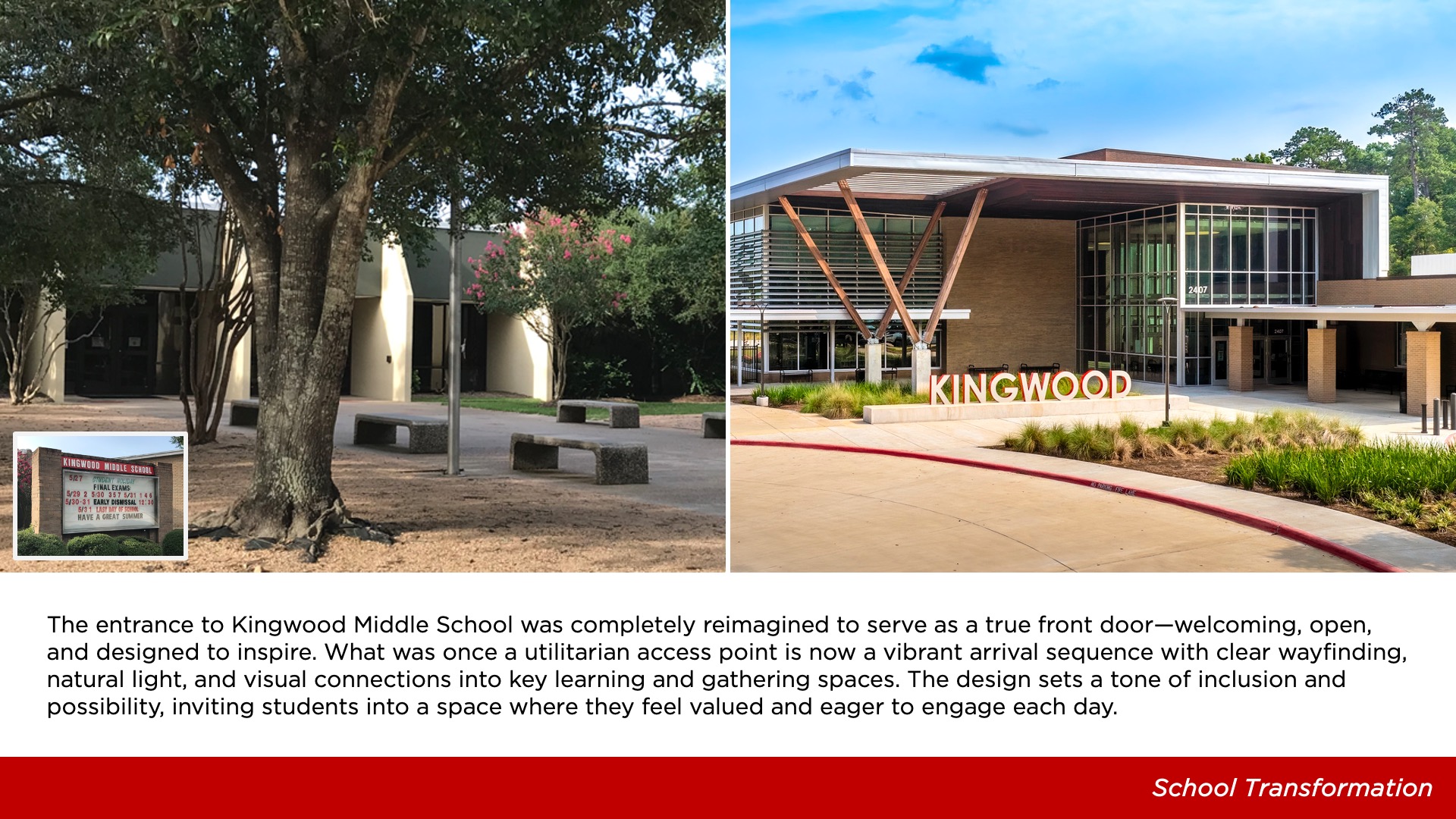
“Kingwood Middle School honors its legacy while embracing the future, reflecting the values and identity of the Kingwood community. The design preserves the original school colors and symbolic elements, reinforcing continuity for generations of students and families. Inspired by the surrounding “Livable Forest,” the building incorporates natural materials and views to the tree canopy, grounding the campus in its local context and reinforcing community pride.
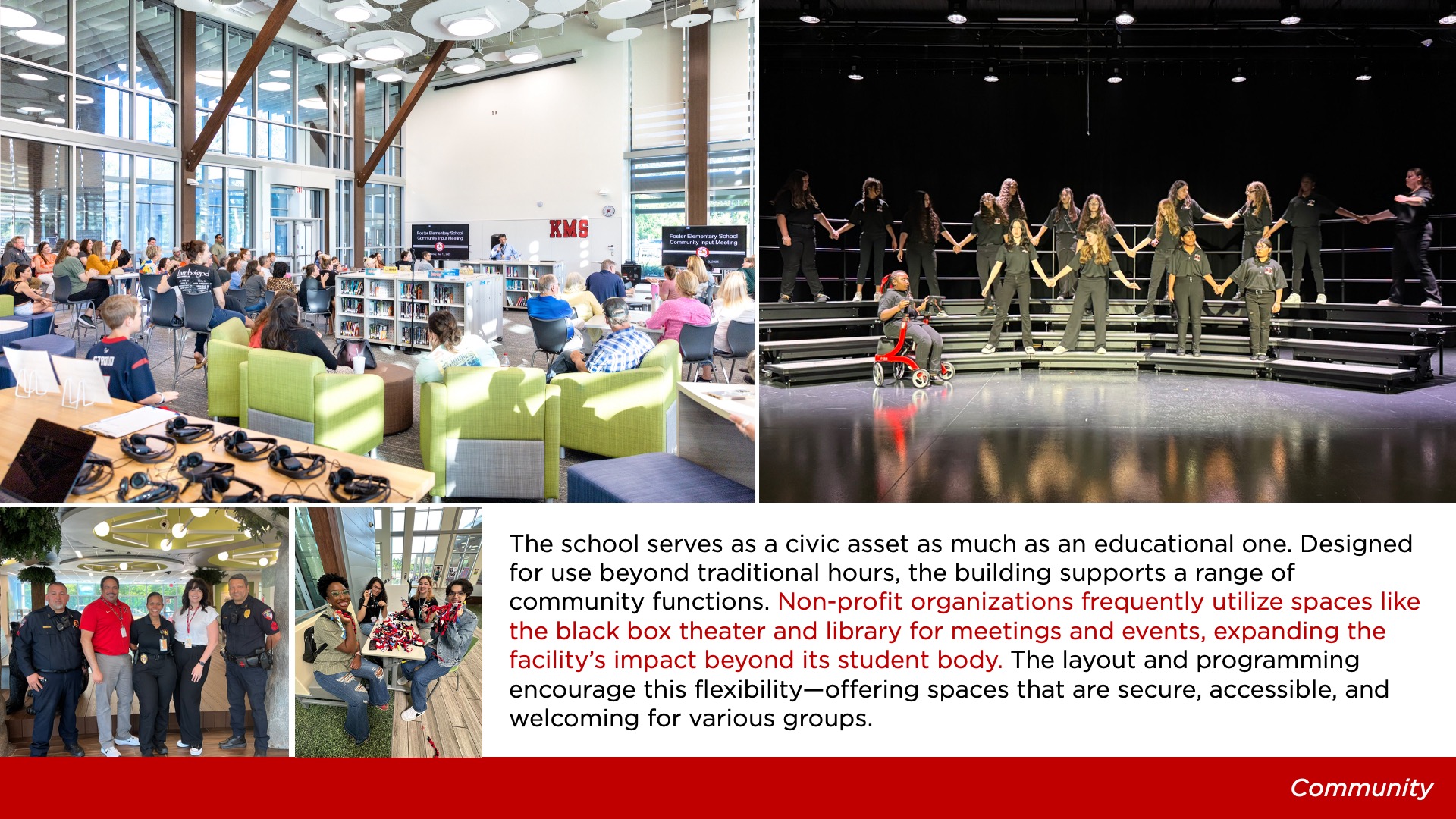
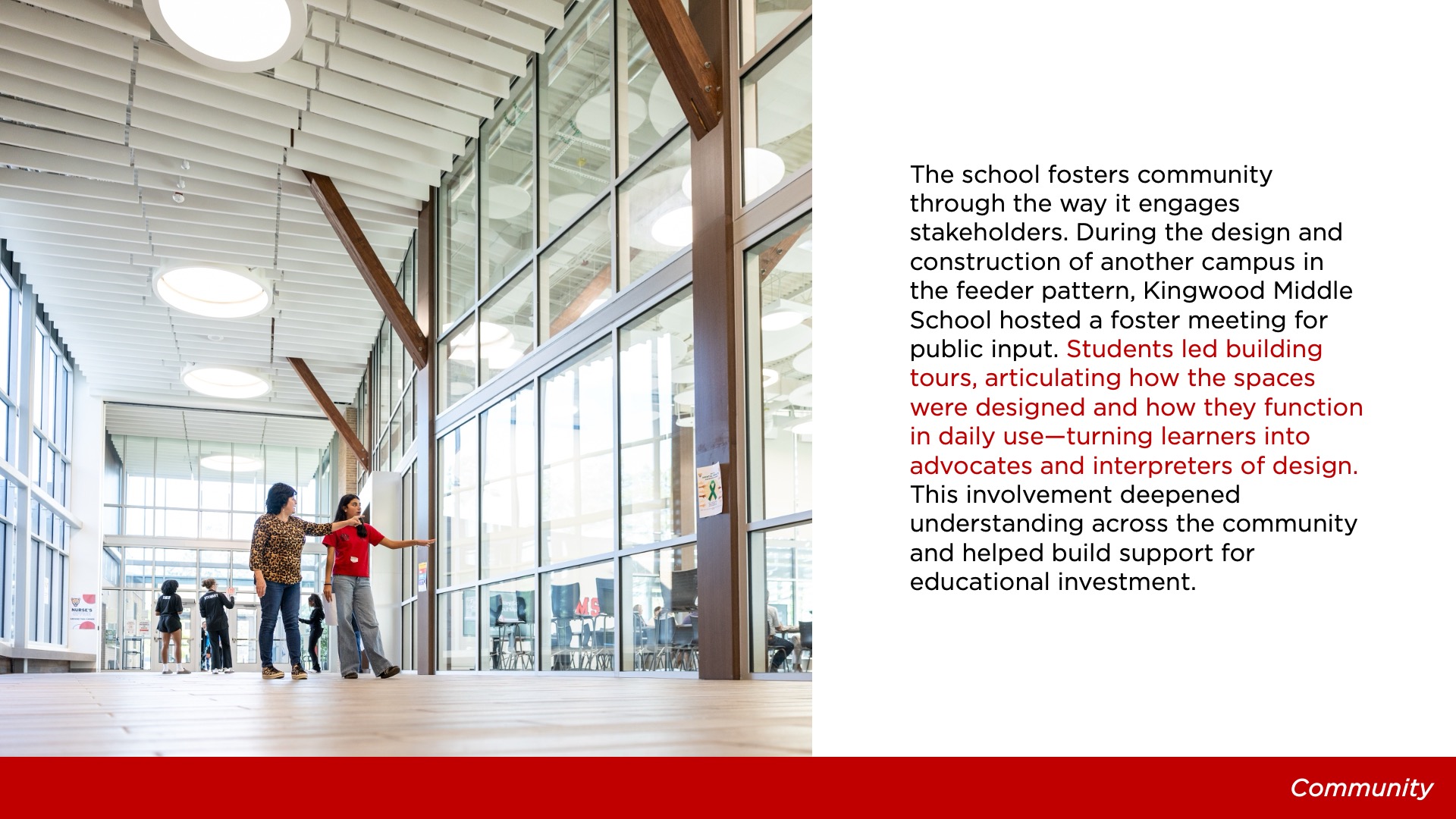
Beyond academics, the school serves as a civic hub. Flexible spaces like the black box theater and library are regularly used by nonprofits and community groups. Student artwork is prominently displayed, and events like public tours—led by students—create meaningful engagement and shared ownership. Kingwood Middle School fosters not only educational excellence but also belonging, connection, and cultural continuity for the entire community.”
 Planning
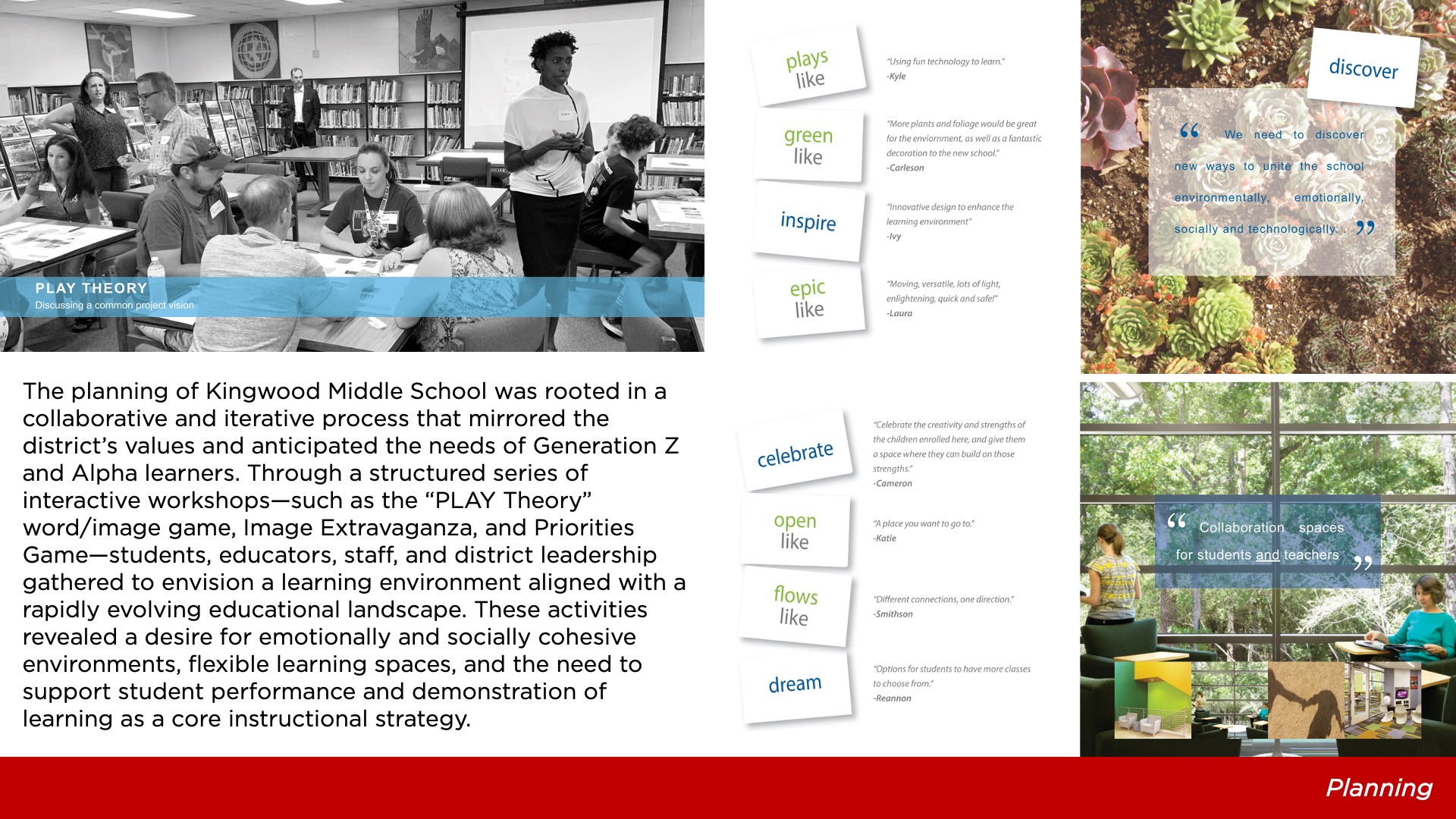
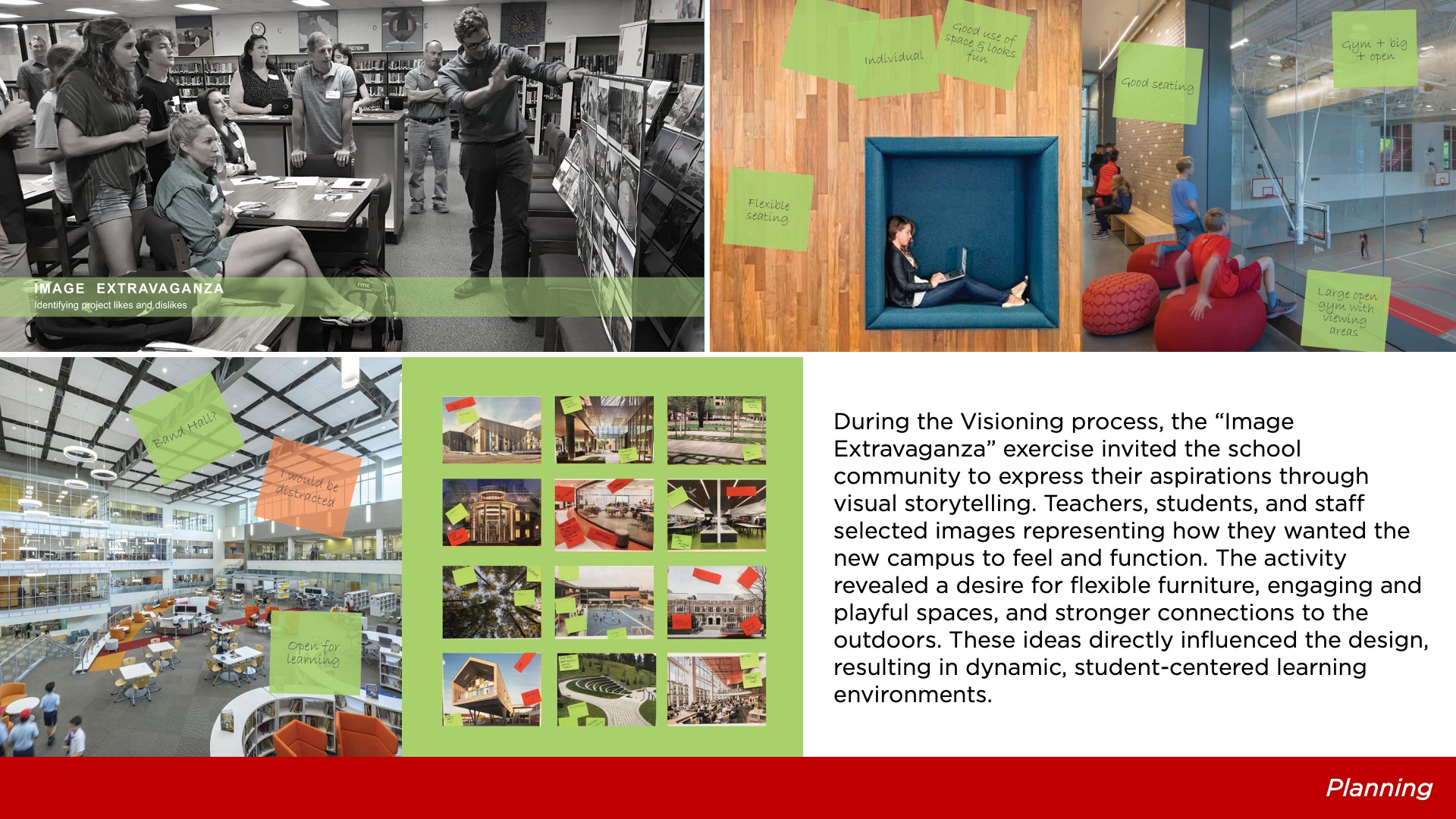
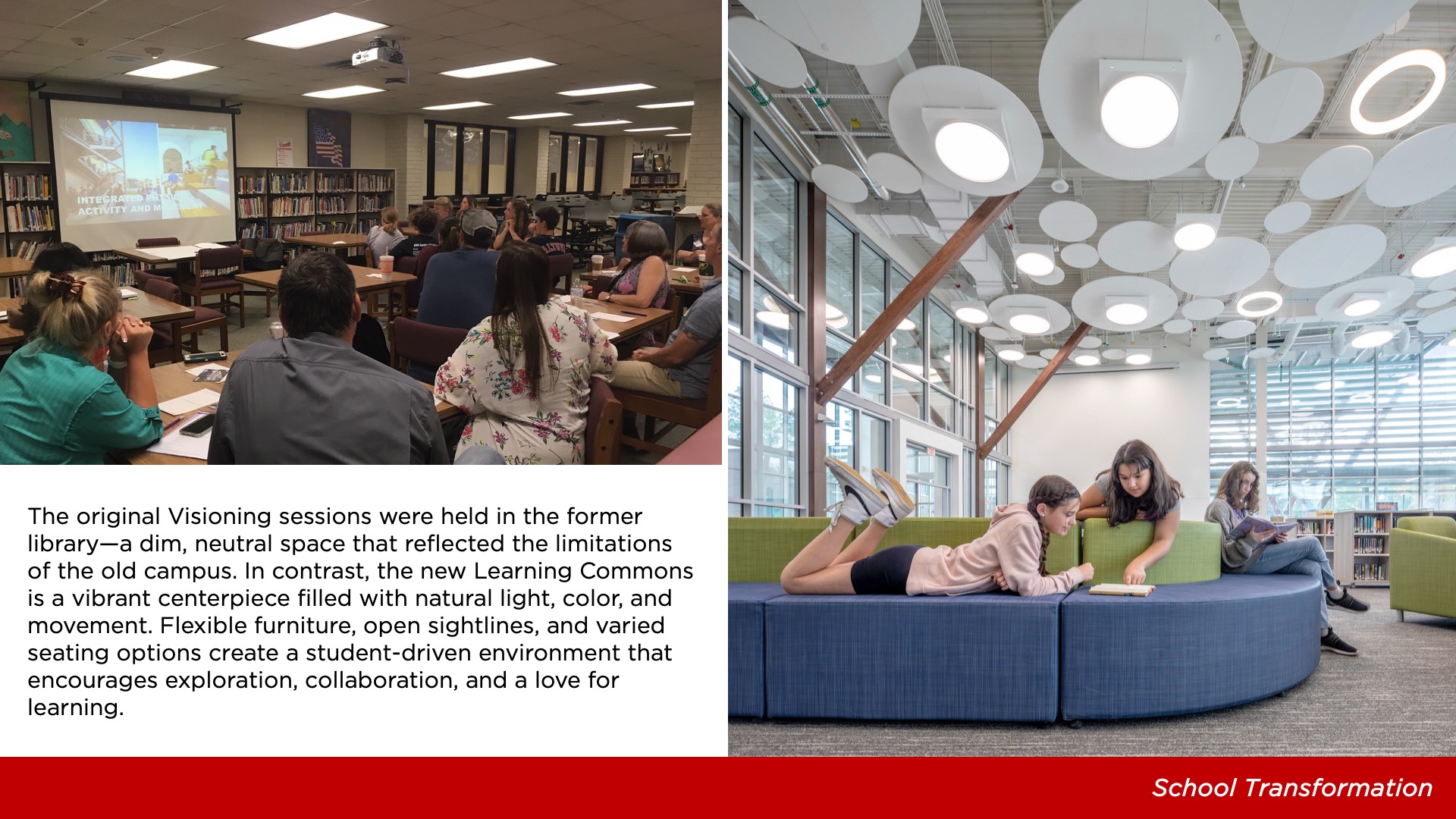
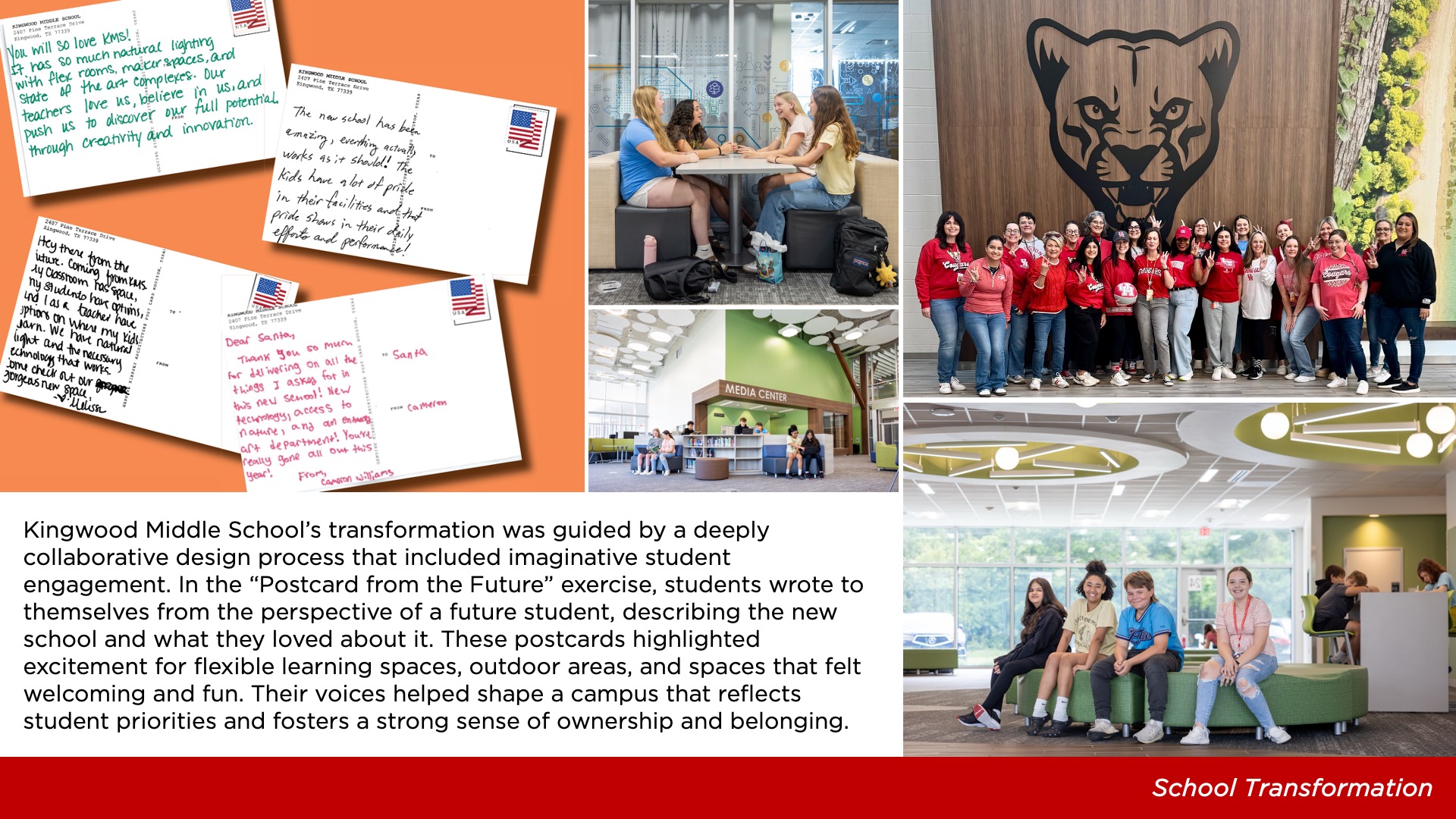
“Planning for Kingwood Middle School was shaped by a collaborative, future-focused process that brought together educators, students, families, and community members. Visioning sessions encouraged participants to imagine learning environments that foster 21st-century skills like collaboration, creativity, and critical thinking. Key themes—flexibility, natural light, outdoor learning, and wellness—emerged from these workshops and became foundational to the design, resulting in a school that supports whole-child development and long-term community investment.
Community input directly informed the layout, which clusters classrooms, labs, and flex spaces into “learning neighborhoods” connected by a central collaboration spine. A large, shaded courtyard reinforces the school’s identity and supports outdoor learning. Strategic construction phasing kept the original campus operational, while sustainable systems like rainwater harvesting and native landscaping were prioritized to reduce costs and teach environmental stewardship. The result is a school that reflects shared values and provides a flexible, resilient foundation for learning.”
 School Transformation
“Kingwood Middle School reimagines the learning experience by replacing traditional, isolated classrooms with flexible, student-centered learning neighborhoods. Classrooms, labs, and support spaces are clustered around shared collaboration zones, enabling fluid transitions between group, individual, and interdisciplinary instruction. Programs like CTE, visual arts, science, and AVID are fully integrated into these neighborhoods—reinforcing the value of diverse learning paths and supporting early student engagement through sixth-grade CTE rotations.
Designed to inspire wellness, agency, and connection, the campus includes flexible furnishings, operable partitions, and breakout spaces that empower both students and teachers to shape their environment. Natural light, forest views, and a central courtyard promote reflection and movement, while outdoor fitness areas and a vertical layout encourage physical activity. Technology-rich classrooms support diverse learning needs, and visible student contributions—like artwork and campus tours—foster ownership and pride. Together, these elements create a responsive, future-ready environment that grows with its learners.”
 Star of Distinction Category Winner