




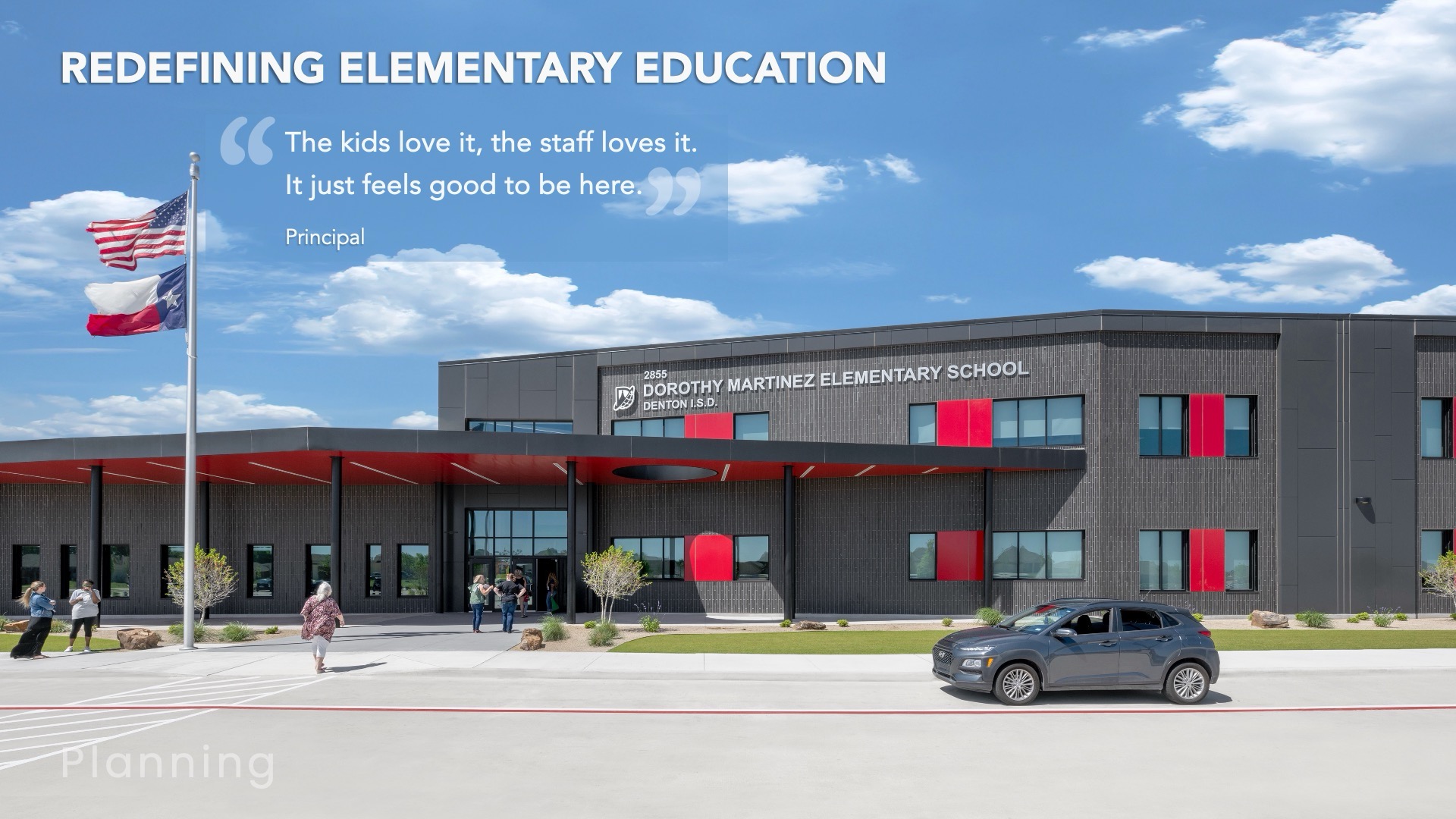

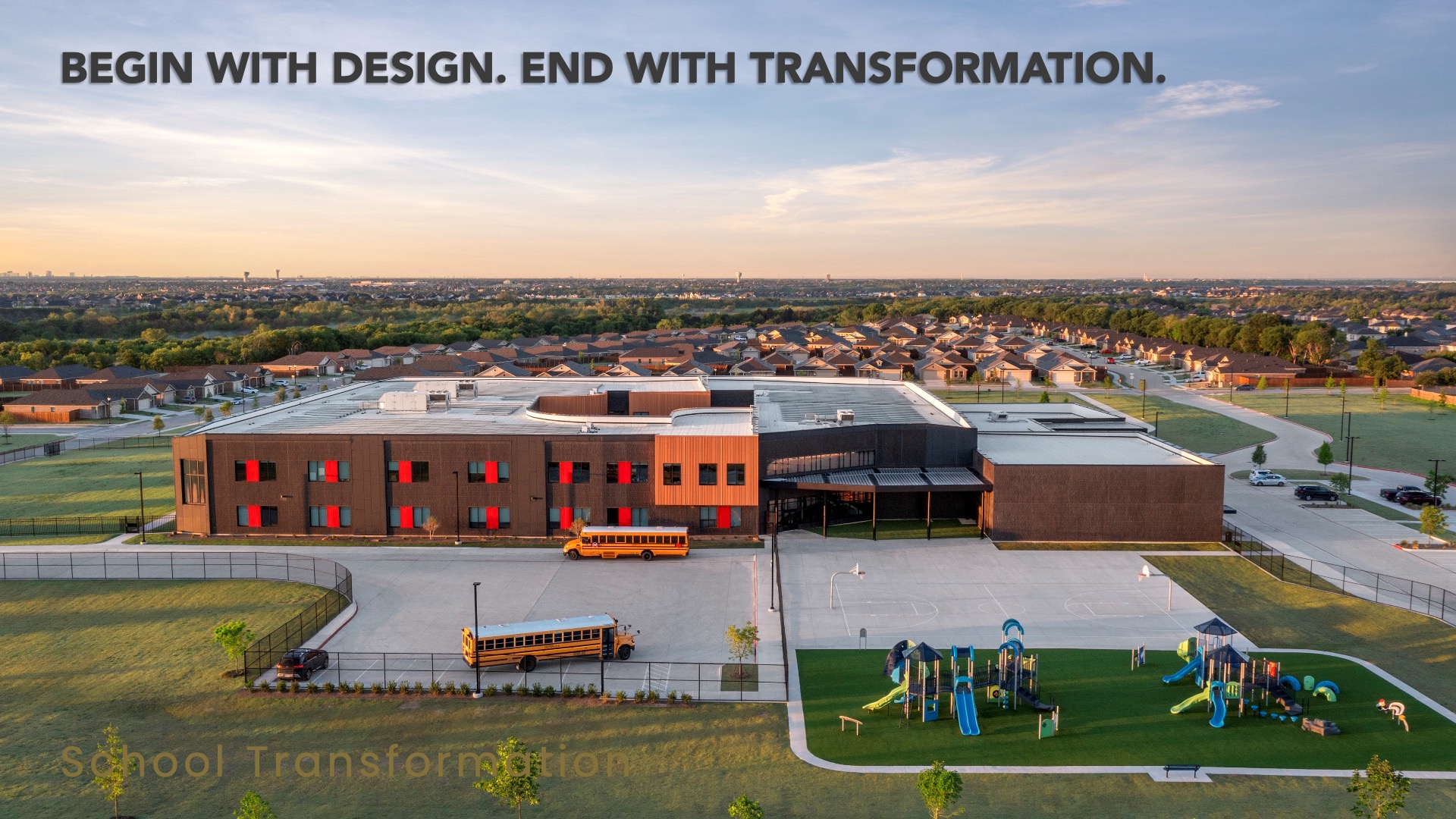
Denton ISD— Martinez Elementary School
Architect: Pfluger Architects, Inc.
“visioning, planning, programming, architectural design, interior design, construction phase services
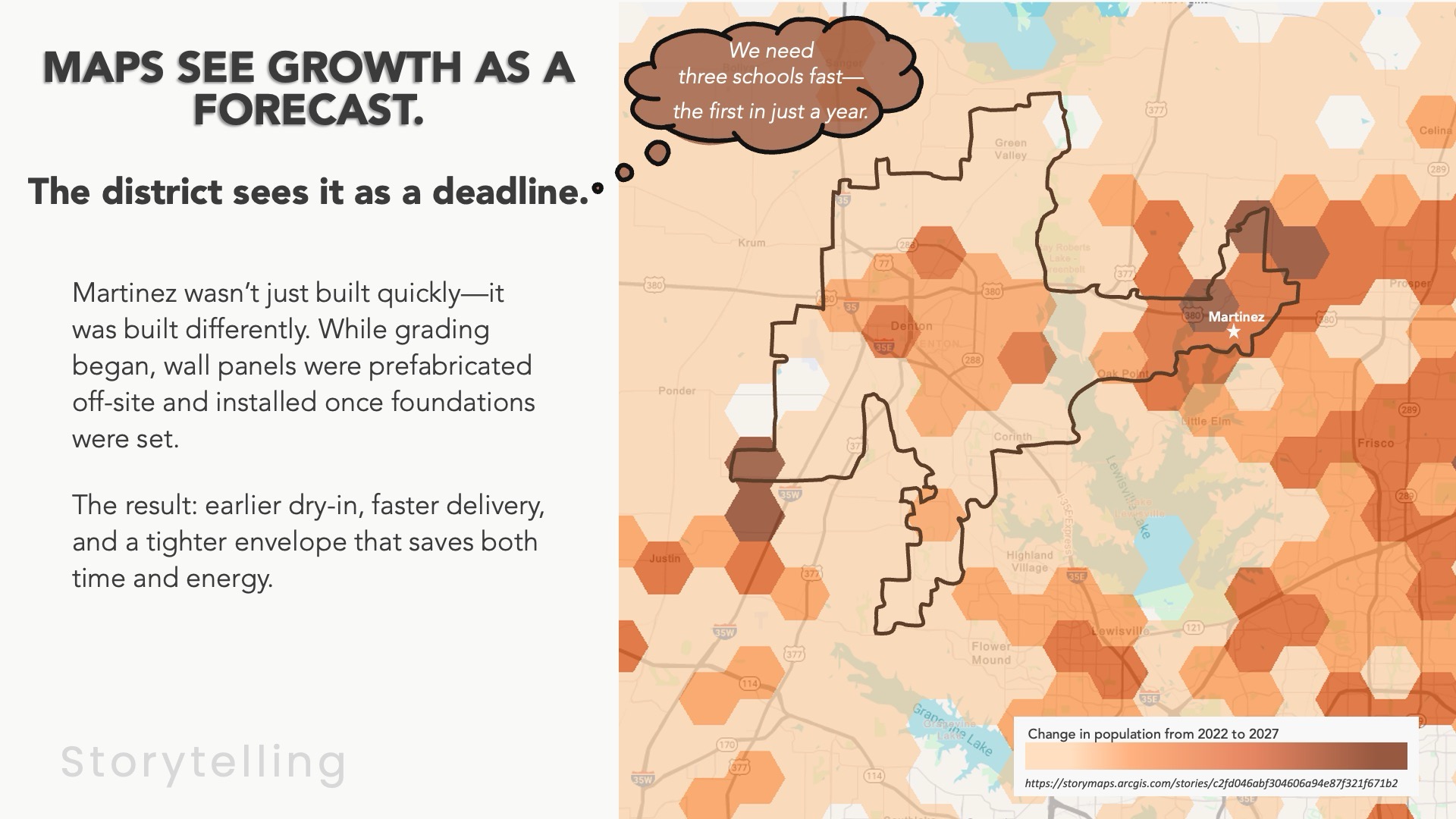
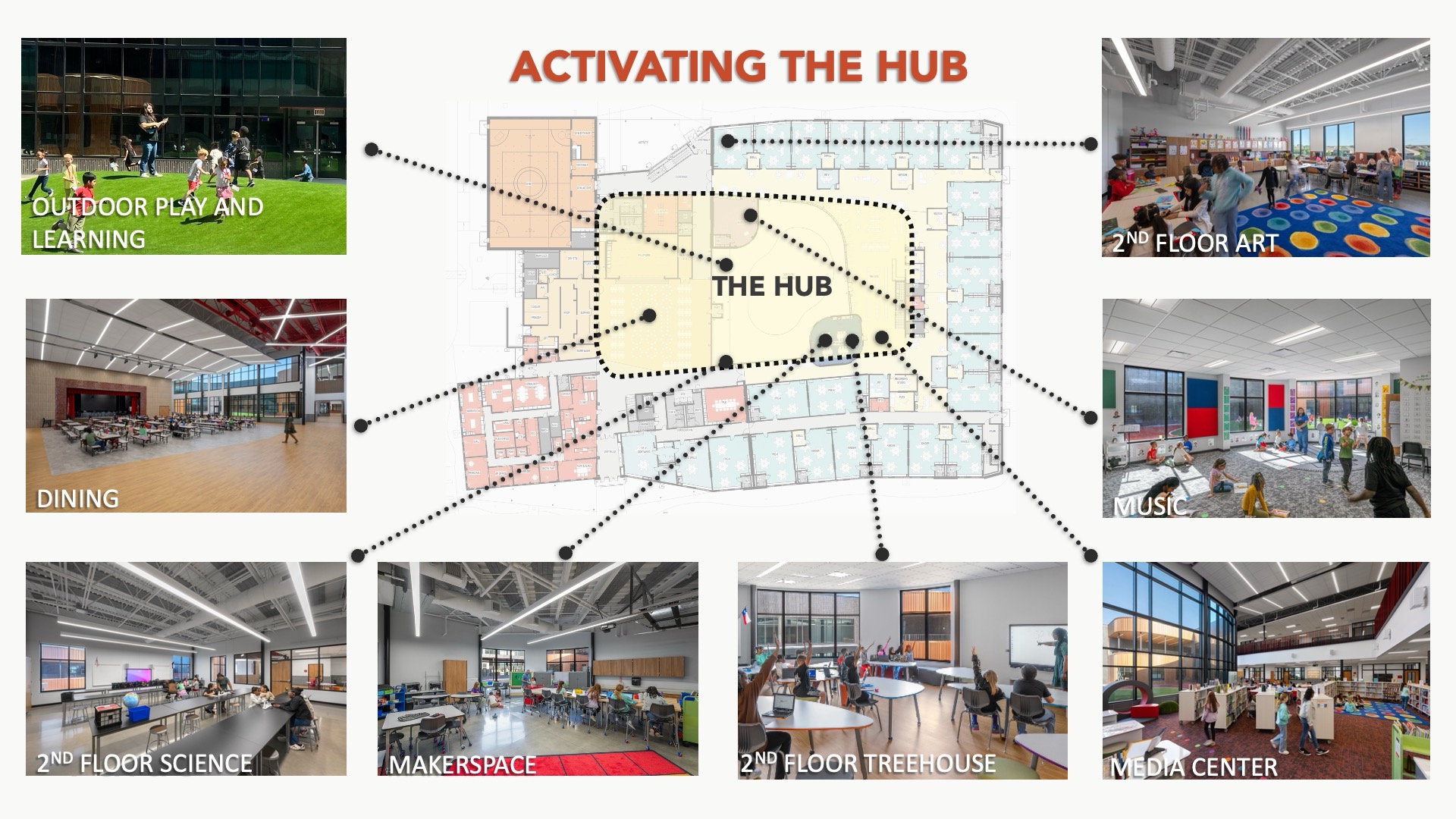
Growth made it necessary for Denton ISD to open three elementary schools quickly—including one within a year of bond passage. That urgency set the pace but a collaborative visioning process set the tone for a redefined elementary model. The result is a unified core anchored by a central hub where library, dining, and courtyard converge. No silos. No destinations. Just one fluid, flexible core where learning moves freely across classrooms and grade levels—with shared energy and momentum.”
Design
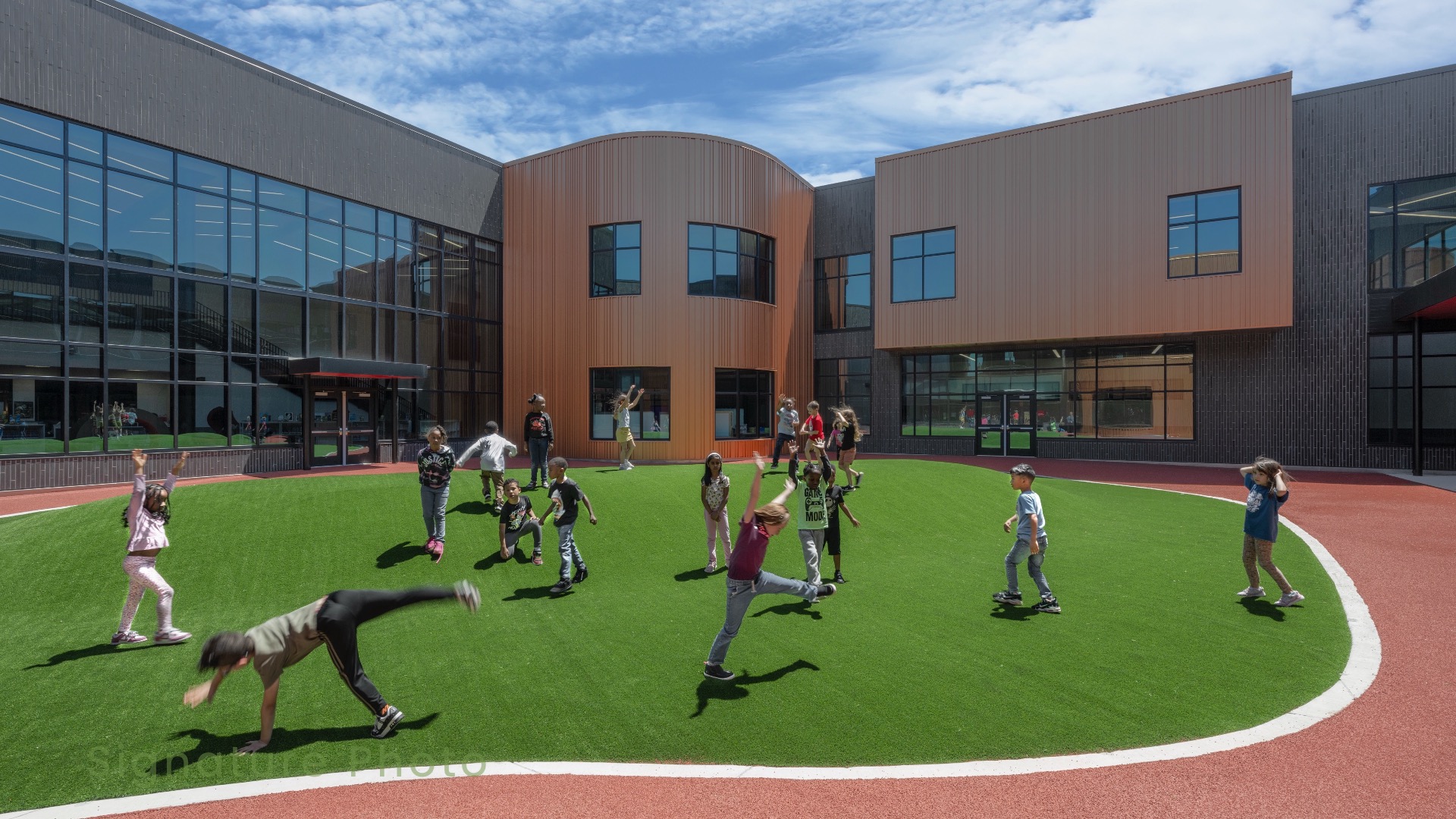
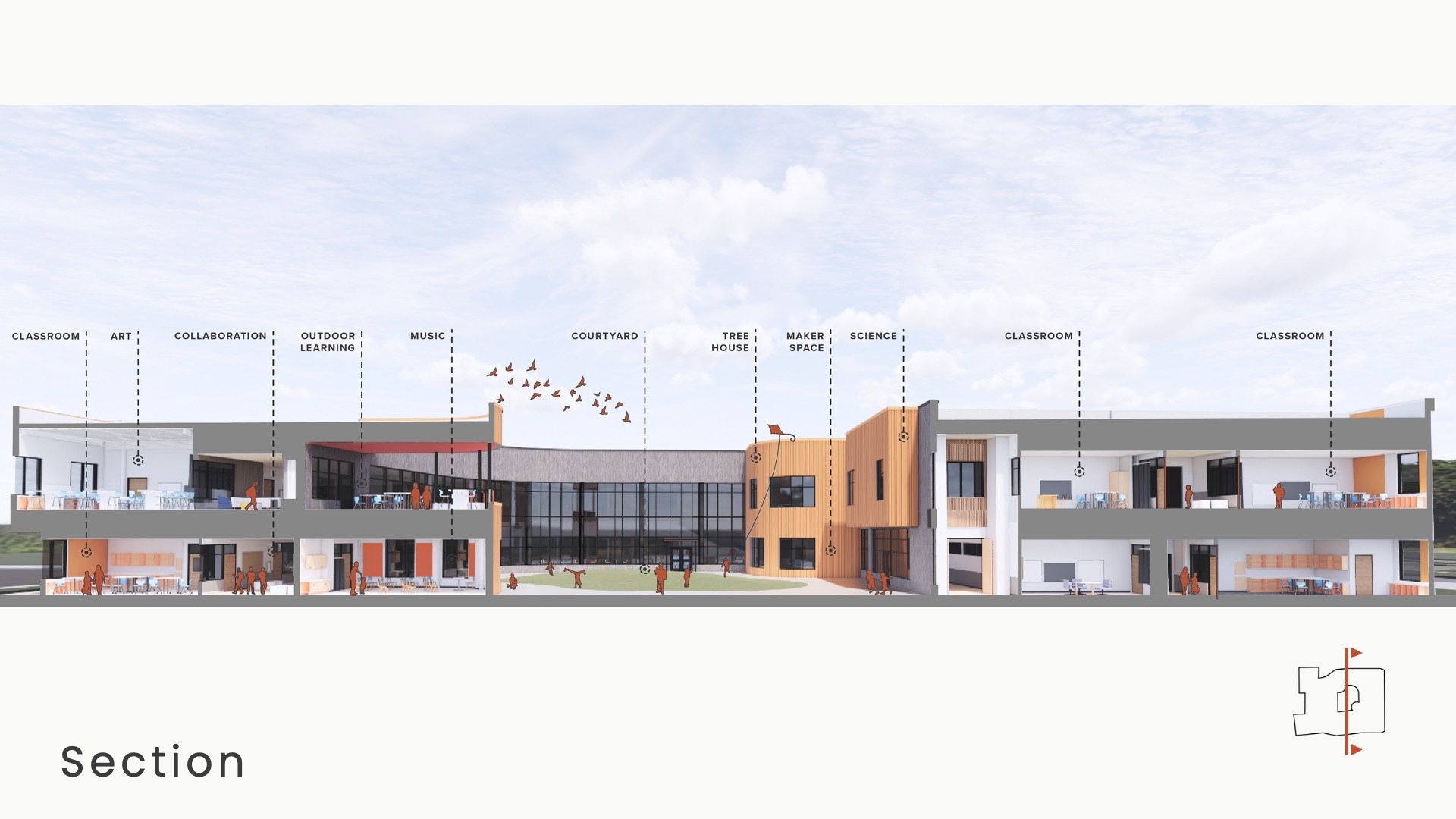
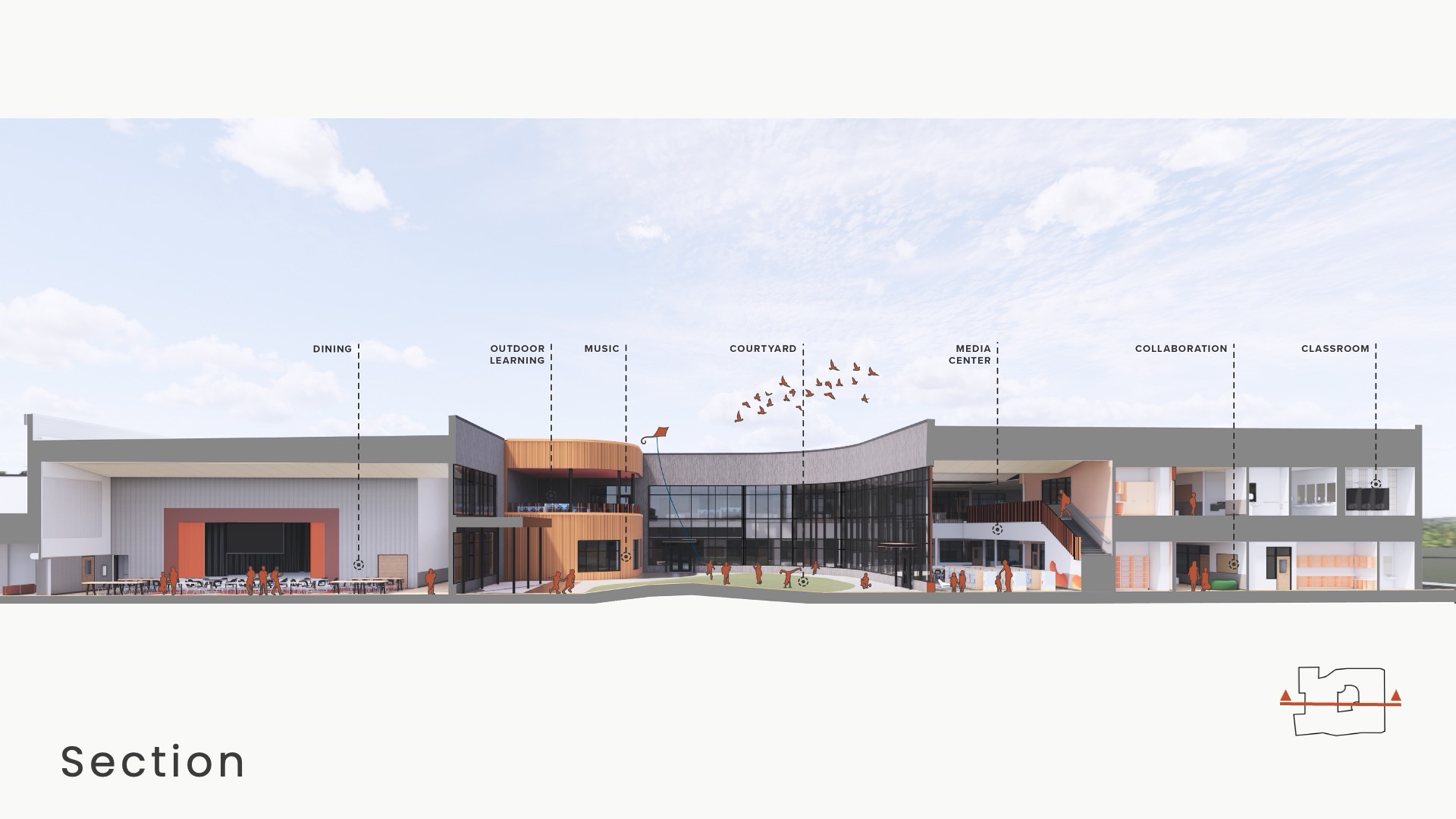
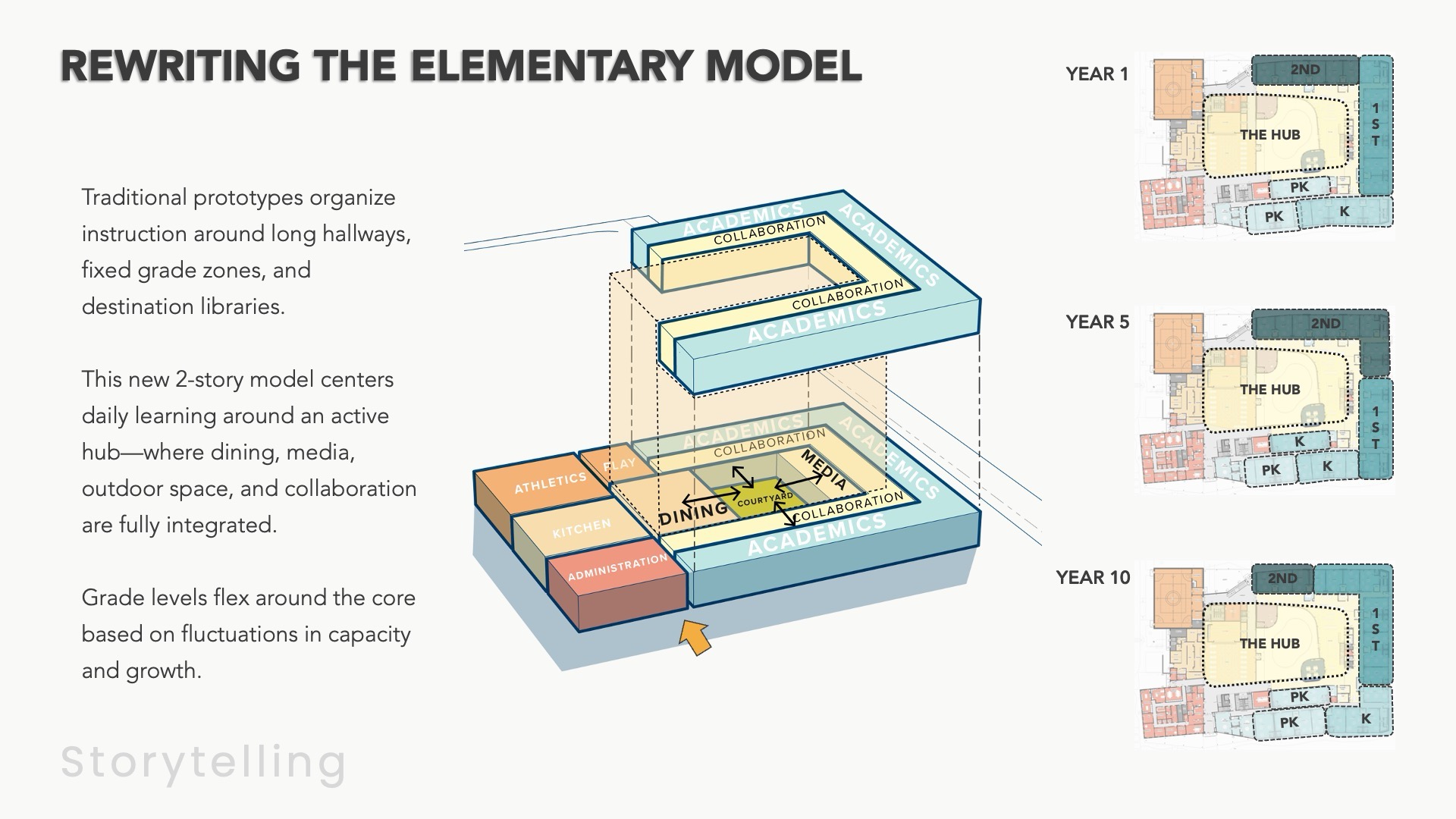
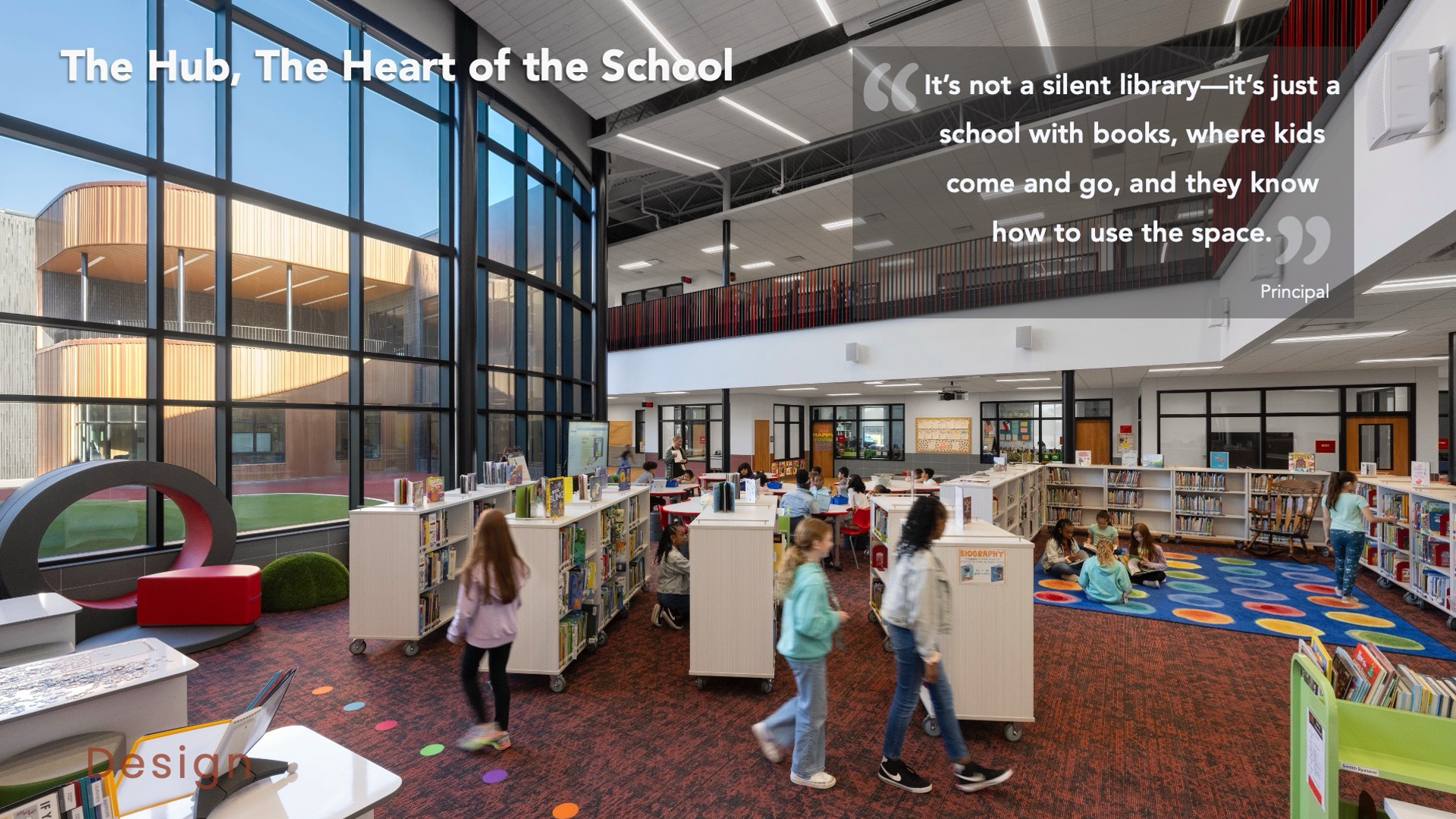
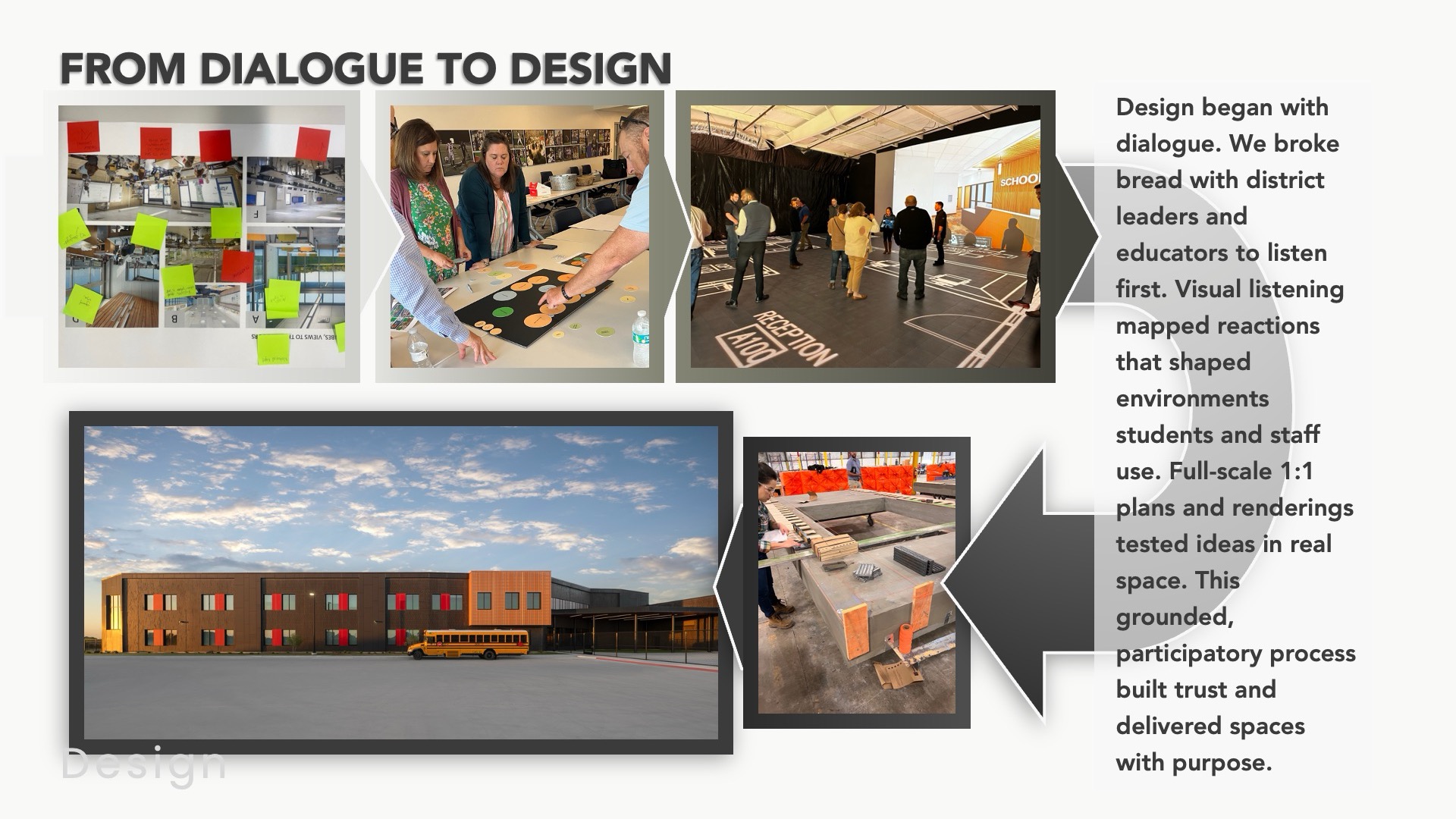
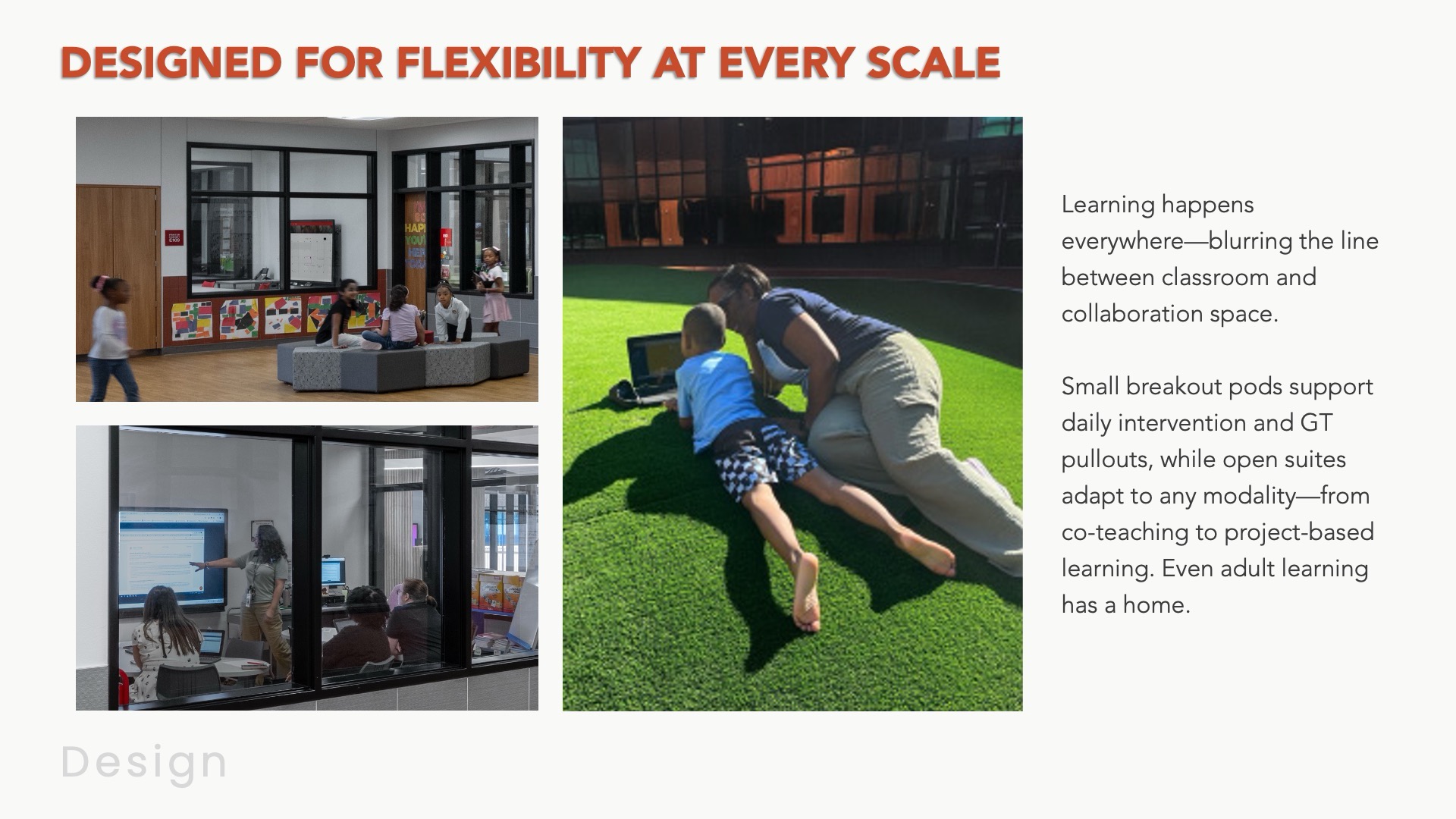
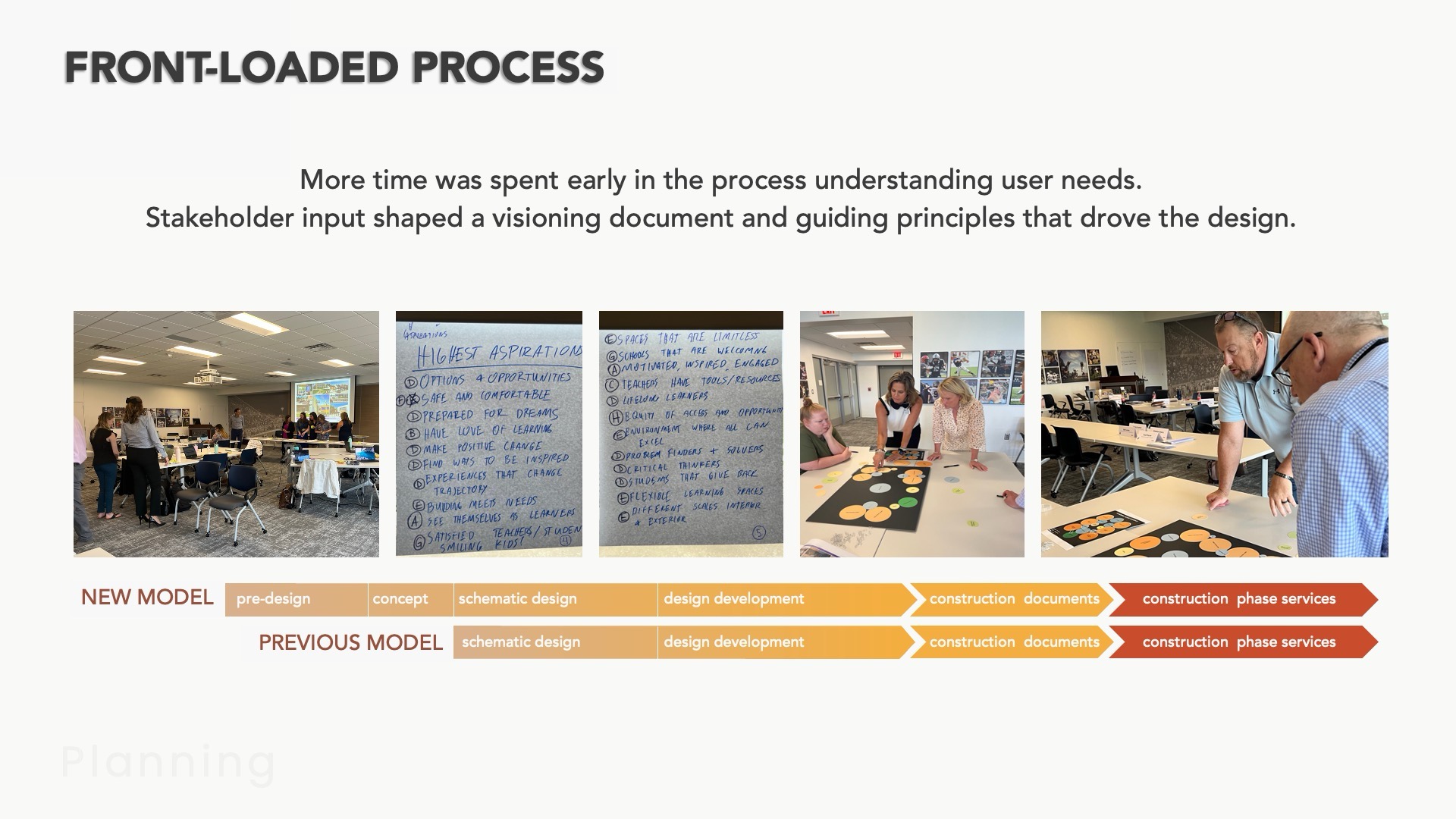
Through a collaborative visioning process, the district mapped learning goals to spatial needs—testing layouts, walking plans full-scale, and exploring how instruction could move across a day. The result wasn’t a wing of classrooms or a string of destinations. It was a central hub—library, dining, and courtyard—designed to keep students connected. The building doesn’t divide students by grade; it engages them with possibility. Boundaries gave way to purposeful circulation.
Value
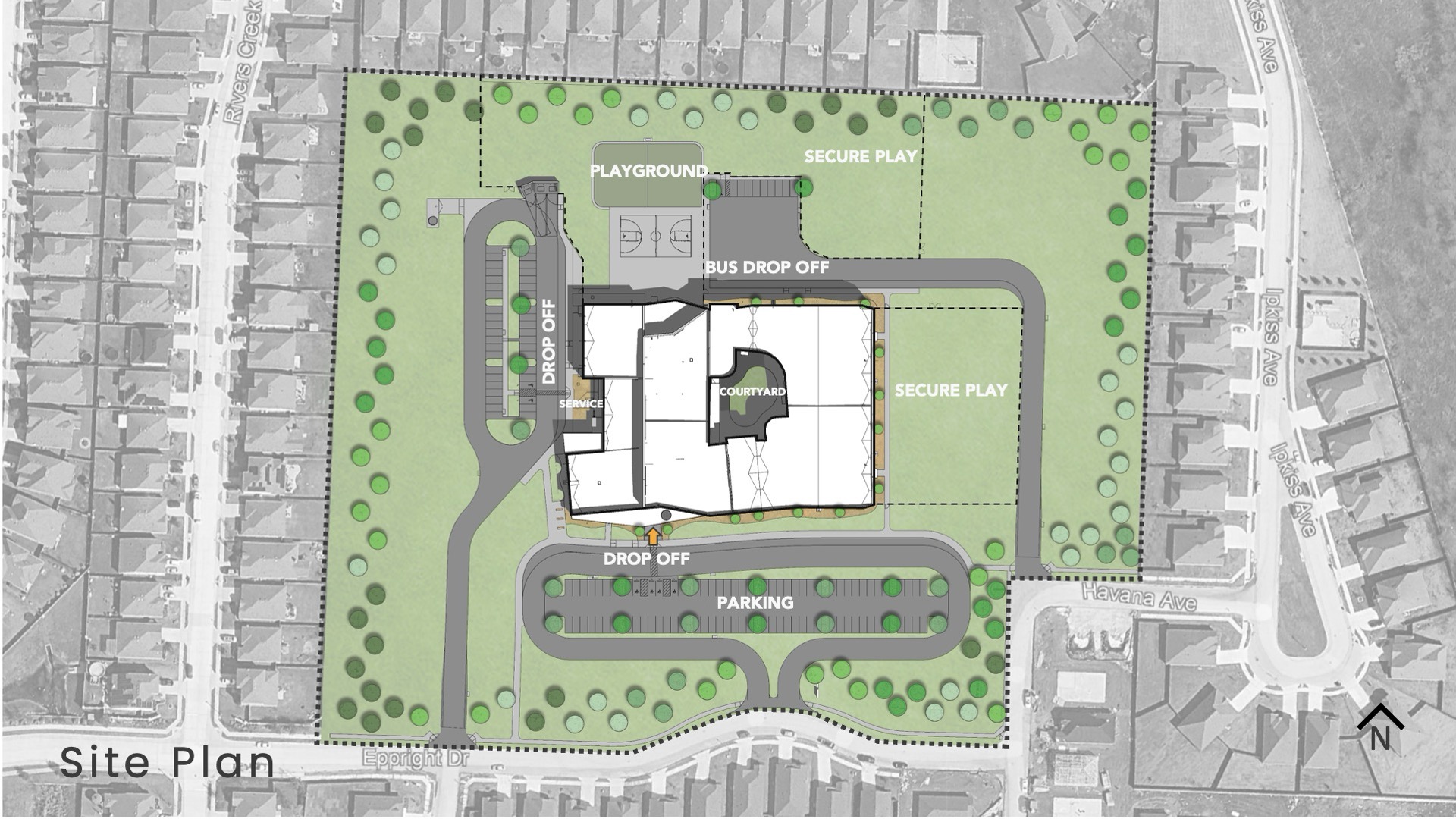
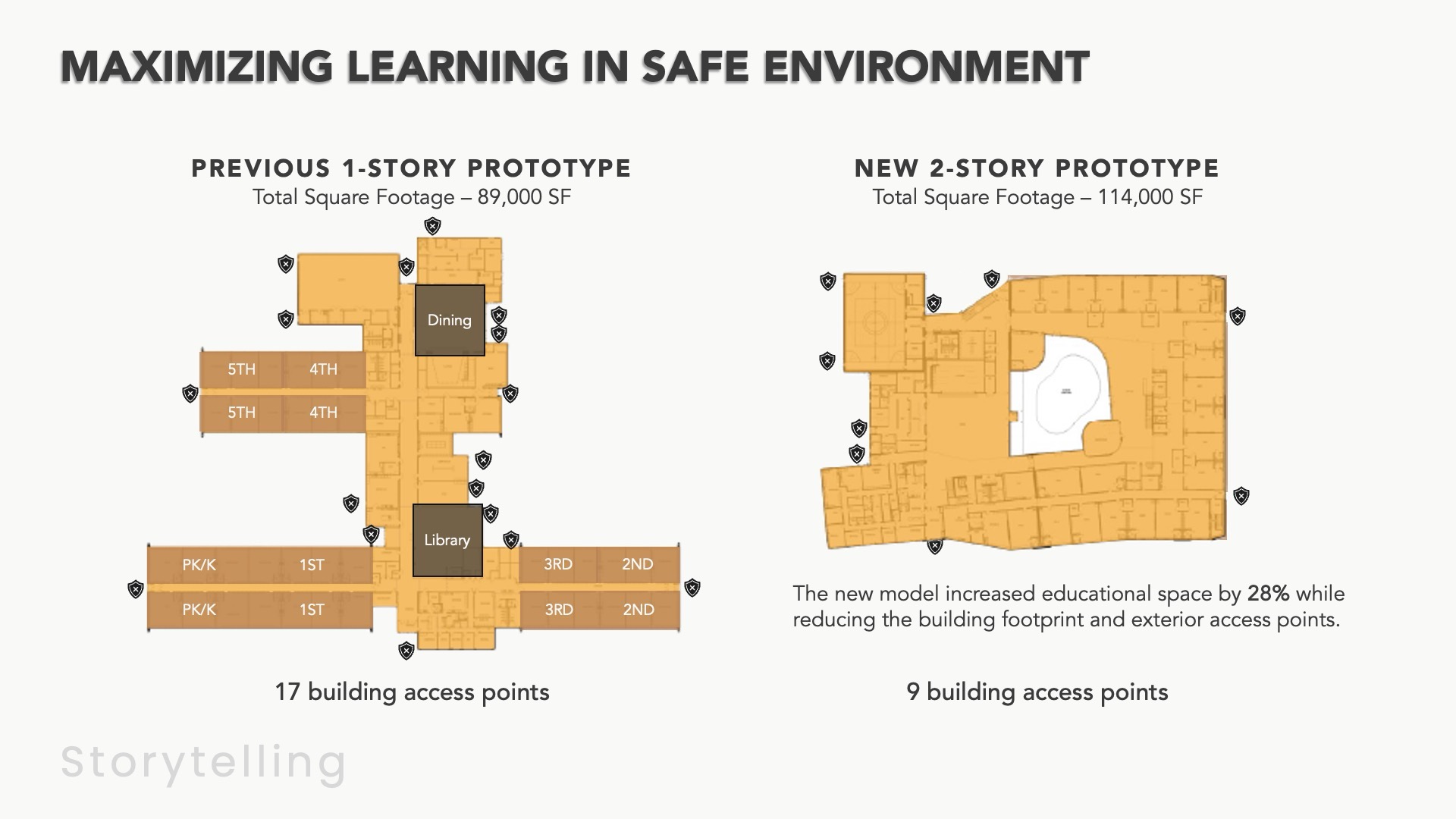
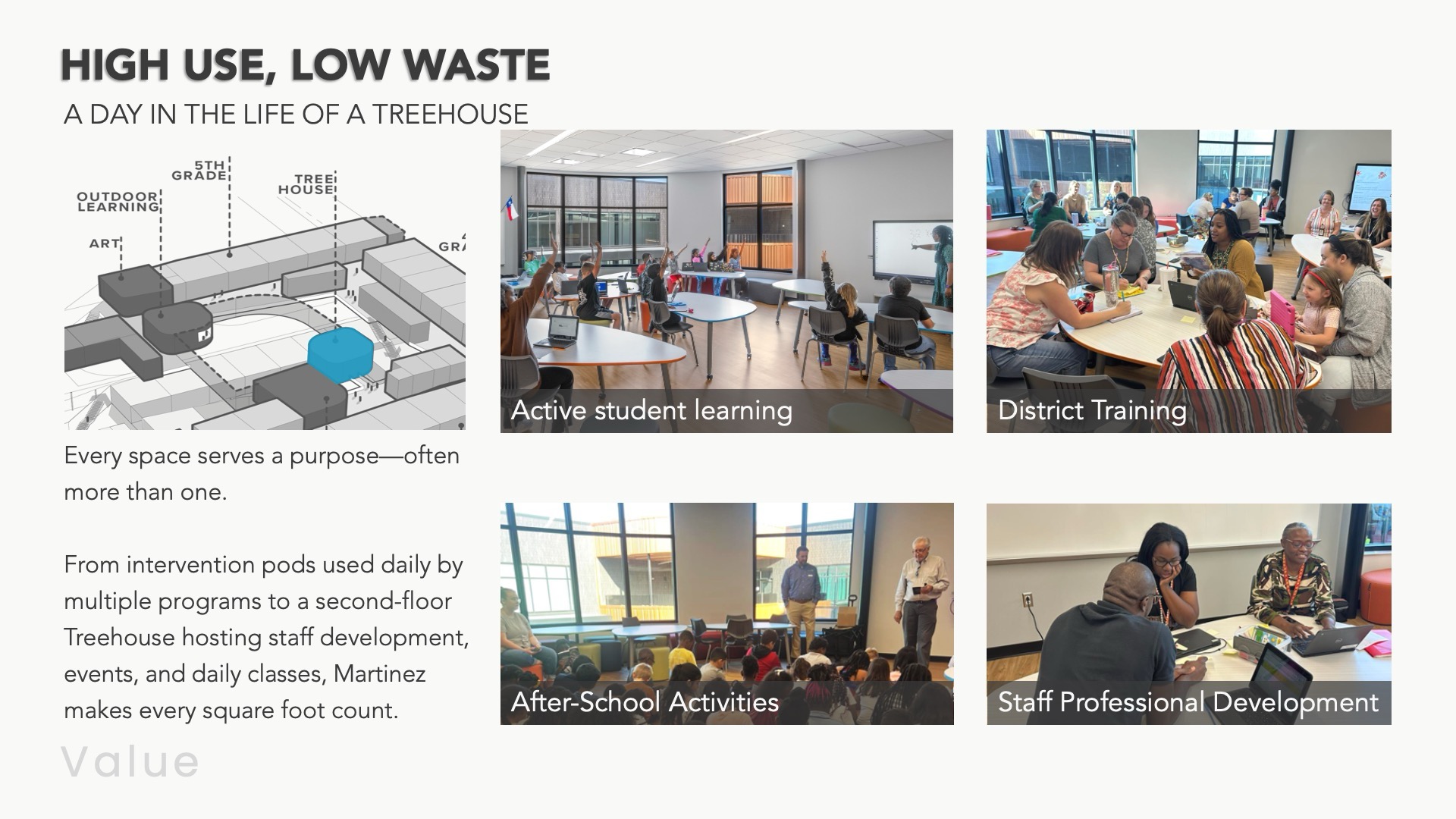
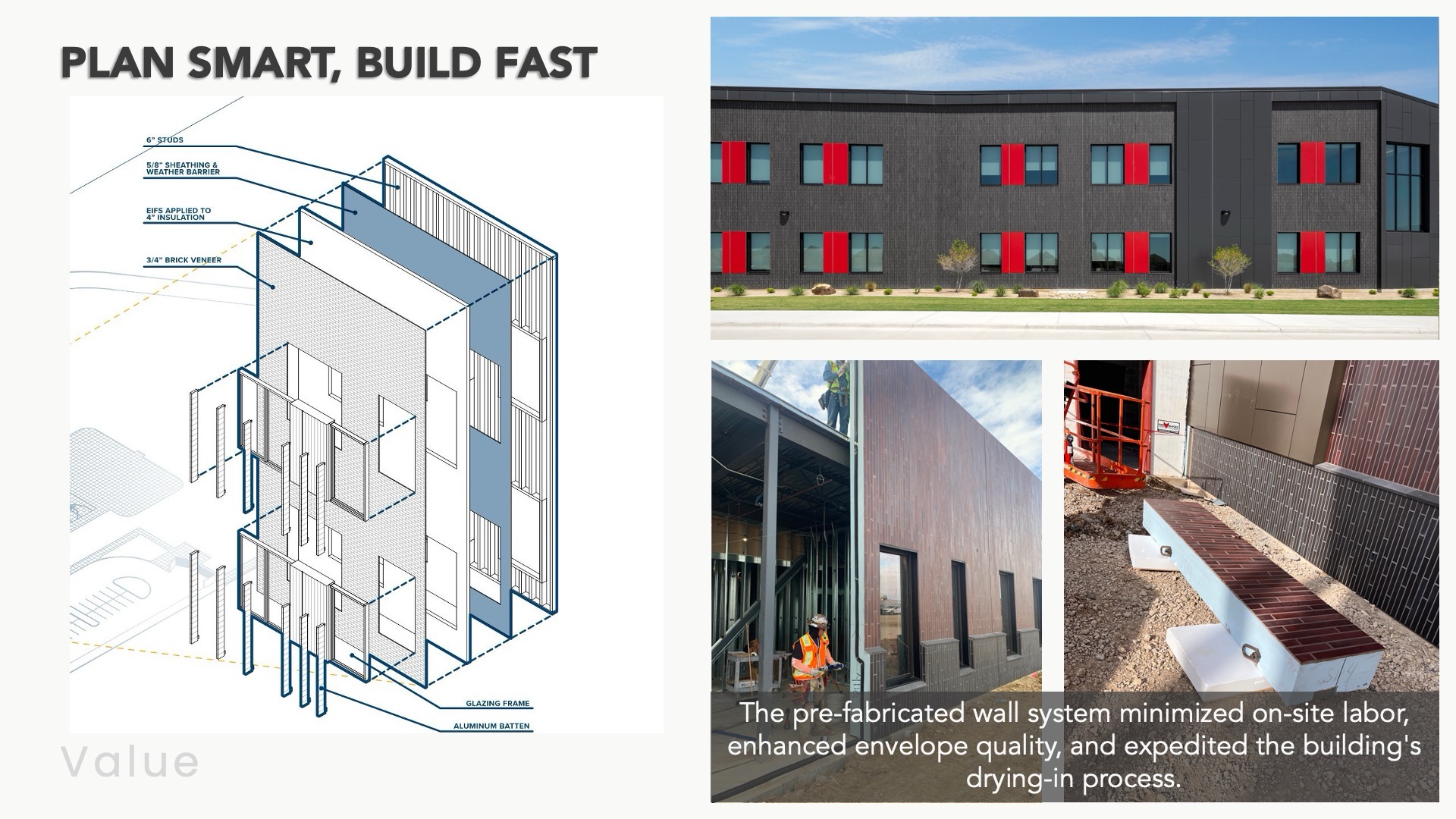
Value is embedded in a prototype design that flexes across sites, scales with growth, and evolves with instruction. The compact layout reduces exterior walls, limits access points, and maximizes learning space. Strategic adjacencies support multi-use without added square footage. Systems were selected for durability and efficiency, including a prefabricated exterior that creates a tighter envelope and improves air quality. The result: lower operating costs and greater educational impact.
Wellness
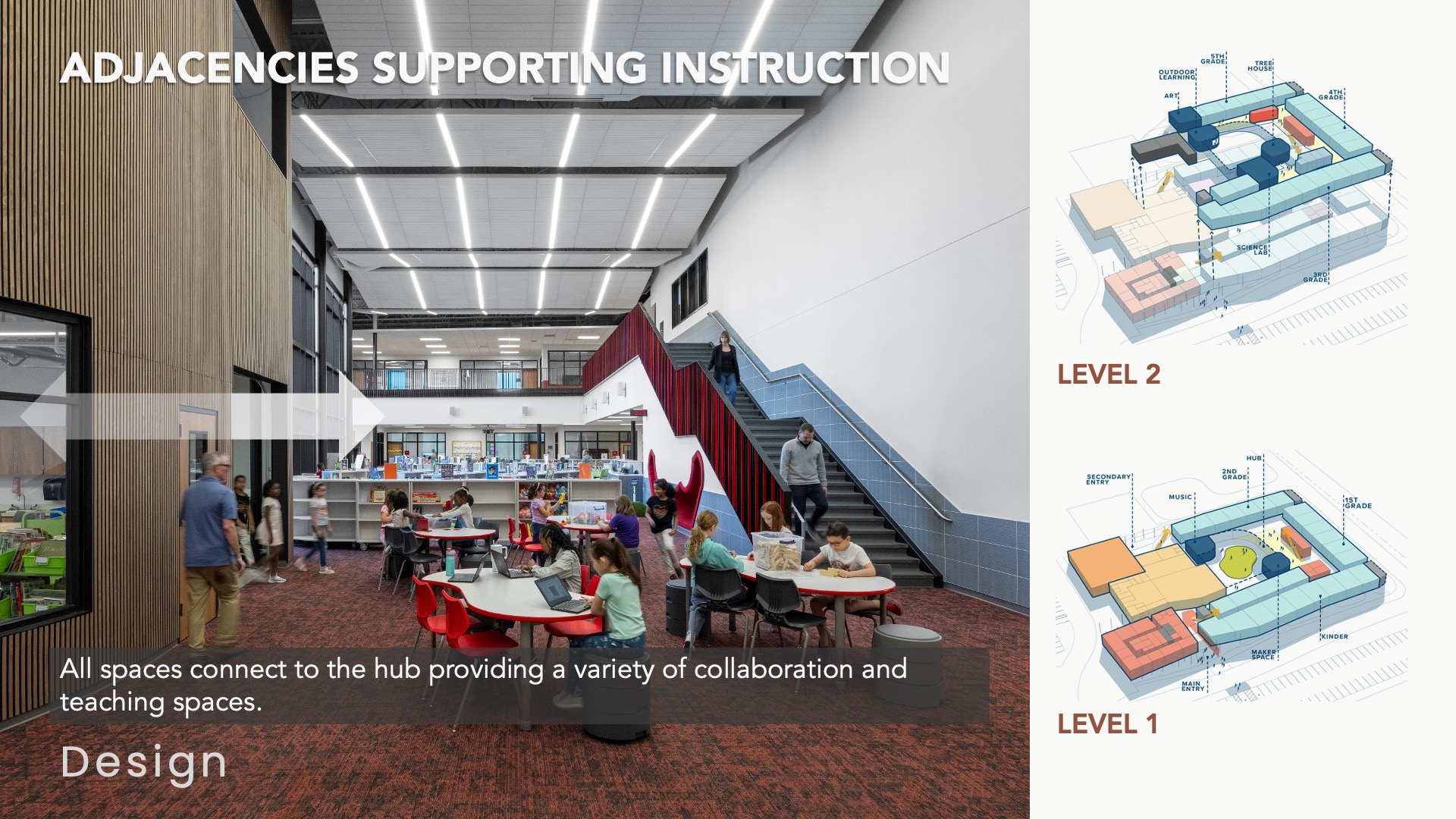
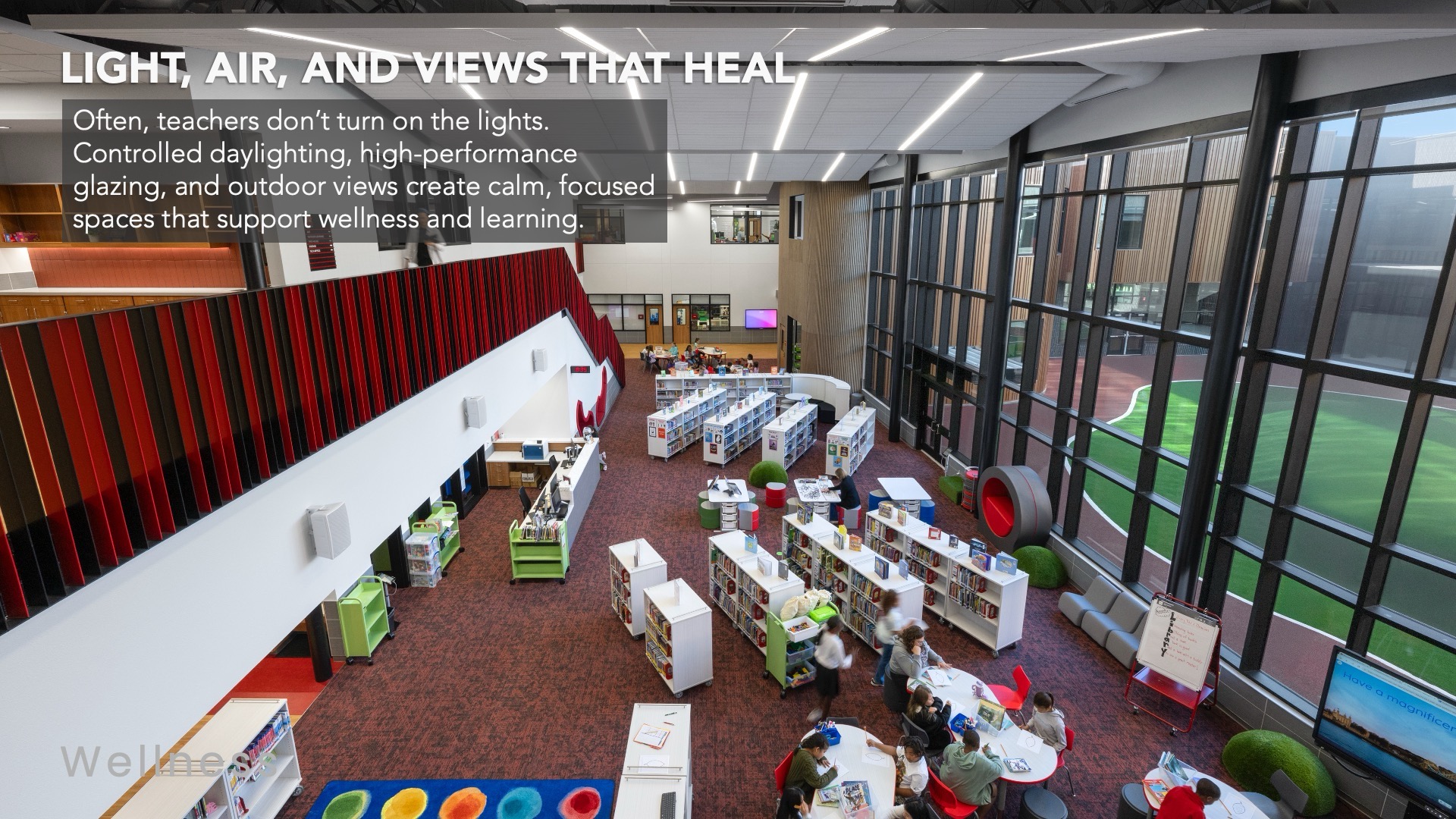
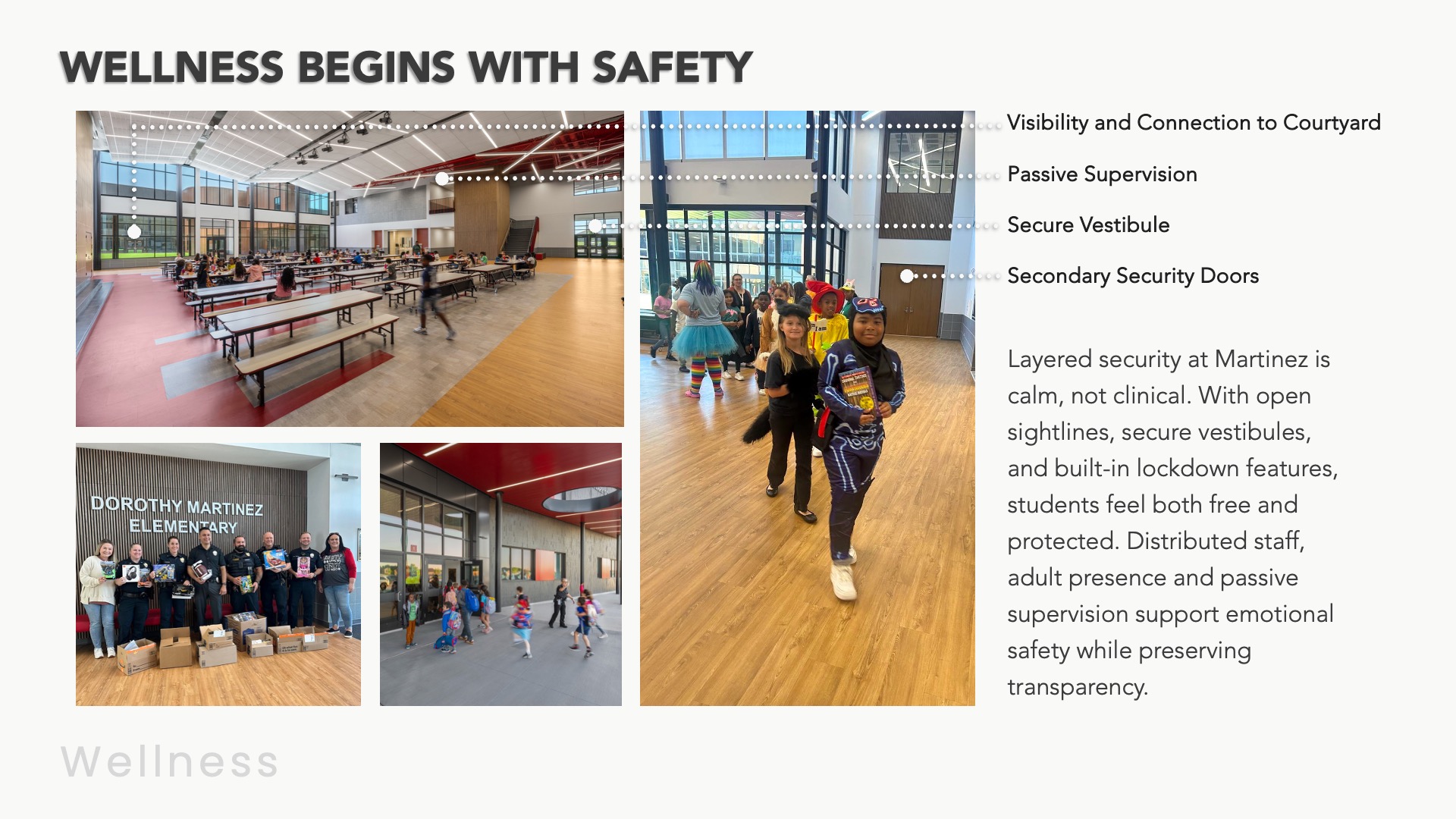
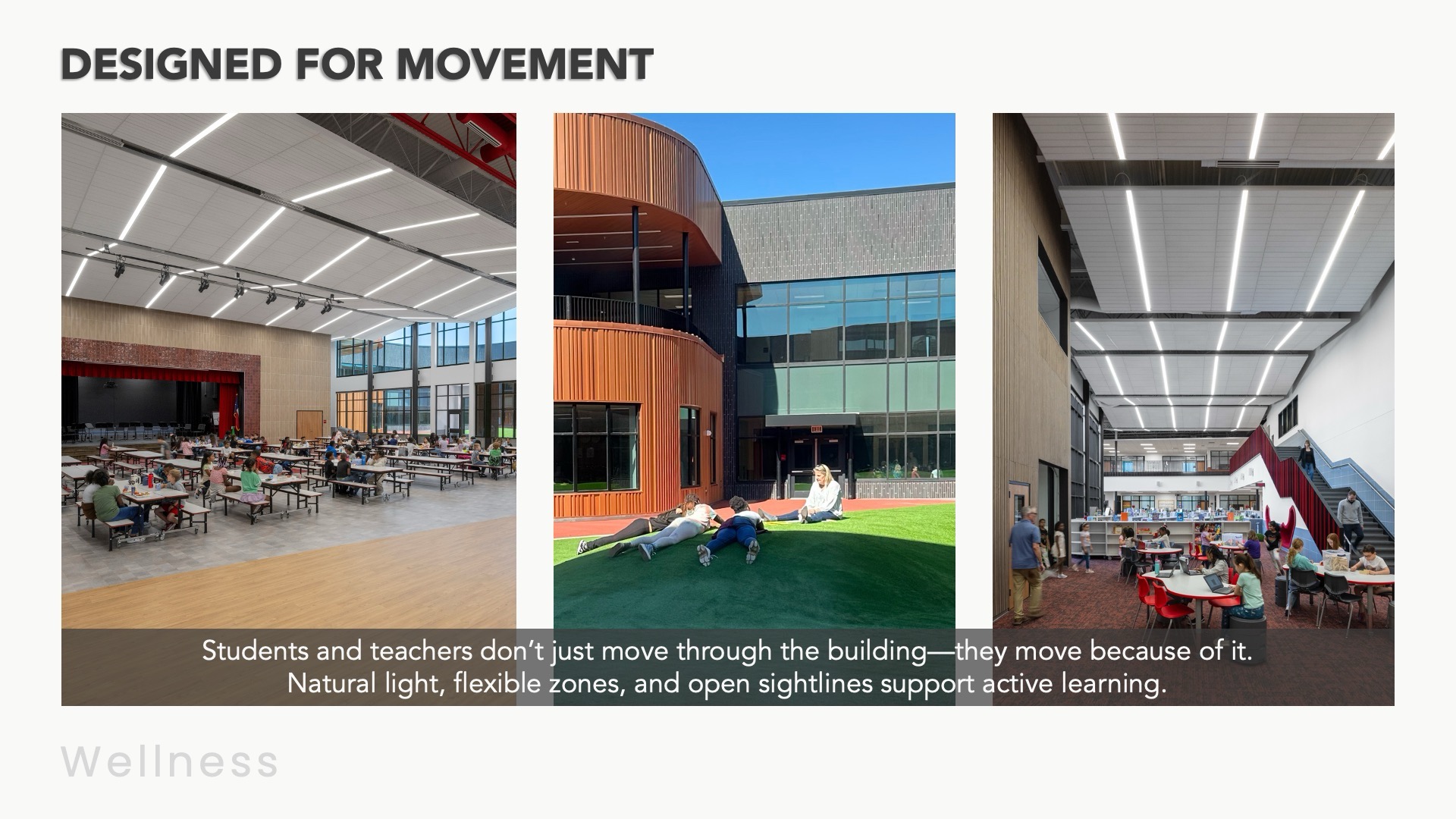
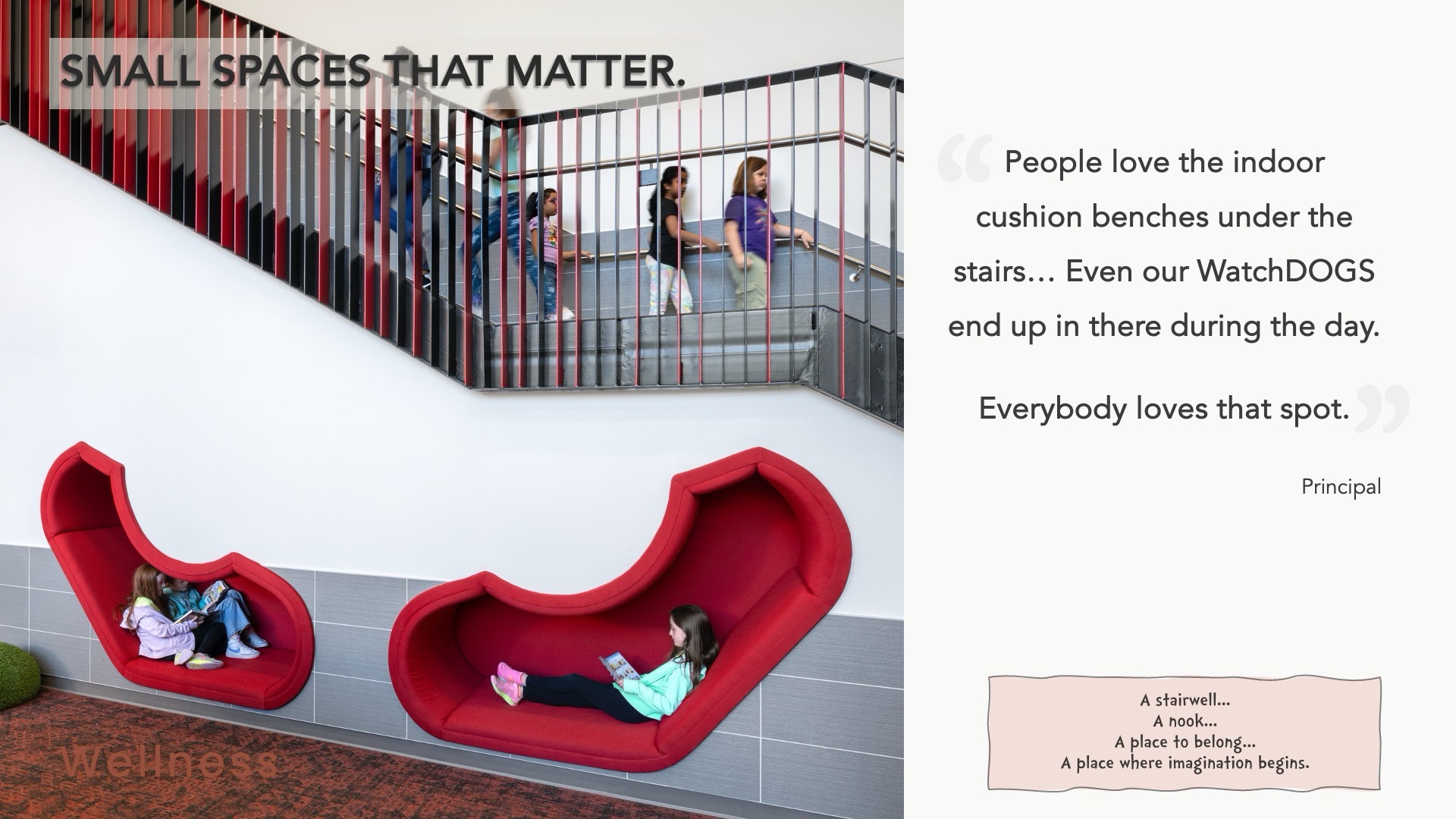
Wellness is shaped through rhythm, light, and flow. Clear sightlines and soft daylight create calm, while intuitive circulation connects learning spaces. The two-story library/dining/courtyard hub anchors the building with vertical flow. Classrooms, collaboration zones, and outdoor areas are physically and visually linked, supporting passive supervision without disruption. Intervention pods, calming rooms, and shared collaboration areas adapt to daily instructional needs and campus operations.
Community
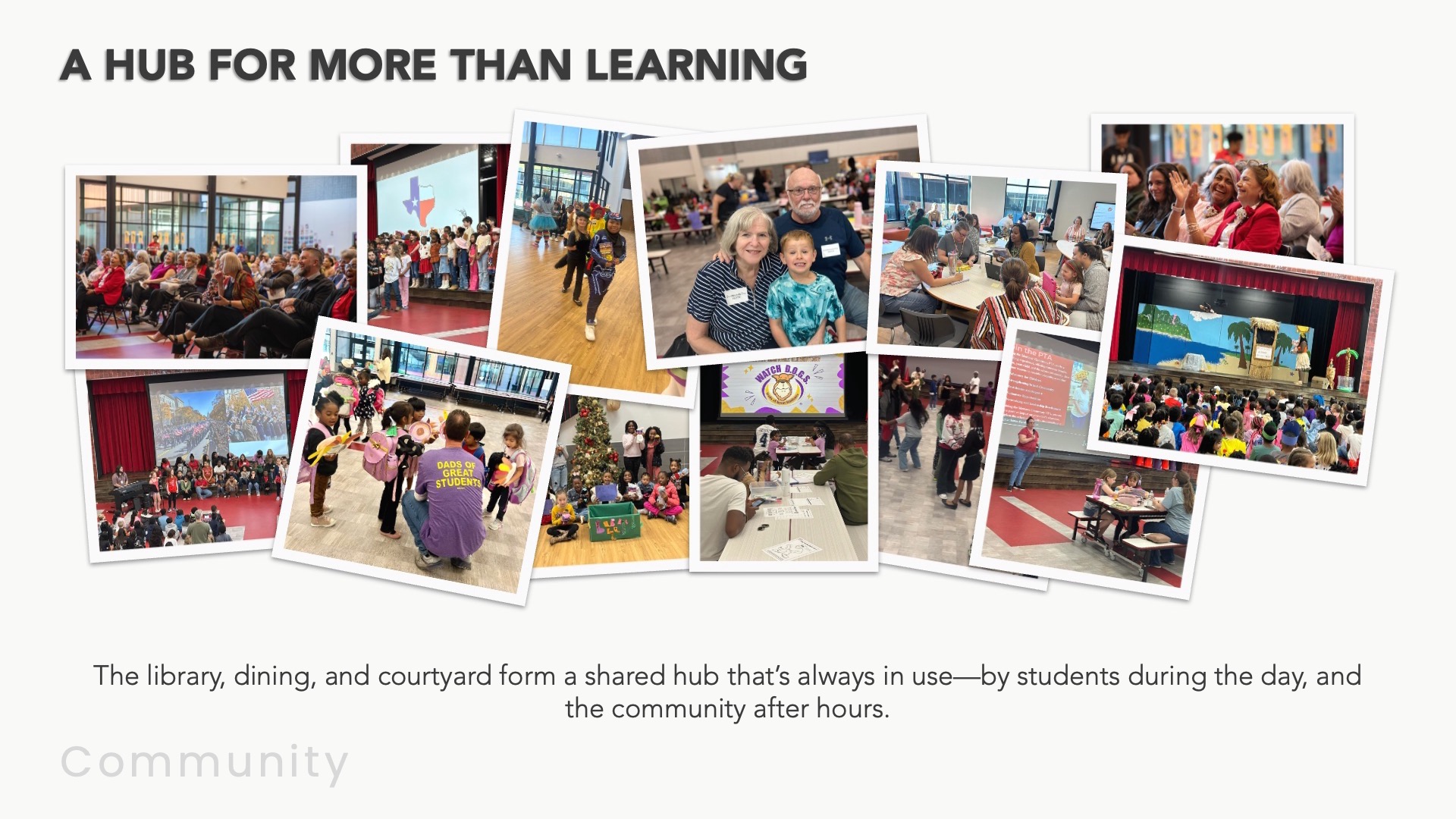
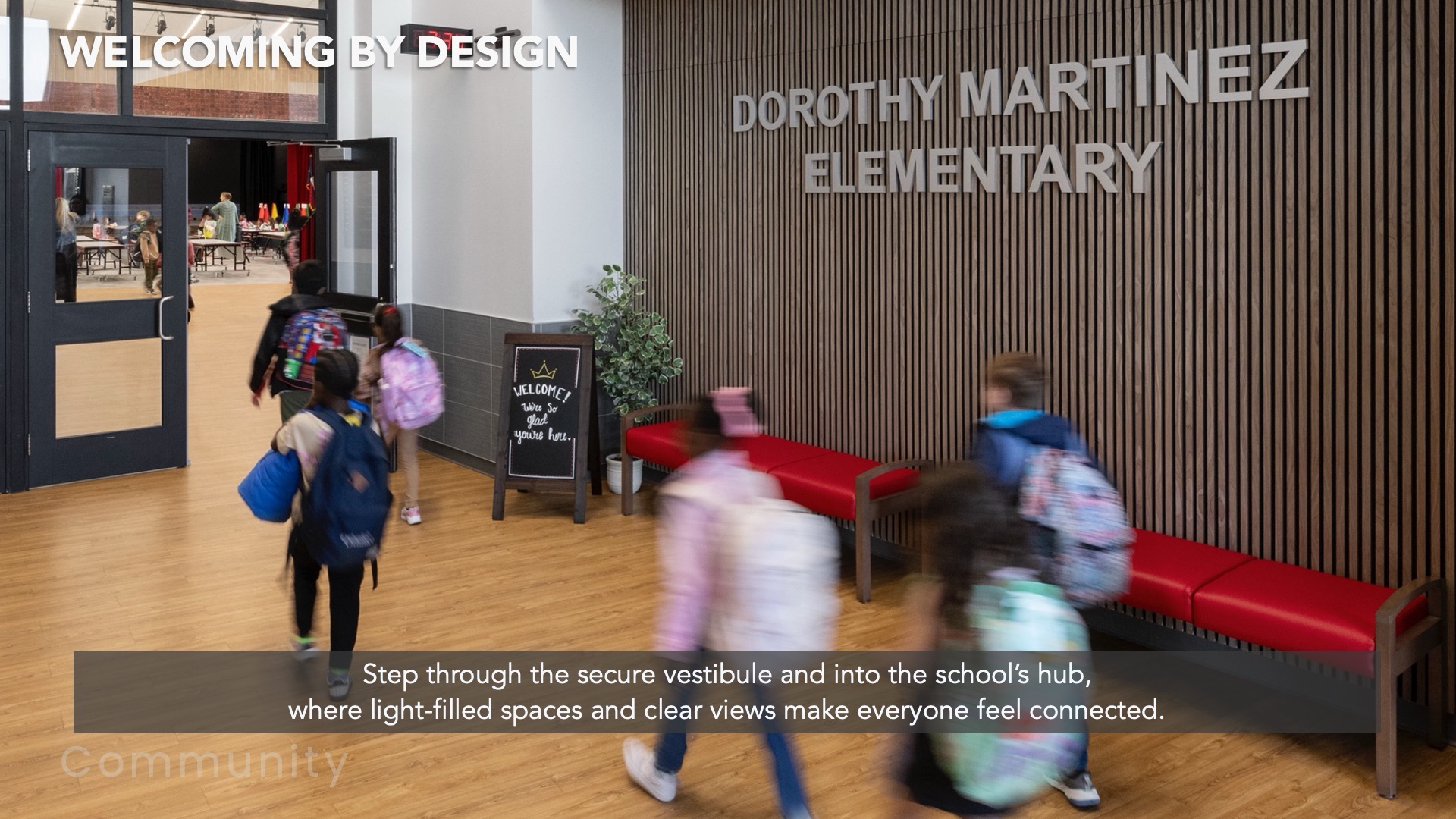
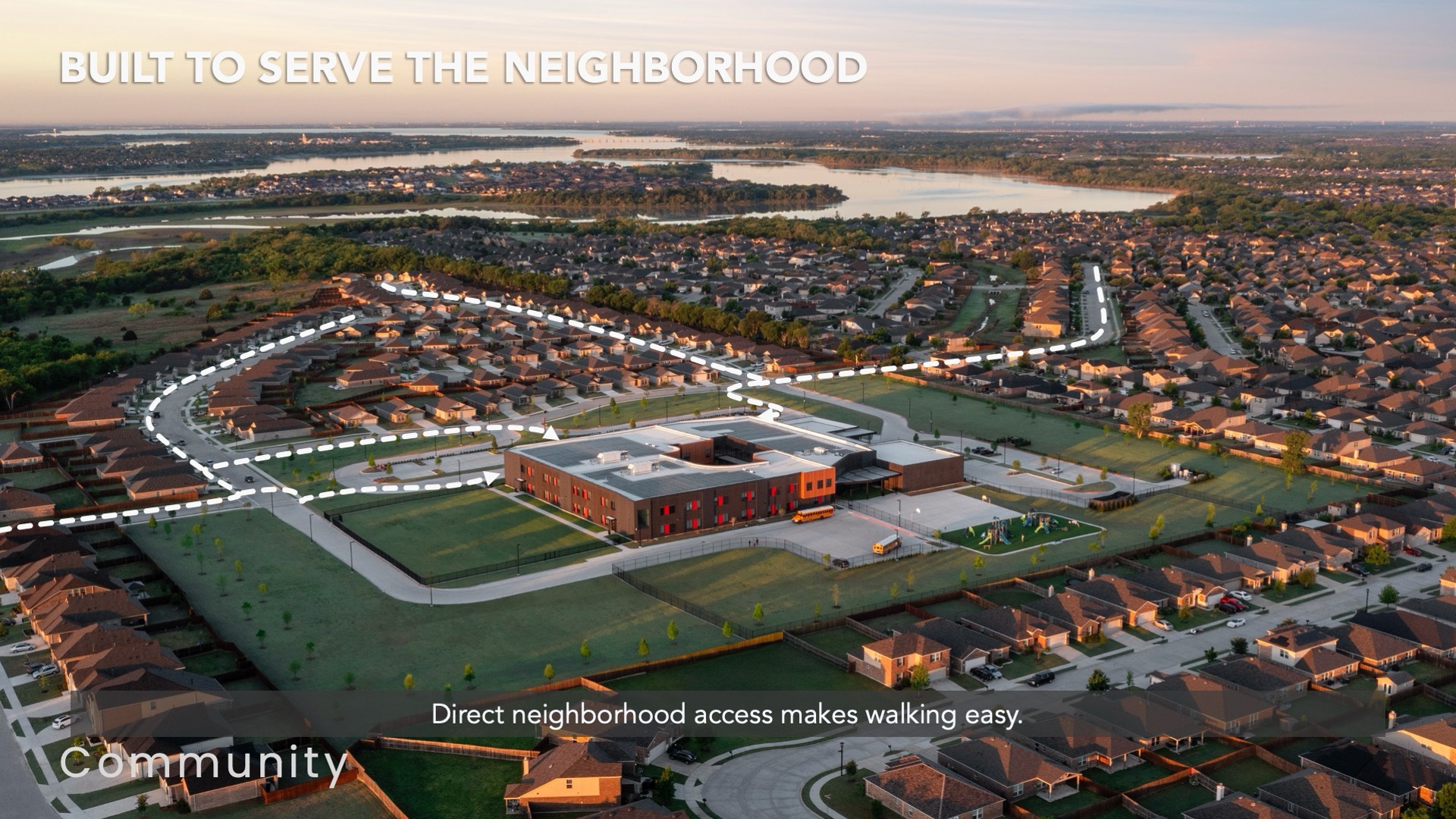
Martinez is designed for everyday use—by students, staff, families, and the district. The layout gives visitors direct access to shared spaces without access to academic wings. The building is easy to navigate, with clear sightlines and logical zoning that support supervision without barriers. District staff hold meetings and trainings here because it’s functional and welcoming. It’s a school built for teaching, gathering, and growing—without having to choose between them.
Planning
Martinez reflects a new level of intentionality in the district’s approach to elementary education—grounded in how students learn, how teachers teach, and how schools can flex to support both. The visioning process shaped a design built around clearly stated profiles and guiding principles, and gave space to reconsider what a school should provide and how to design for long-term value. Every element—the compact layout, the connected hub, the flexible learning suites—traces back to that vision.
 School Transformation
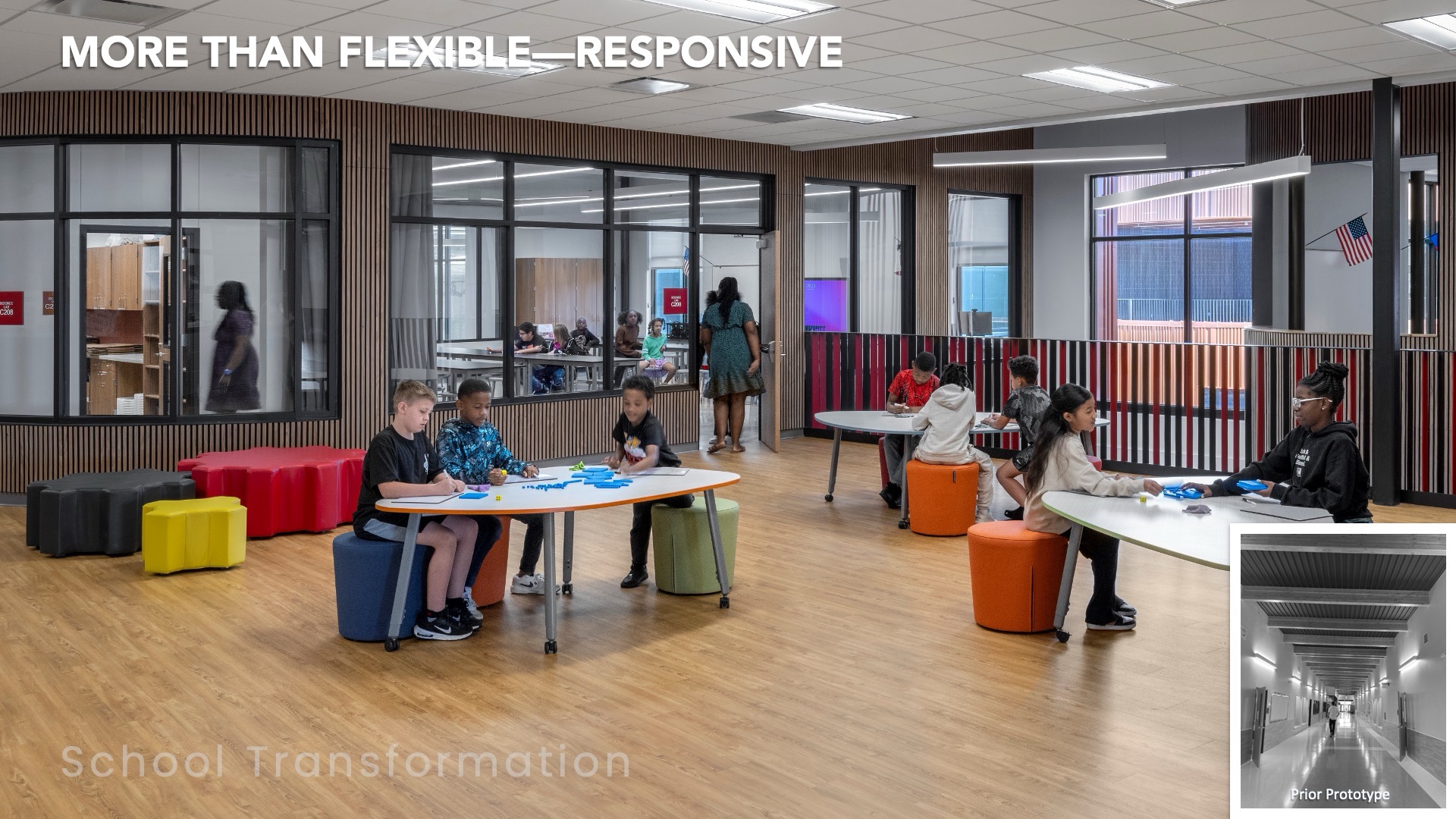
For decades, Denton used the same prototype—isolated wings, destination libraries, traditional models. But the district was ready to rethink how students learn, and teachers teach. What if the whole school were the neighborhood? No silos. No dead ends. Classrooms, dining, library, and courtyard are all part of the central hub—fully connected, always active. The building works differently—every square foot centers on connection and learning.
 Star of Distinction Category Winner