










Spring Branch ISD — Woodview Elementary School
Architect: Stantec Architecture Inc
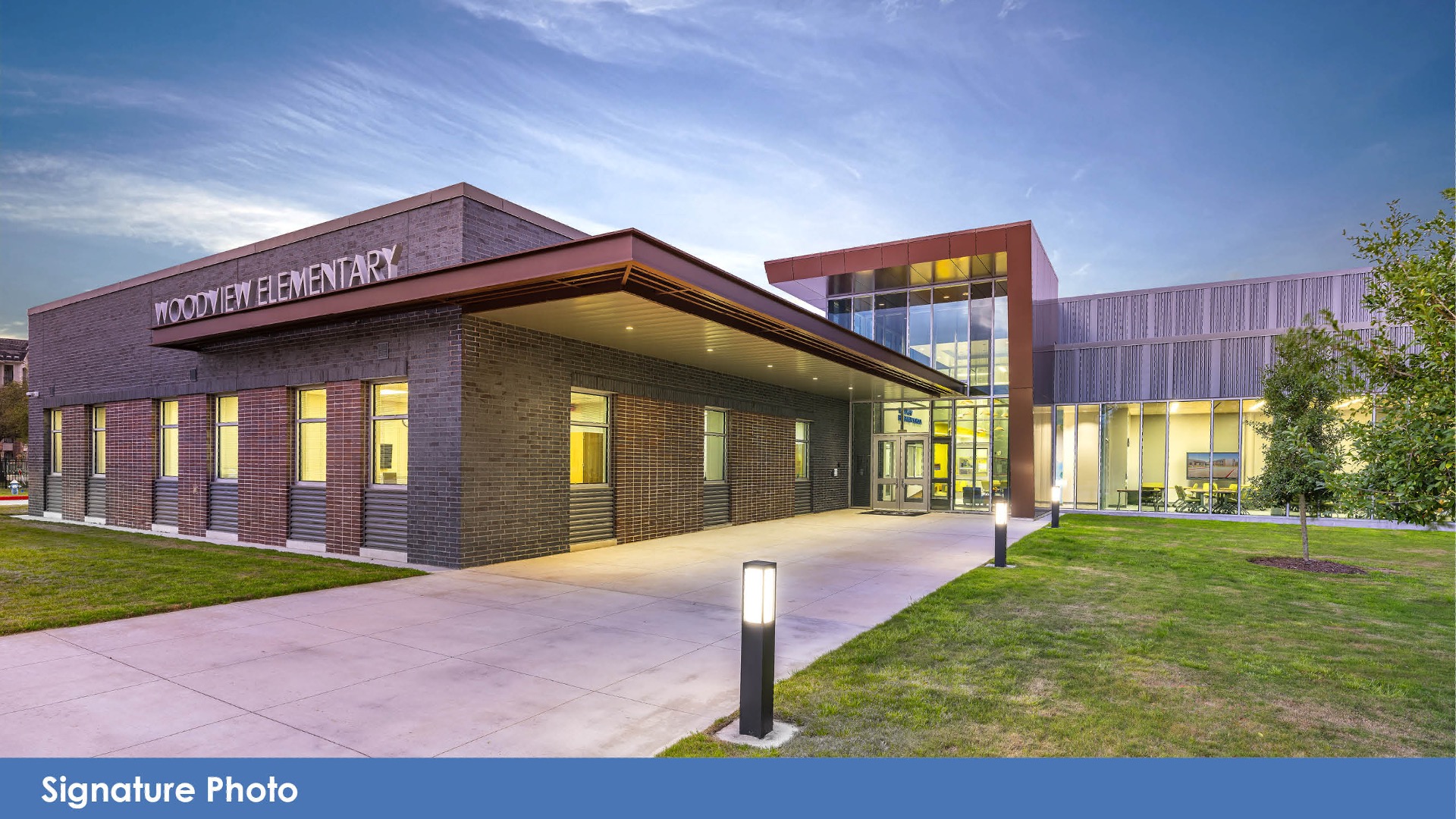
“Founded in 1958, Woodview ES was a simple school for the thriving Spring Branch area. The design has evolved into a modern learning facility to support a proud and diverse community. Understanding the history of the school and the neighborhood helped align the new design with the Spring Branch community and greater area. The spaces within the school are designed to support modern school curriculums and promote collaboration, connections to the outdoors, and a hands-on approach to learning.
Close to the heart of downtown Memorial City, the existing school’s site provided an opportunity to embrace its metro location. By highlighting the existing nature on site, the new design feels exciting and modern, while remaining a familiar neighborhood landmark. Because of the site limitations, the staff and students held class off campus during the construction of the new school. This strategy allowed for the preservation of the nature and a public park on site, in addition to the existing gym and library structure.
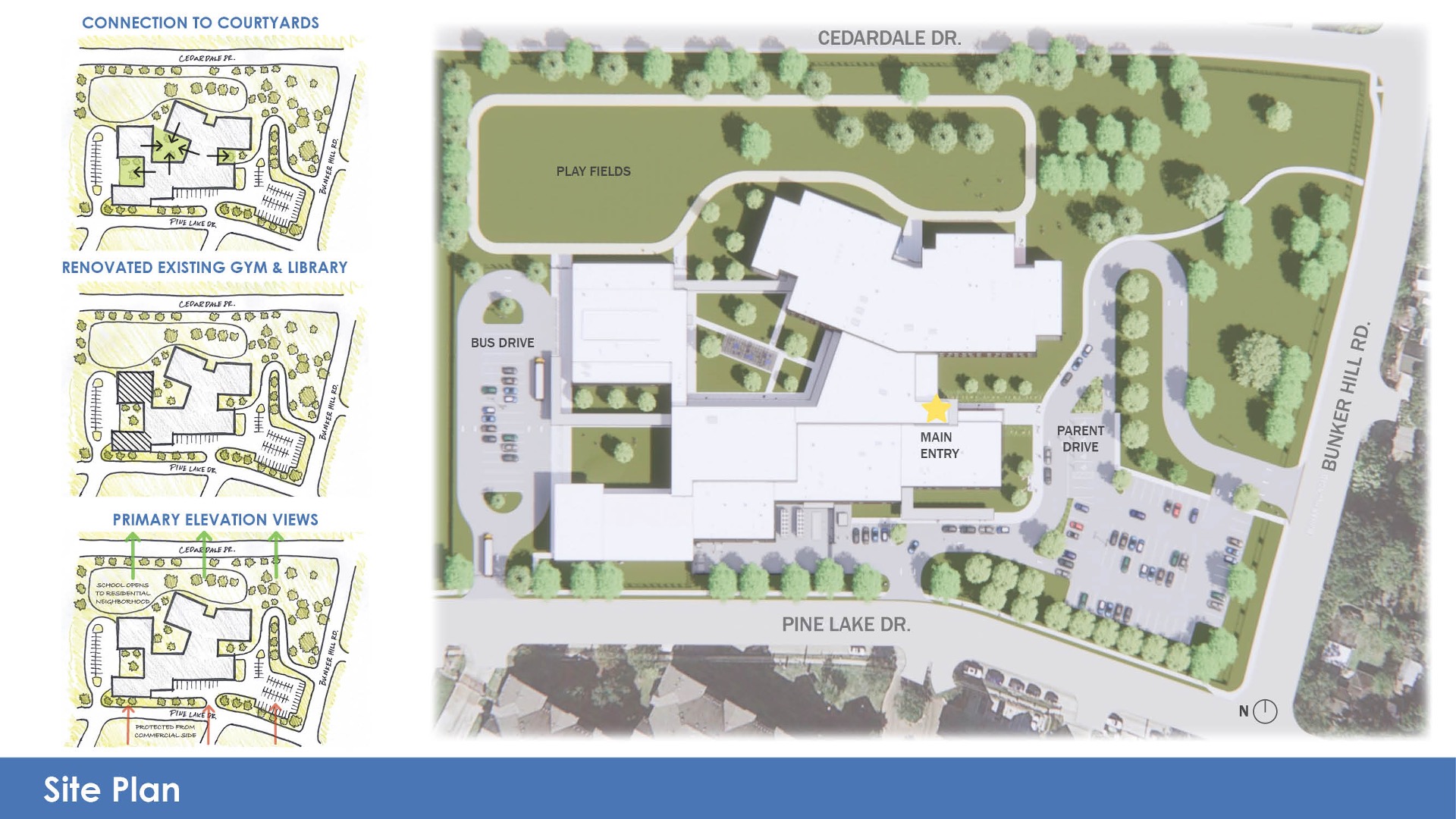
By preserving the existing landscape of the site, the school’s envelope is defined by strategically placed courtyards. These courtyards frame the historic trees on site and create a feeling of familiarity in a new modern education facility. These courtyards also double as outdoor learning spaces and opportunities for the community to gather and interact.”
Design
“After 67 years of minor-changes, the school was left with unconnected spaces in multiple buildings. The compact site posed design challenges due to the locations of large trees, high traffic and challenging utilities. The new design overcomes and embraces them by creating a neighborhood landmark for the students, staff, and community to come together. The design aligns with the district’s goal for a new learning facility that is timeless, flexible, and both student and community centered.
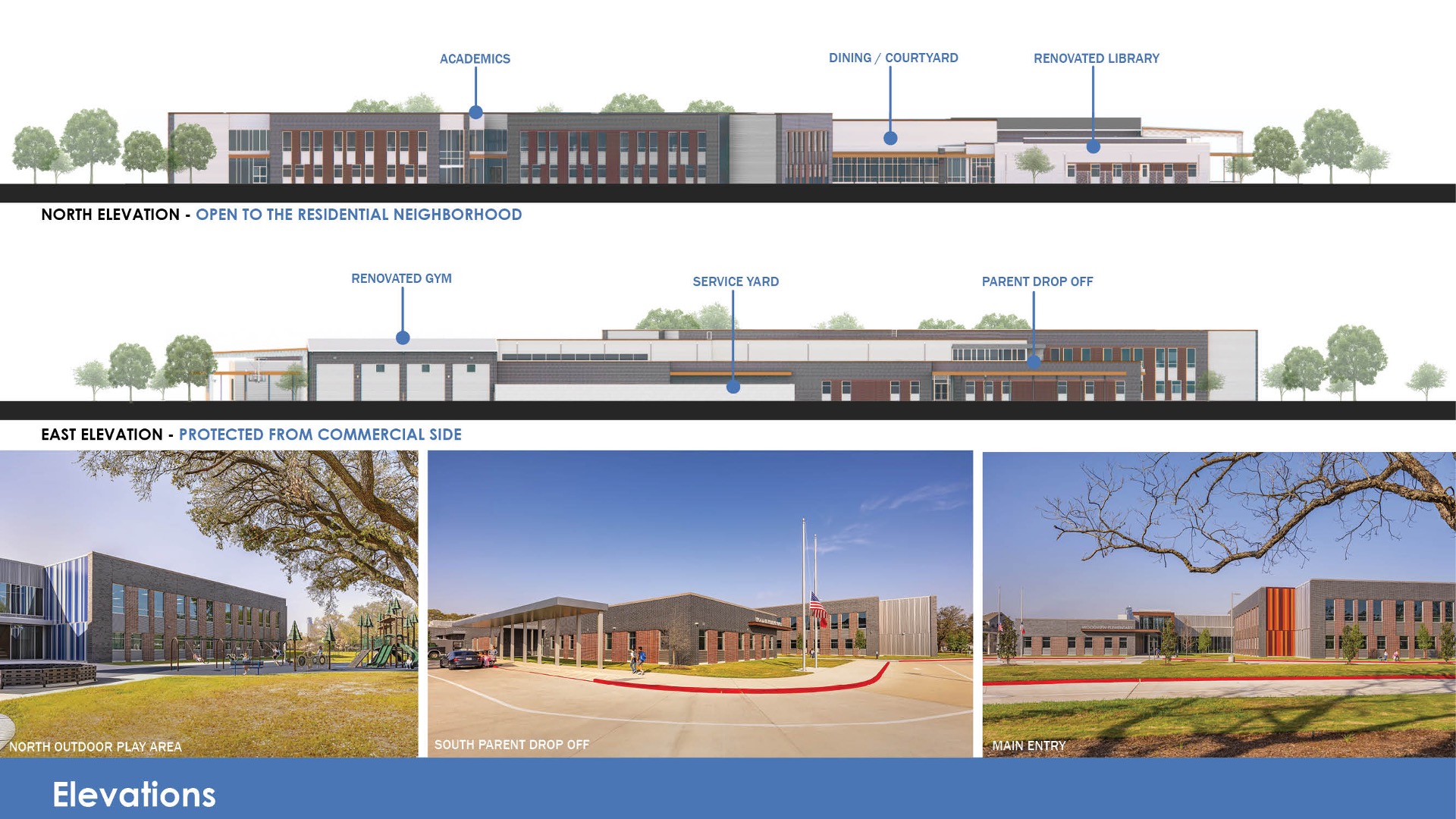
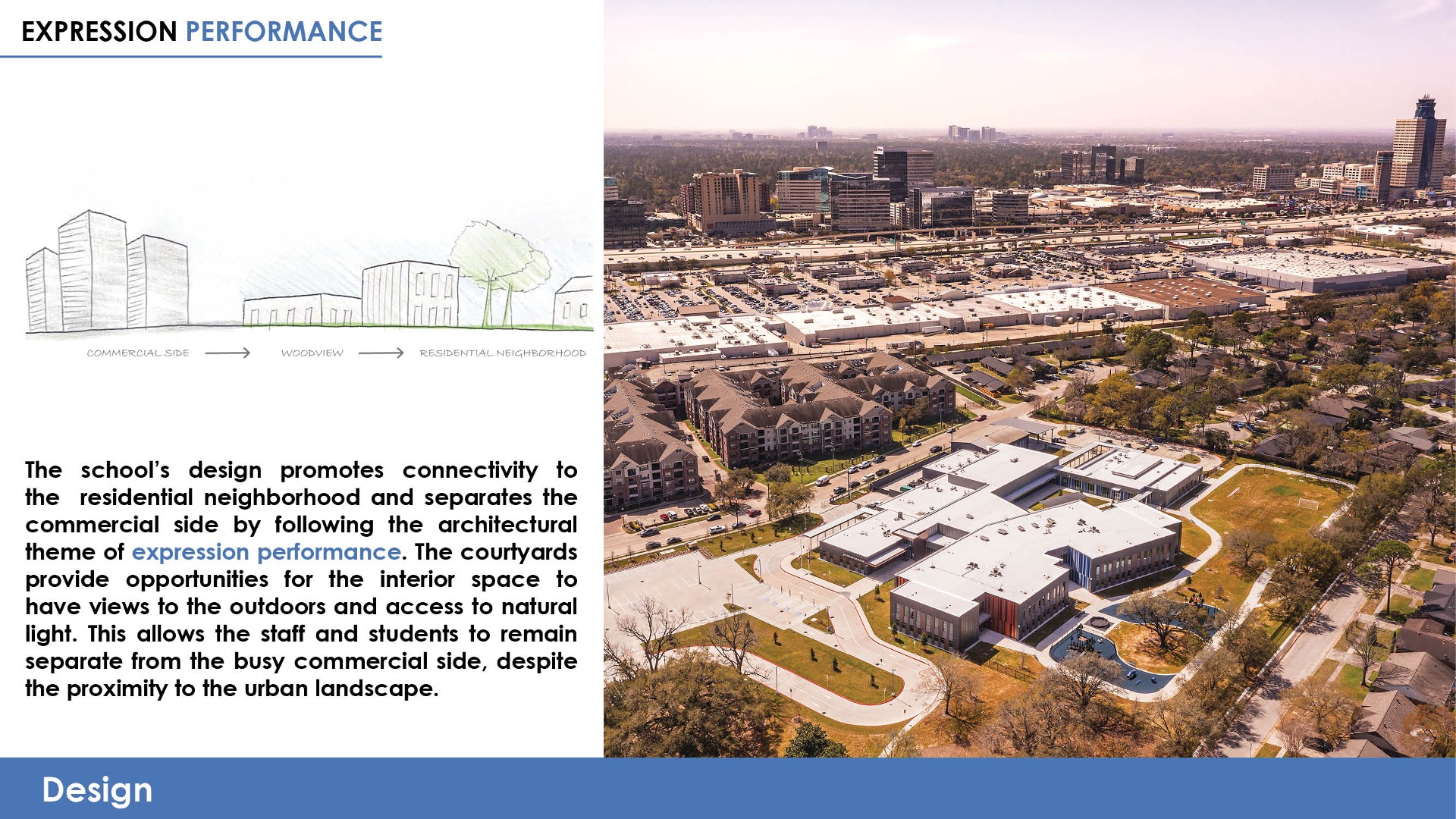
Expression Performance | The school’s design promotes connectivity to the residential neighborhood and separates the commercial side by following the architectural theme of expression performance. The courtyards provide opportunities for the interior space to have views to the outdoors and access to natural light. This allows the staff and students to remain separate from the busy commercial side, despite the proximity to the urban landscape.
21st Century Learning Environment | By combining the past and present through materials and landscape, the design achieves a balance between a modern learning environment and the historic site of the original school. These modern learning spaces feature views to the preserved trees and landscape to create a bright and engaging space.
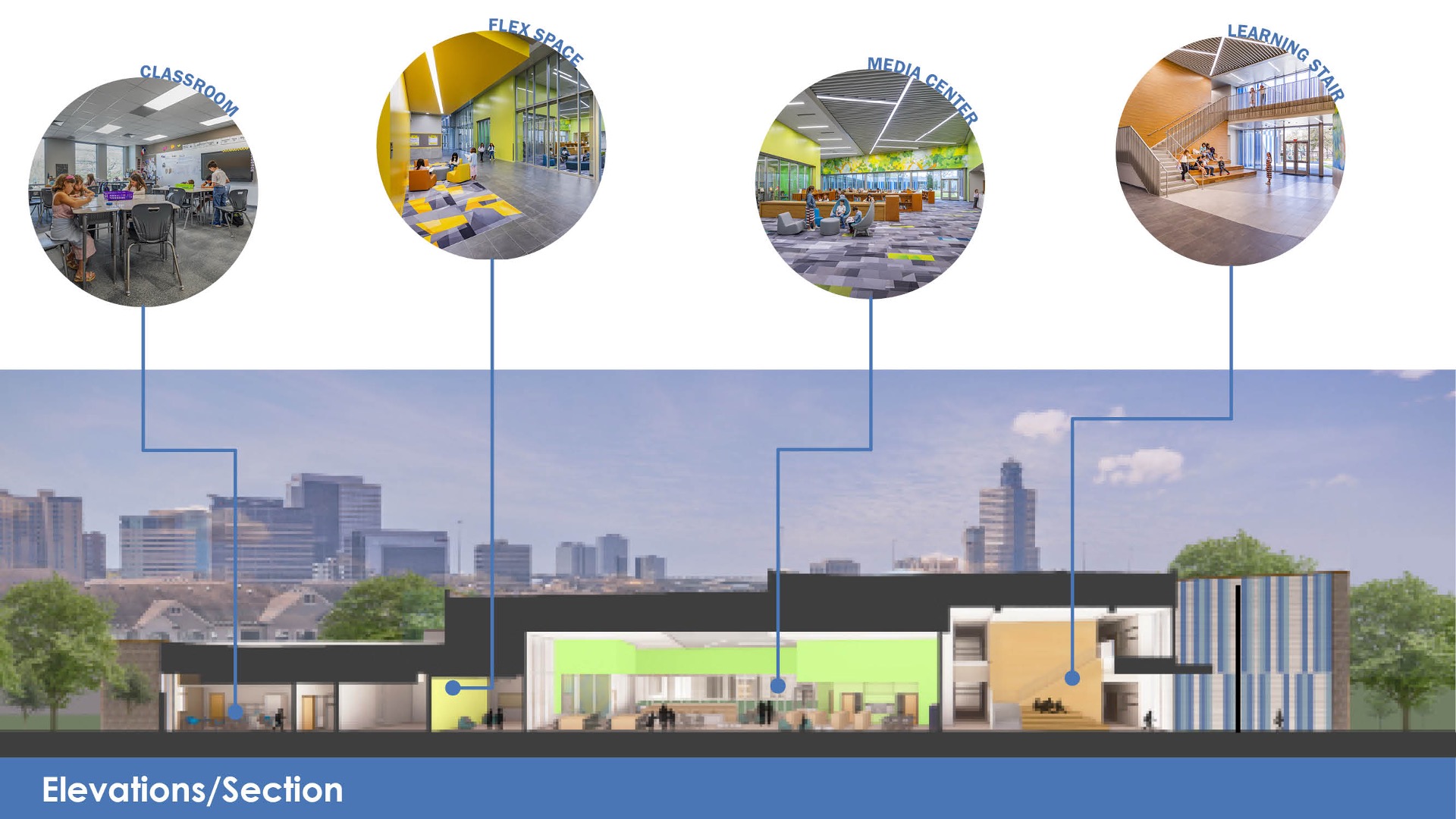
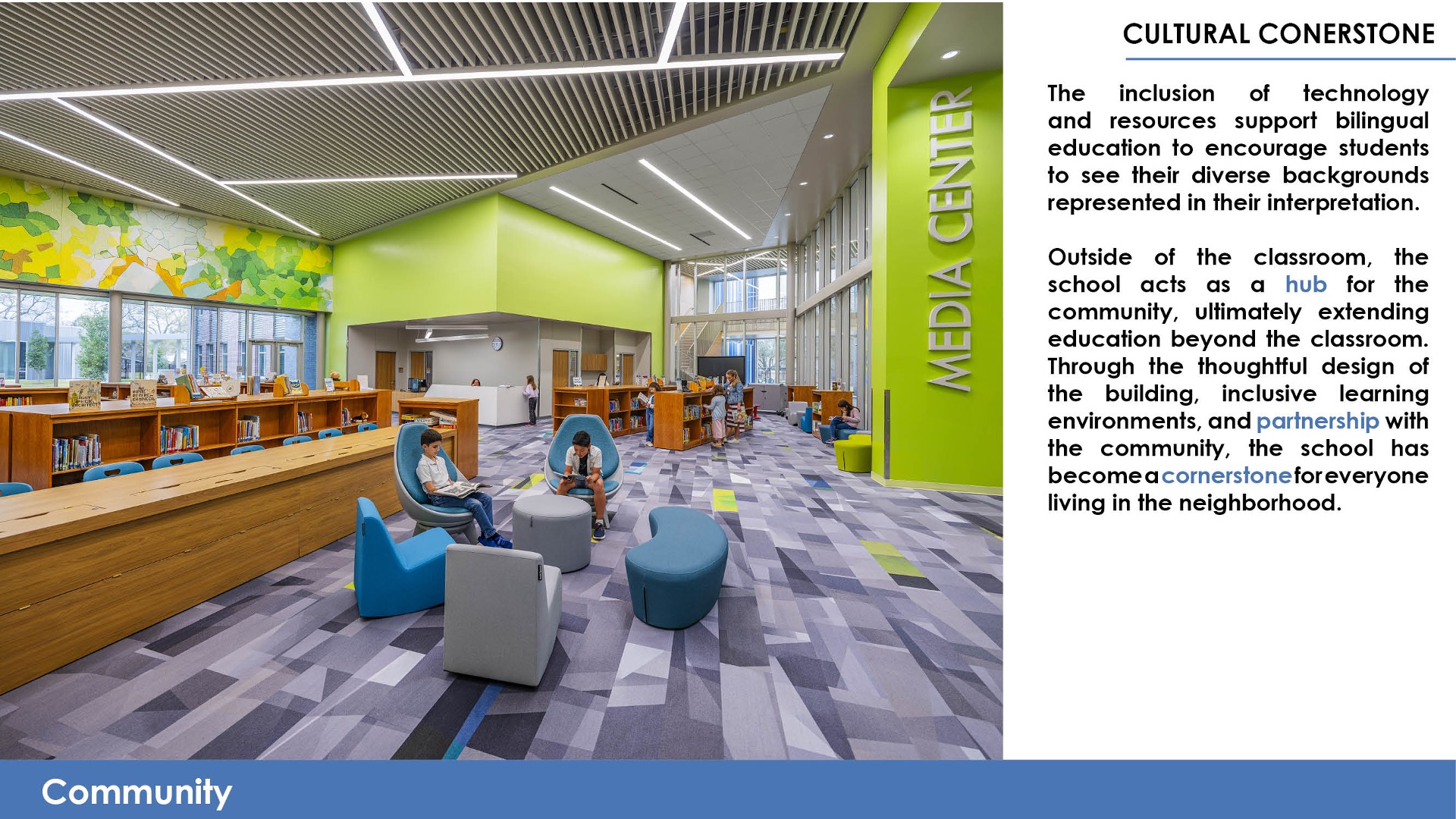
Flexible Spaces | The adaptability of the media center creates a unique space for students and staff. This space can be utilized in a variety of ways. Students and staff can read, utilize technology for learning, and hold class outside of the typical classroom setting. Building off of the idea of flexible spaces and unconventional learning environments, the design features similar spaces throughout the building. These spaces include: Learning Stair, Hallway Group Seating, Outdoor Courtyards, Flexible Dining Commons, Public Park.
Project Vision | Guiding principles for the project include:
- The selection of building materials unifies the design and reflects the residential neighborhood.
- The informal composition and modern angular forms encourage discovery and creativity for the students.
- Accents of colors appealing to kids are fun and inviting.
- Layered forms and varied materials represent the diversity of the WVE school.
- Ample glazing reveals the dynamic movement through the school while providing abundant daylight to interior spaces.”
Value
“The new school creates an opportunity to improve design and efficiency. By organizing the plan into a 2-story building, the footprint was reduced, giving more outdoor space to the community. Lighting and shading strategies focused on the existing trees, allowing natural light to filter into the spaces through strategically placed windows. Through the school’s ties to the neighborhood and the community’s input in the design process, Woodview Elementary became a valuable institution for all.
Value Through Sustainability | The sustainability strategies included:
- Reusing existing structure: The existing structure of the gym and library were both saved and utilized in the new design.
- Preserving legacy trees: Legacy trees on-site influenced the shape of the building.
- Preserving legacy park: The on-site park was preserved and improved.
- Reducing overall building footprint: The overall footprint of the building was reduced by 25%.
- Natural lighting and shading: The design coincides daylighting strategies and natural shading in key locations.
Value Through Engaging Spaces | Creating engaging learning environments that promote collaboration was one of the leading principles during the design process. These spaces consist of flexible classrooms that can be used at any time, in addition to the dedicated classroom space. These environments are designed to be used for group work and projects – Further promoting teamwork and collaboration in a different environment from the traditional classroom.
Value Through Materiality | Blended modern brick colors with traditional brick matches the previous school’s design. This achieves a modern updated look that ties back to the school’s history. Additionally, metal panels featuring the school’s colors create wayfinding opportunities on the exterior. Introducing natural materials softens the geometric design of the building. The wood panels bring a sense of warmth to the cool color palette of the school. Acoustic panels are placed in strategic locations to optimize acoustic performance of flexible spaces.
Value Through Community Engagement | Because of the proximity to the city, it was important to consider the existing
community space when choosing the footprint of the new building. By building on top of the existing school’s footprint, the new efficient design preserves public spaces, such as the park while also creating new interior spaces for the community to utilize. By providing space for the community, the school and neighborhood retain its identity while being close to the busy metroplex.”
Wellness
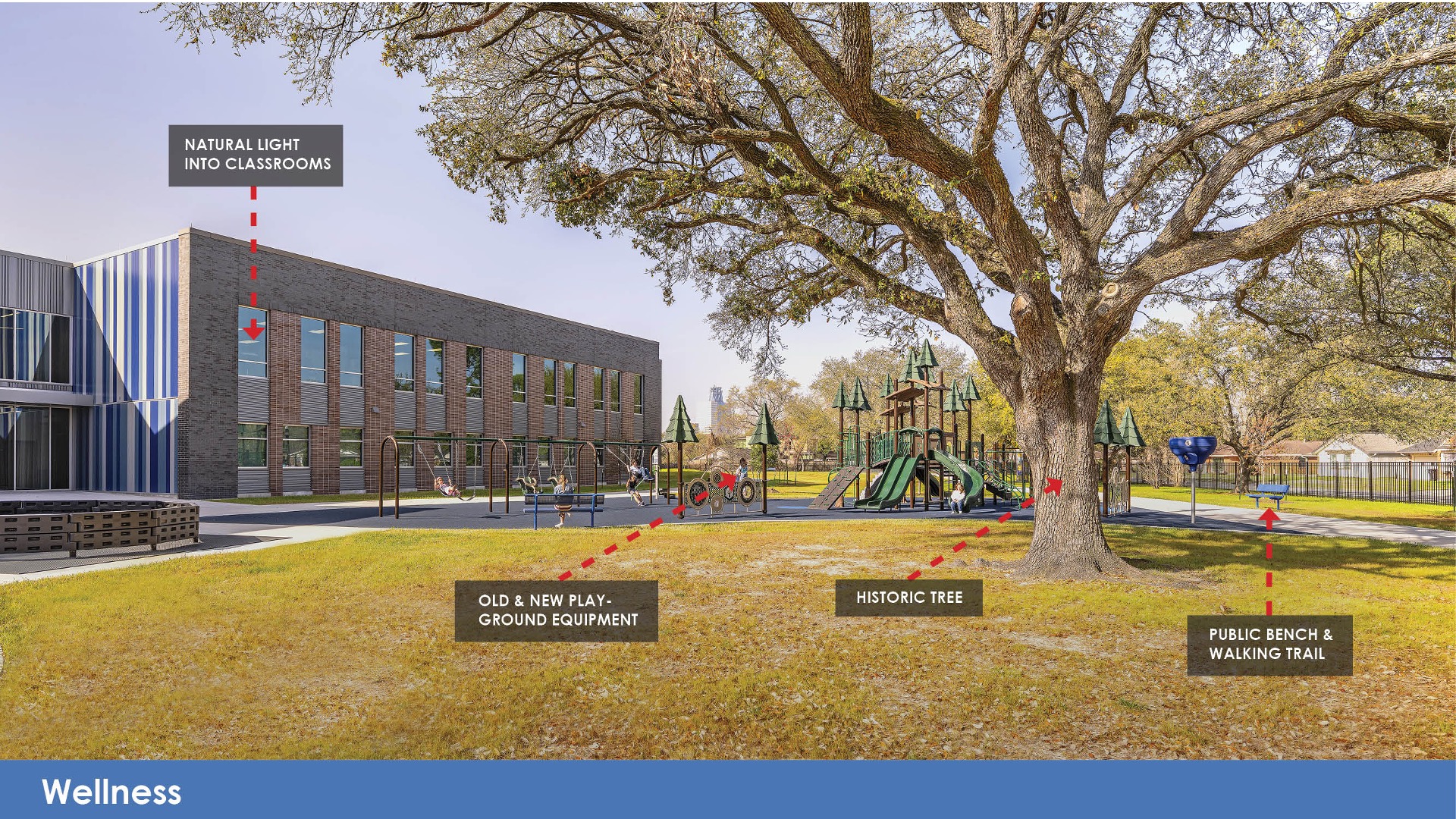
“Careful thought was given to key ideas such as daylighting, biophilia and connections to the outdoors. By properly positioning the school, the windows increase the natural lighting in the school, reducing the reliance on artificial lighting. Students in well-lit classrooms are proven to experience higher academic performance and reduced stress. Additionally, the color palette was strategically chosen to better engage students and promote a feeling of energy and excitement.
Integrating biophilic design involved integrating plants, landscape and natural materials into the design. In locations without views to the exterior, graphics and color are introduced to retain the feeling of the natural views around the school. Large windows in the media center, cafeteria and classrooms offer views to the legacy trees and create a biophilic response in students and staff throughout the school day.
Wellness interventions include:
- Deciding the positioning of the building took into consideration the existing landscape and available amenities to the local neighborhood. As a result, the school features several courtyards while providing plenty of greenspace to contrast the modern design.
- By placing large windows in high traffic areas, the design is able to maximize natural light rather than relying on artificial light. This approach allows for minimal light fixtures in key areas and reduces energy usage, while highlighting design features.
- Geometric graphics and design depict natural elements create a unique identity, blending nature with the modern built environment. Graphics often depict trees, flowers, or biophilic themes that give the school its colorful nature inspired aesthetic.”
Community
“There is a deep history and connection to this school, as many families have previous generations that have graduated from Woodview ES. The design plays an important role in preserving the identity of the community while and maintaining pride in the institution they grew up with, while introducing modern learning environments and communal spaces that promote inclusivity. Preserving the gym and reusing the library structure to support modern pedagogy showcases the school’s past while educating future generations.
Communal Spaces | When envisioning the new elementary school, the design prioritized open communal space in the interior and exterior. Multi-purpose hallways, flex spaces, and shared outdoor seating all provide community spaces for staff, students and the neighborhood. These communal spaces are used to hold classes, cultural events for community that bring everyone together in one space. Throughout the school, portions of the hallway are carved out for flex spaces. These spaces offer a place for staff and students to stop and chat, read a book, or do homework. These spaces transform the hallways from spaces only used for circulation, into usable program space that is given back to the school.
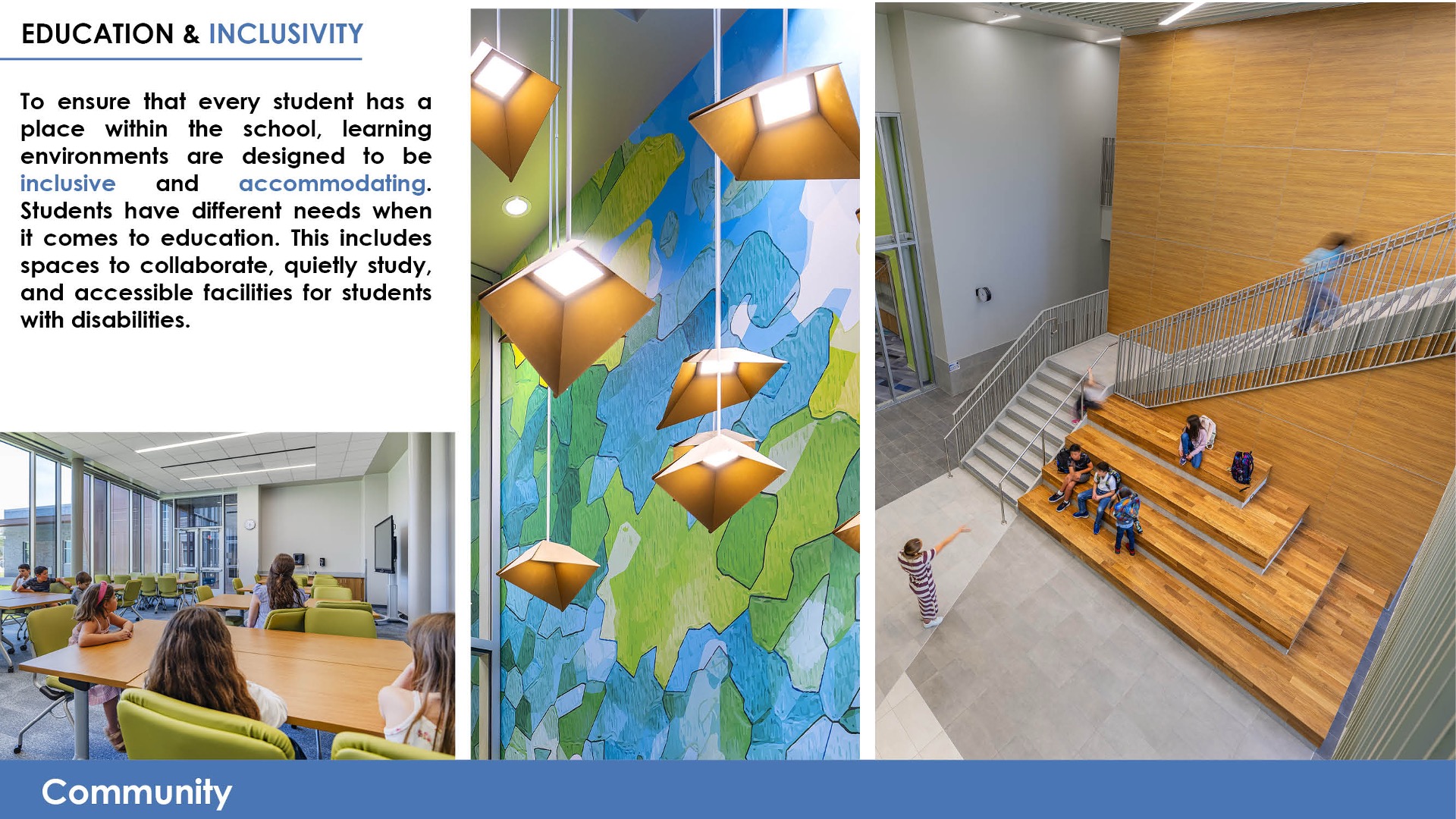
Education & Inclusivity | To ensure that every student has a place within the school, learning environments are designed to be inclusive and accommodating. Students have different needs when it comes to education. This includes spaces to collaborate, quietly study, and accessible facilities for students with disabilities.
Cultural Cornerstone | The inclusion of technology and resources support bilingual education to encourage students to see their diverse backgrounds represented in their interpretation. Outside of the classroom, the school acts as a hub for the community, ultimately extending education beyond the classroom. Through the thoughtful design of the building, inclusive learning environments, and partnership with the community, the school has become a cornerstone for everyone living in the neighborhood.”
 Planning
“Planning this project included a diverse group of community members, staff, parents, and district personnel to create a Project Advisory Team (PAT). The design team and PAT established guiding principles and design goals. After a series of planning presentations, PAT members were unanimous in their design outcome. This planning process was instrumental in understanding the diverse community and the unique needs of the students and staff, resulting in a project that is authentic to Woodview.
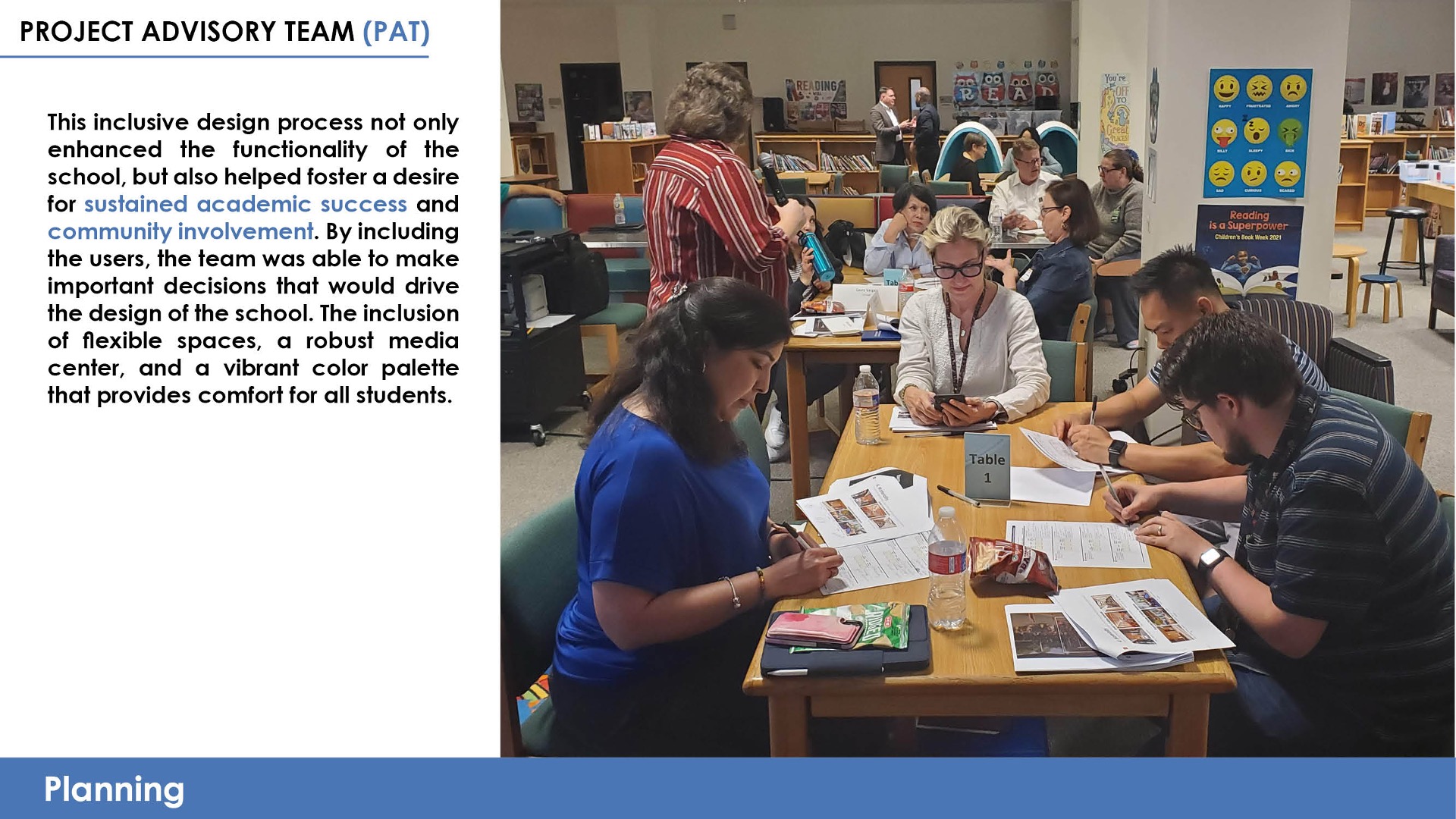
Project Advisory Team (PAT) | The process began with project advisory teams led by the owner and architect. A series of six meetings were scheduled at the campus to work collaboratively with the community to develop a design concept. These meetings solicited feedback from the community for the history of the school and surrounding neighborhood. This inclusive design process not only enhanced the functionality of the school, but also helped foster a desire for sustained academic success and community involvement. By including the users, the team was able to make important decisions that would drive the design of the school. The inclusion of flexible spaces, a robust media center, and a vibrant color palette that provides comfort for all students.
Programming | The first meetings determined the building location, as well as the parking and play fields. In addition, the team worked to save legacy trees on the site. Discussions regarding the building orientation and site access ensured the design was efficient and maintained a safe and secure campus for staff and students. The inclusion of outdoor learning space further developed the shape and exterior design of the school. A sustainable design decision allowed for the re-use of existing structure to be included alongside the new design.
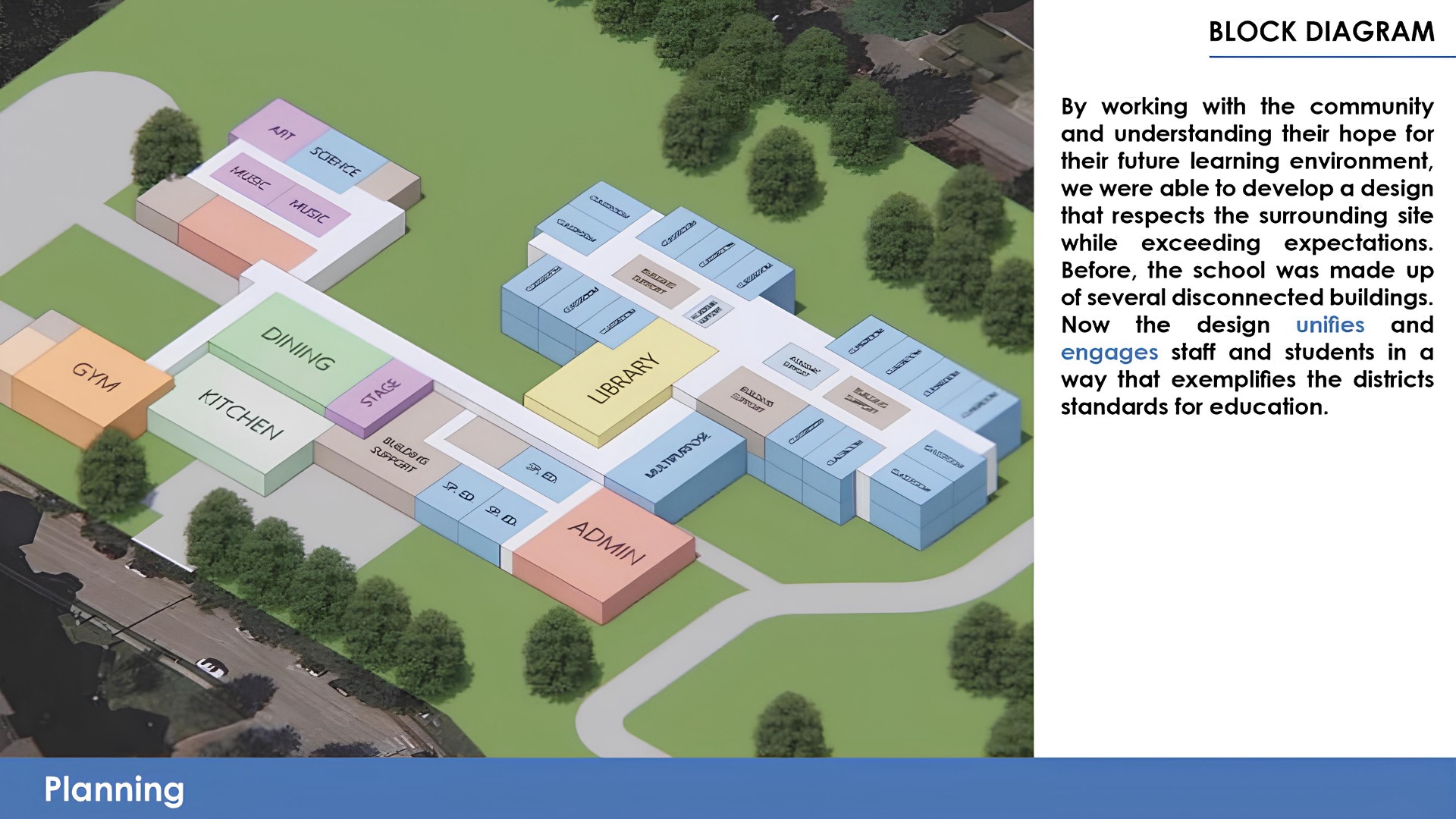
By working with the community and understanding their hope for their future learning environment, we were able to develop a design that respects the surrounding site while exceeding expectations. Before, the school was made up of several disconnected buildings. Now the design unifies and engages staff and students in a way that exemplifies the districts standards for education.”
 School Transformation
“The new Woodview ES has completely transformed how students and teachers engage and learn in their deeply rooted, traditional community. The connection to the outdoors and dynamic interior graphics provides placemaking opportunities for students and staff that did not exist before. The bold colors, flexible learning areas, and natural lighting transform what were originally dull spaces into vibrant, motivating, and exciting learning hubs that students enjoy and look forward to every day.
Transformation Through History | Opened in 1958, Woodview Elementary School has a rich history. By learning about its history, the design team was able to make decisions that respect the community’s past while prioritizing the student’s future.
Examples of referencing the community’s history and current needs in the design includes:
- Materiality: The color palette of the exterior blends modern building materials with traditional red brick.
- Site Design: Preserving legacy trees and designing an efficient footprint gave space back to the community.
- Community Spaces: The public park, outdoor learning space, and playing fields are places where the community gathers.
Built For Future Generations | Woodview Elementary transformed from a historic school building to a modern 21st century learning environment. The new campus integrates seamlessly into the urban landscape and has become a landmark for the neighborhood. The new campus now hosts new technology, flexible learning spaces, connections to the outdoors, and a place for every student to belong.”
 Star of Distinction Category Winner