



Spring Branch ISD — Memorial Drive Elementary School
Architect: Stantec Architecture Inc.
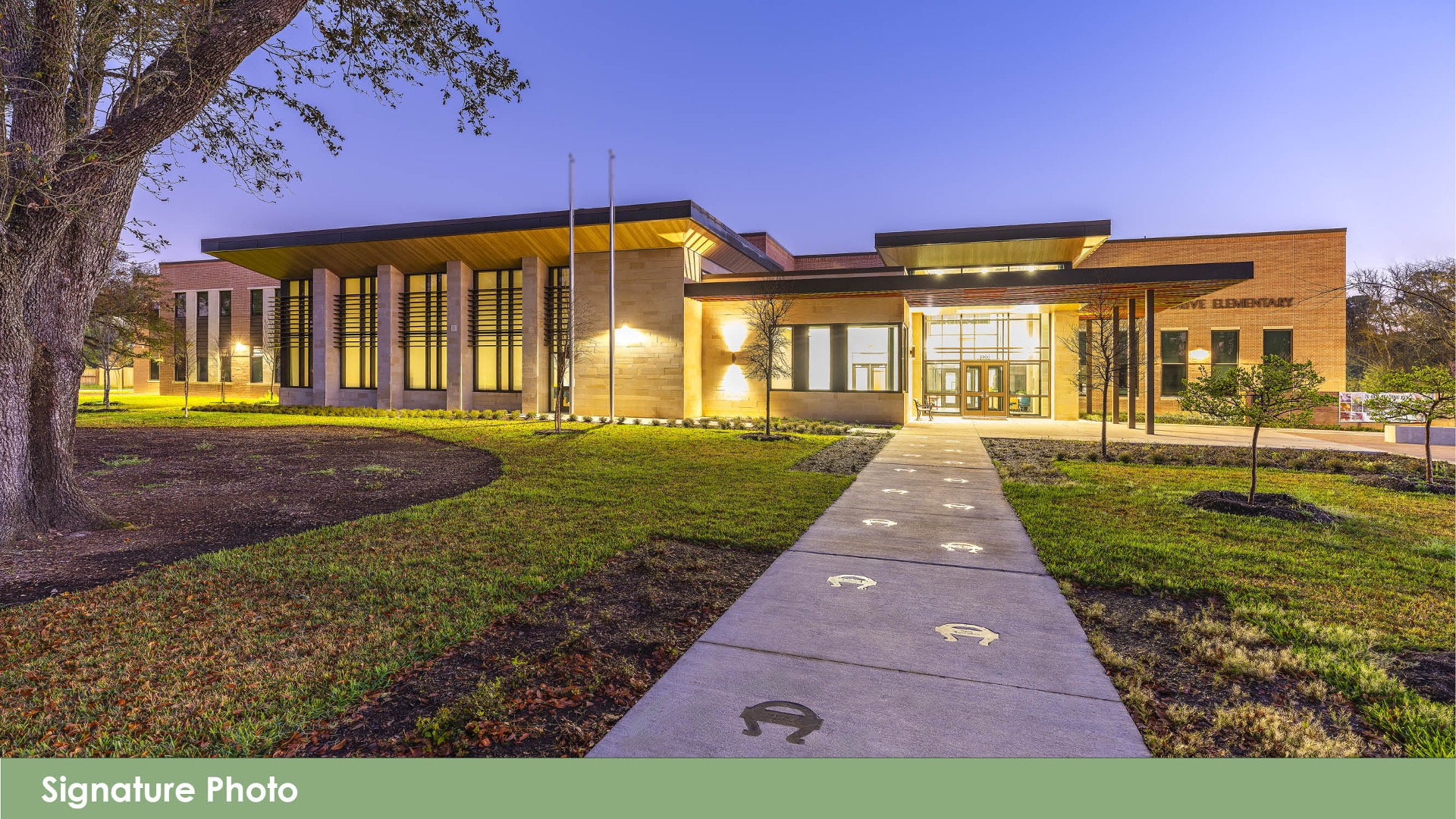
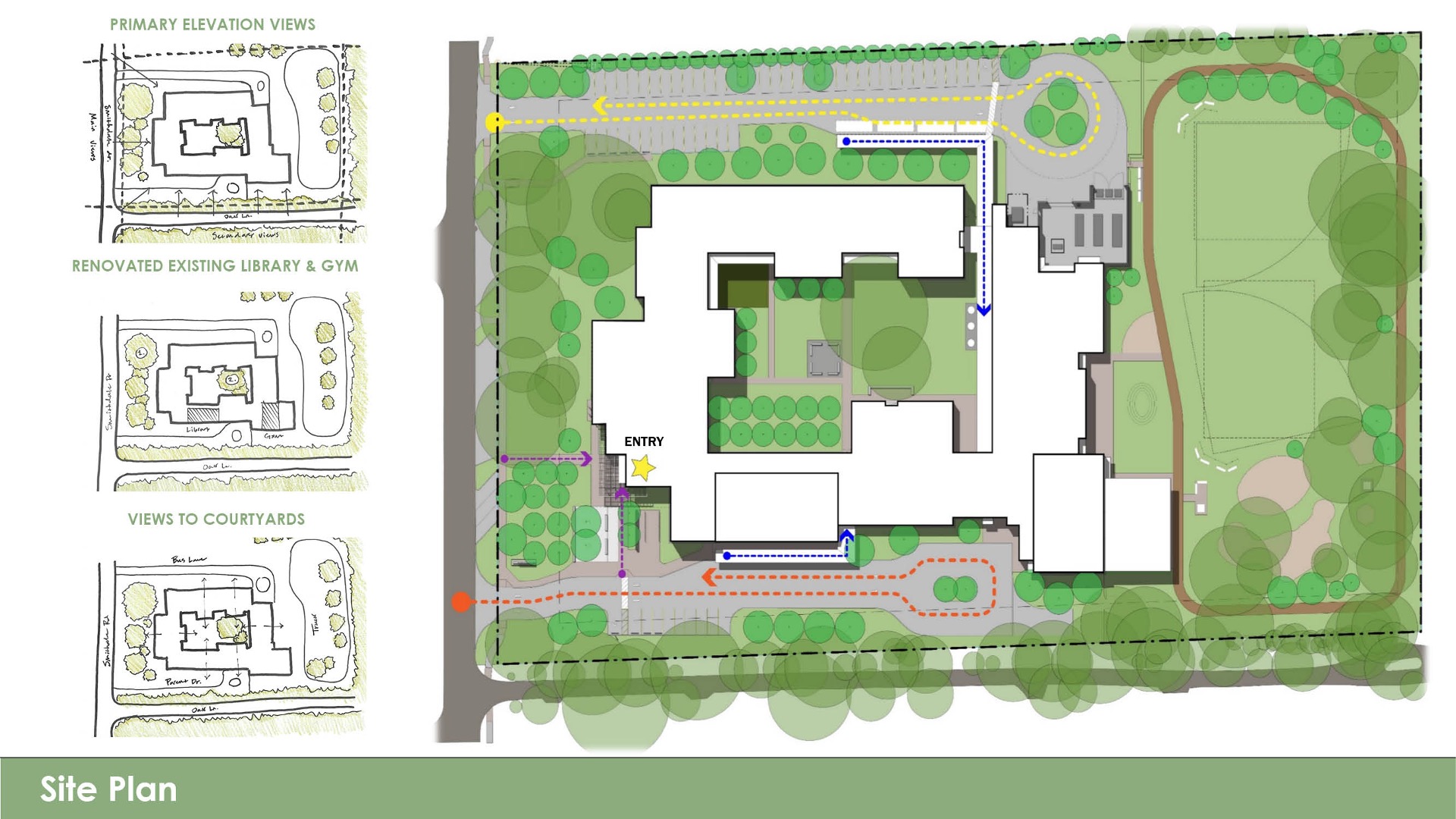
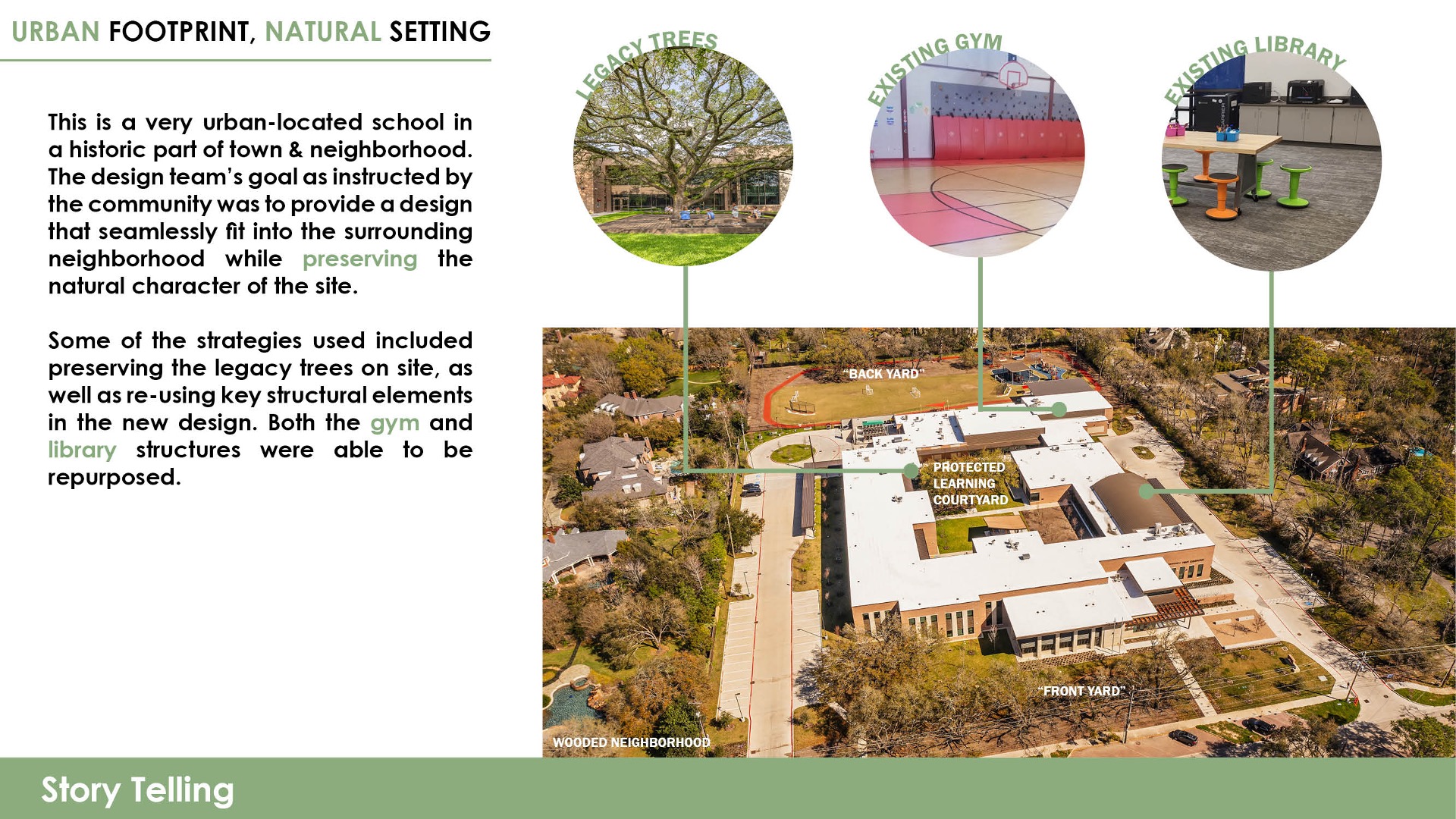
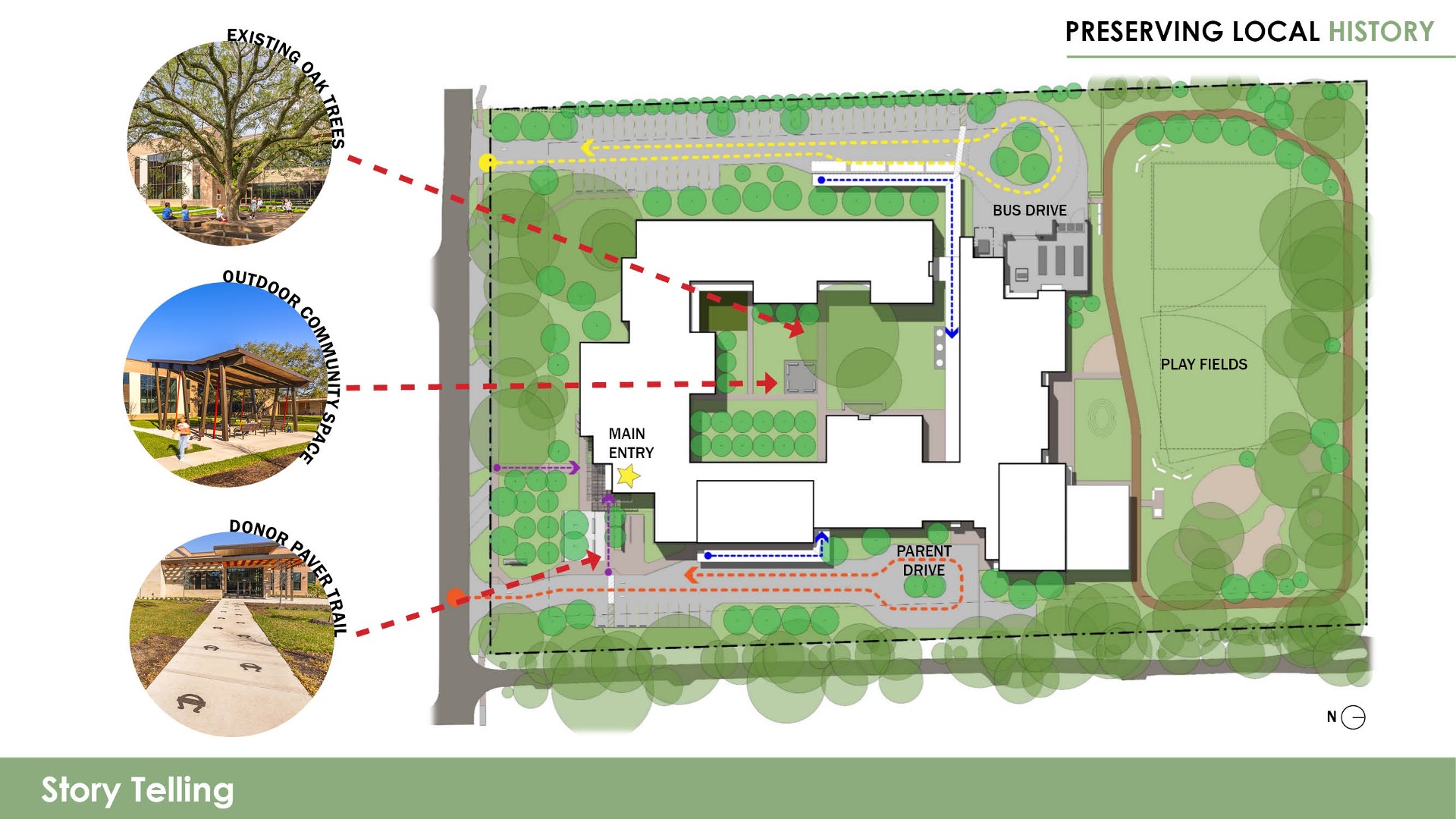
“The school replaces an existing facility that has been serving families with pride and a great sense of community on its naturally wooded site since 1949. Many of the current students are 2nd and 3rd generation students. The Project Manager is also an alumnus of the school, adding another layer of pride into the new school. The campus is located within a well-established neighborhood with a single street access to the site. The layout of the campus separates bus, car and pedestrian traffic, providing plenty of vehicle stacking on site and protecting existing mature trees. This is a very urban-located school in a historic part of town & neighborhood.
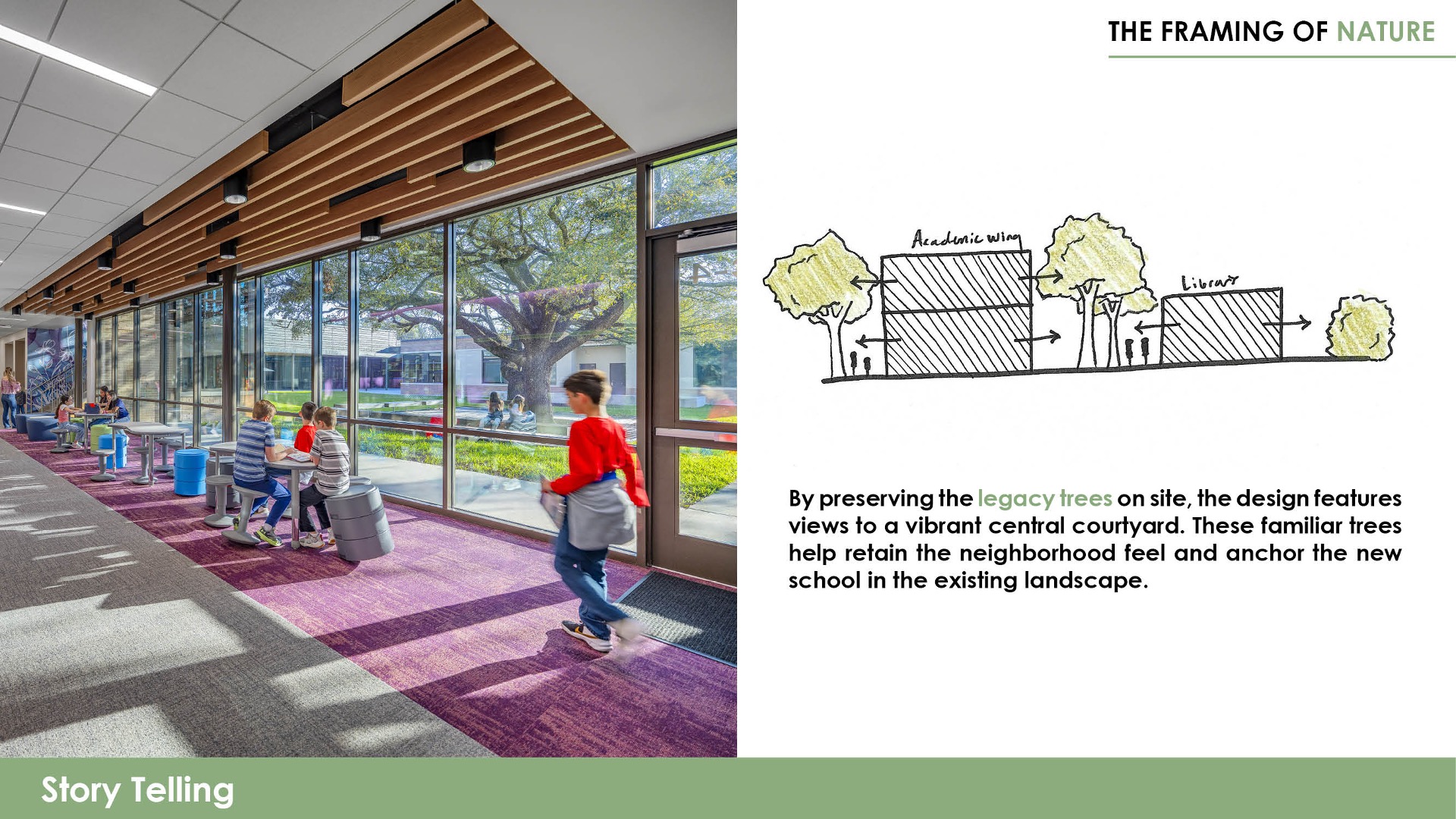
The design team’s goal as instructed by the community was to provide a design that seamlessly fit into the surrounding neighborhood while preserving the natural character of the site. The new campus includes a 2-story academic wing rich in technology and supported by flexible collaboration spaces, outdoor learning, and a library at the heart of the campus. Campus security was enhanced with additional fencing, secure entry, areas for sheltering, and visual barriers from the public. Some of the strategies used included preserving the legacy trees on site, which allows the design to feature views to a vibrant central courtyard and helps retain the neighborhood feel and anchor the new school in the existing landscape. Re-using key structural elements in the new design was also important. Both the gym and library structures were able to be repurposed.”
Design
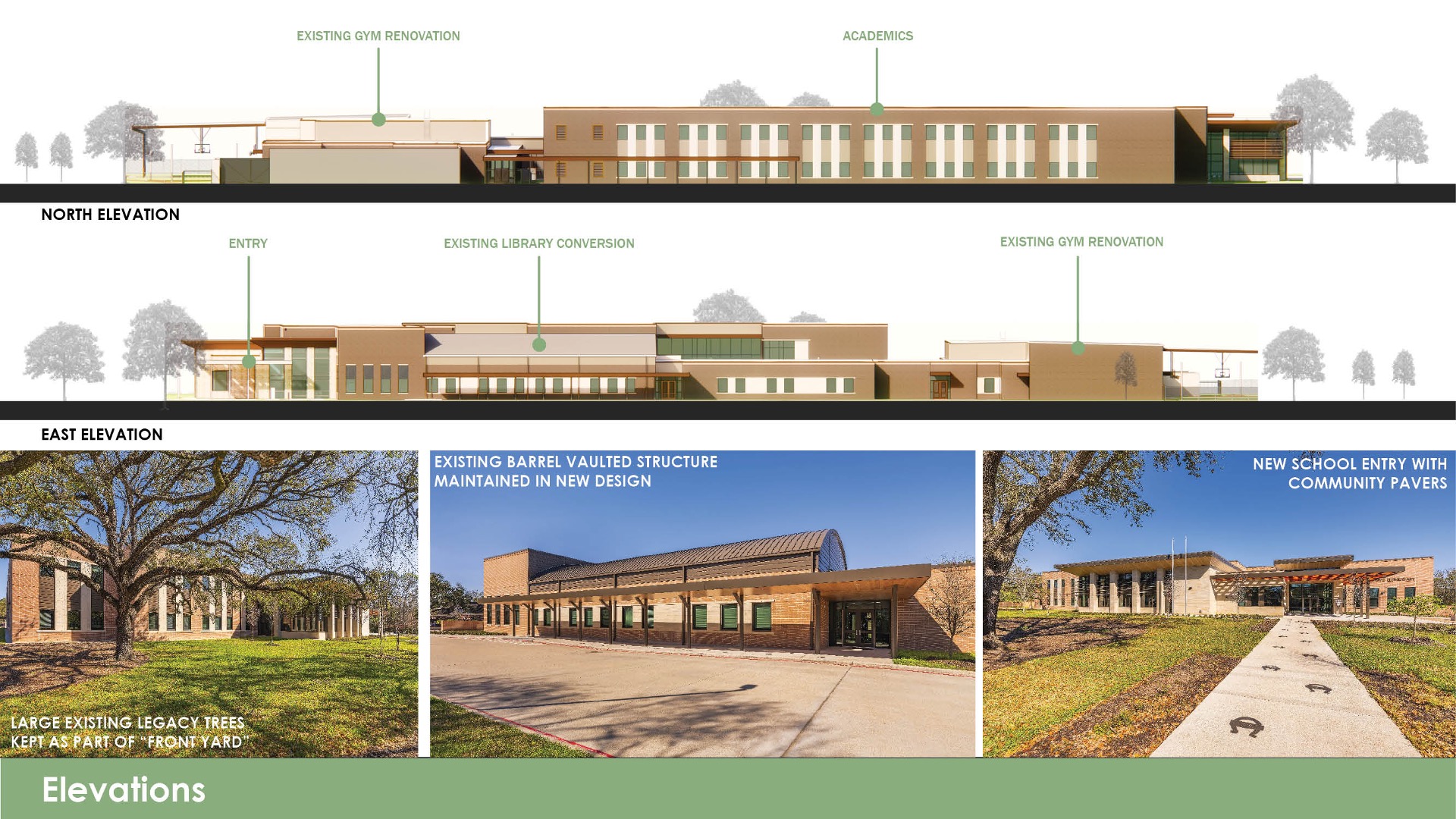
“The design team incorporated the renovation of the existing gym and repurposed the library building into the new front office; with these modifications seamlessly integrated into the rebuild. The new school connects all functions together under one roof providing a central library as the heart of the campus, flexible learning areas within the 2-story academic wing, connected to the high energy science, art, music and gym portion of the campus. The dining commons space is a large multi-purpose area located adjacent to the gym for large scale events. The direct access between the commons, gym, outdoor playground and play fields provide a backyard feeling to the campus.
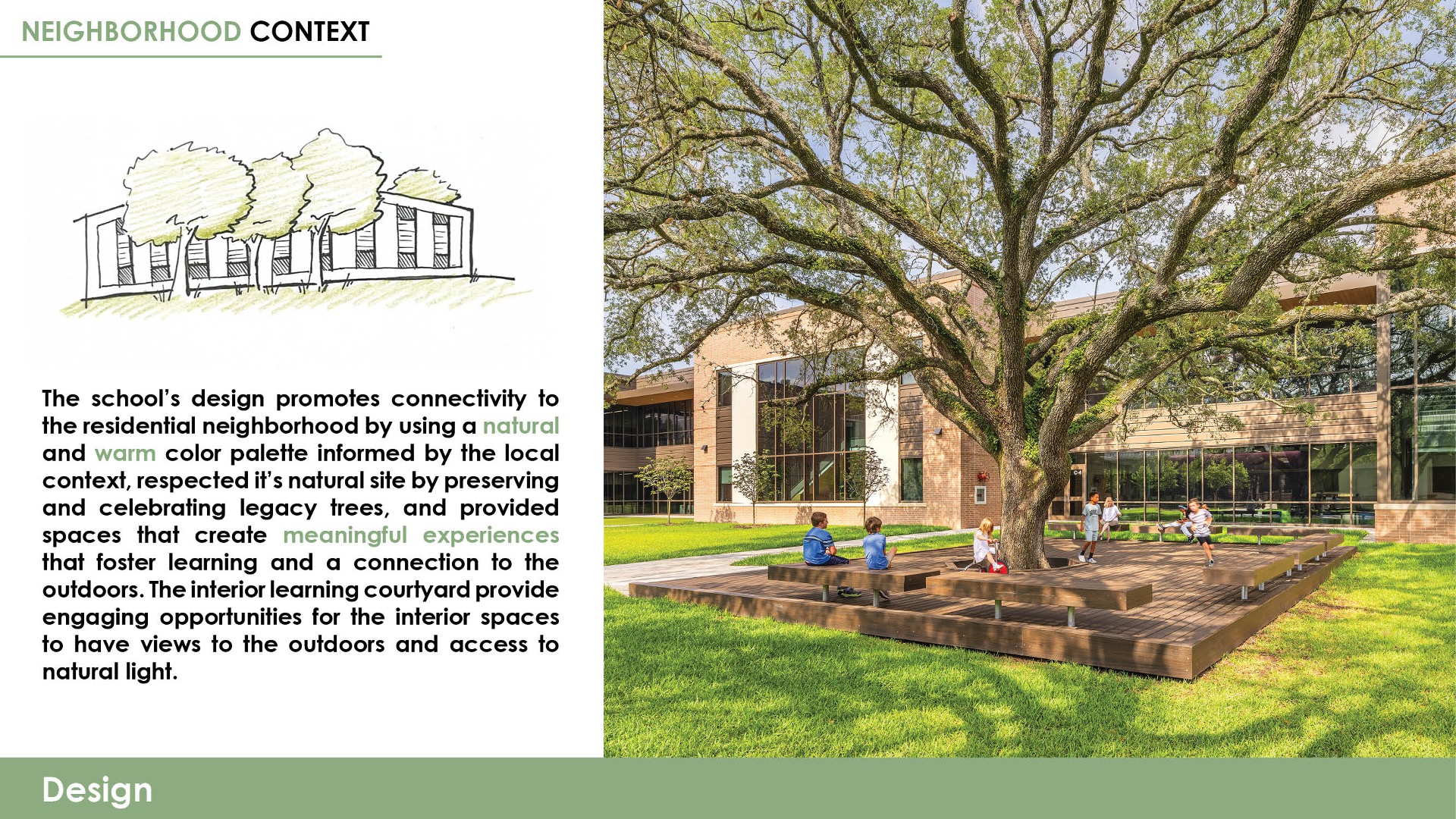
The school’s design promotes connectivity to the residential neighborhood by using a natural and warm color palette informed by the local context, respected its natural site by preserving and celebrating legacy trees, and provided spaces that create meaningful experiences that foster learning and a connection to the outdoors. The interior learning courtyard provides engaging opportunities for the interior spaces to have views to the outdoors and access to natural light.
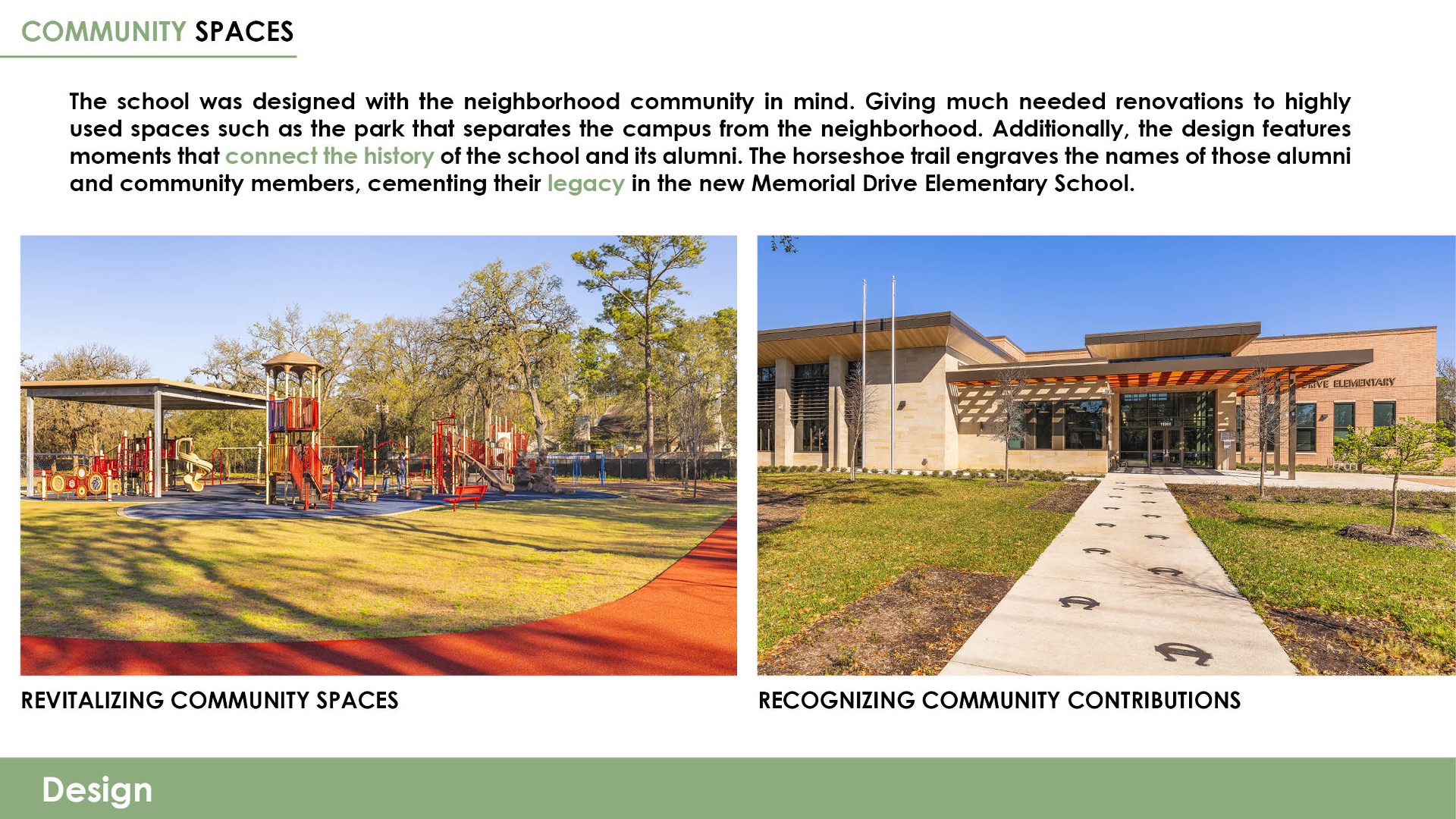
The school was designed with the neighborhood community in mind. Giving much needed renovations to highly used spaces such as the park that separates the campus from the neighborhood. Additionally, the design features moments that connect the history of the school and its alumni. The horseshoe trail engraves the names of those alumni and community members, cementing their legacy in the new elementary school.
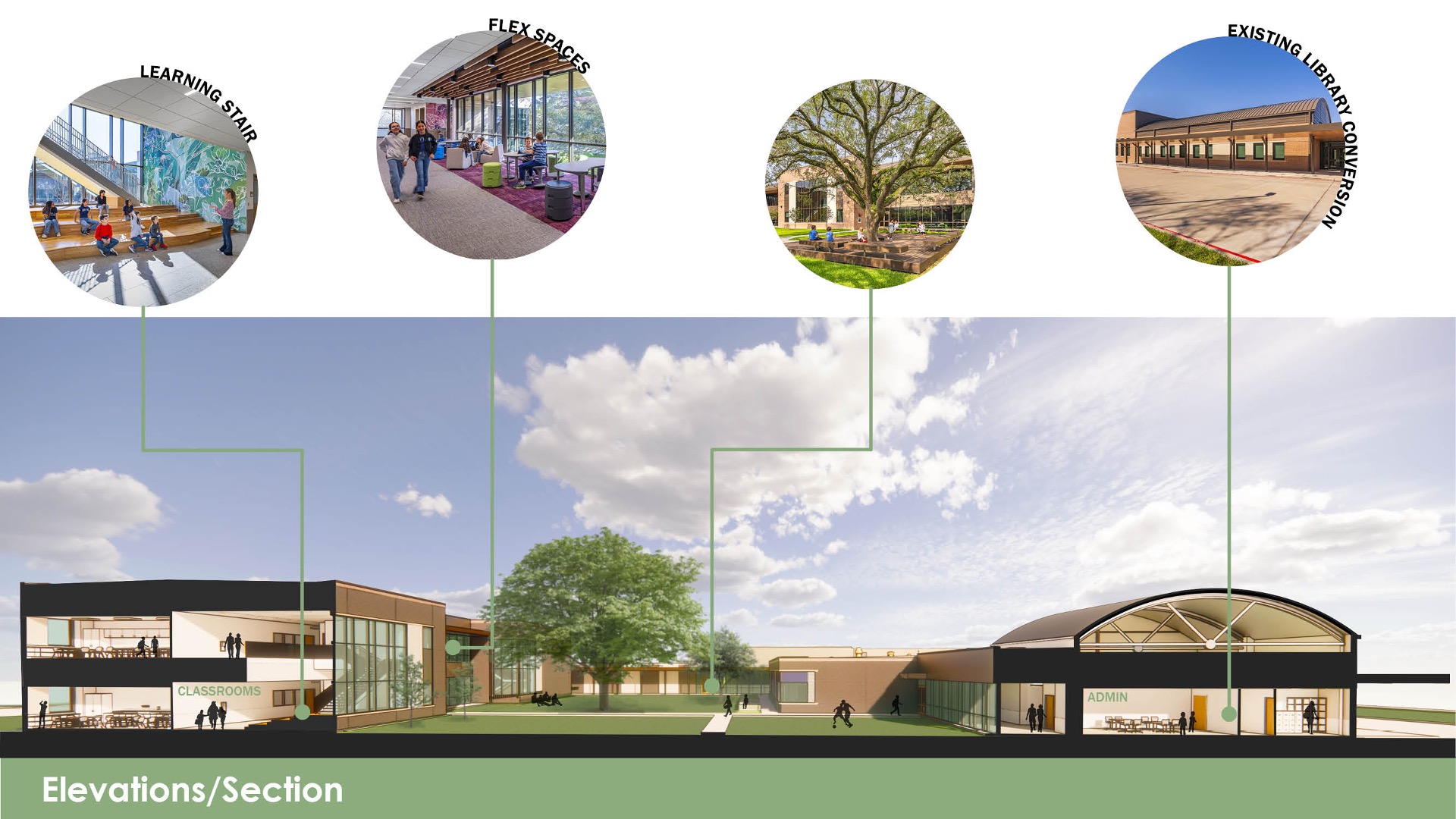
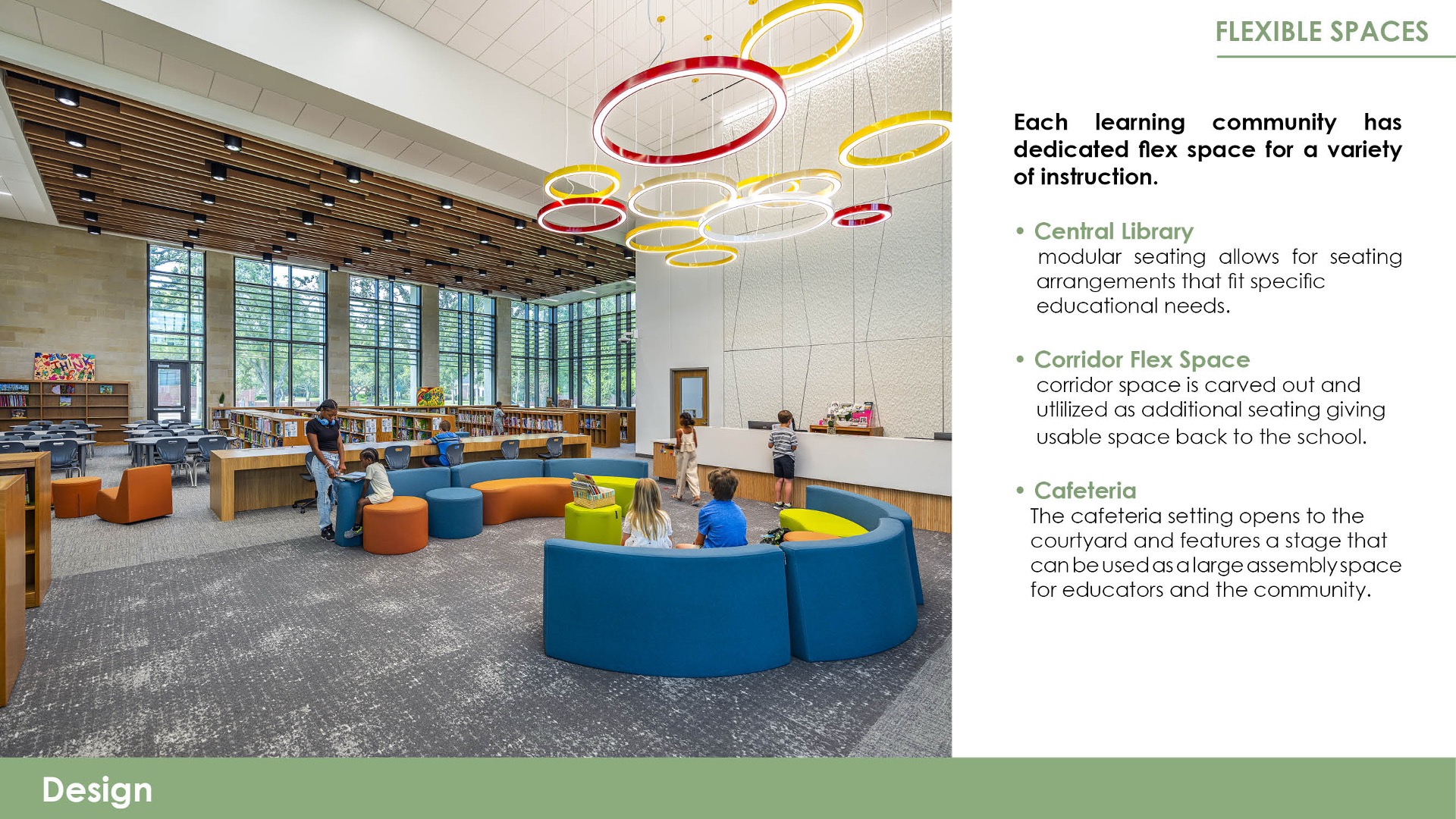
Each learning community has dedicated flex space for a variety of instruction.
- Central Library: modular seating allows for seating arrangements that fit specific educational needs.
- Corridor Flex Space: corridor space is carved out and utilized as additional seating giving usable space back to the school.
- Cafeteria: the cafeteria setting opens to the courtyard and features a stage that can be used as a large assembly space
The guiding principles for the project vision included:
- Design with an emphasis on the neighborhood location.
- Design spaces that will enhance the natural setting.
- Spaces are intentional and create meaningful experiences.
- Design a school that highlights natural materials that match the local context.”
Value
“Value-driven designs made creative use of the school’s existing footprint to reduce costs. By transforming the former library into the front office and renovating the gym, the team saved on the cost of construction and materials like steel. The project also enhances the community with its multipurpose room, positioned and equipped to handle public events and voting. Replacing the 70-year-old building gives the district more efficient and accessible systems that are less costly to maintain.
Adaptability strategies included:
- Value-driven repurposing and renovation of existing spaces: The existing barrel-vaulted library and gym were able to be repurposed in the new design.
- By designing the new building around the two existing structures, the early design planning allowed for seamless integration of existing structures into new design as well as preserving trees to maximize the limited site.
- Saved costs on construction and materials such as steel. Both spaces provided significant savings in the budget, allowing for funds to be spent on new design features.
Flexibility strategies included:
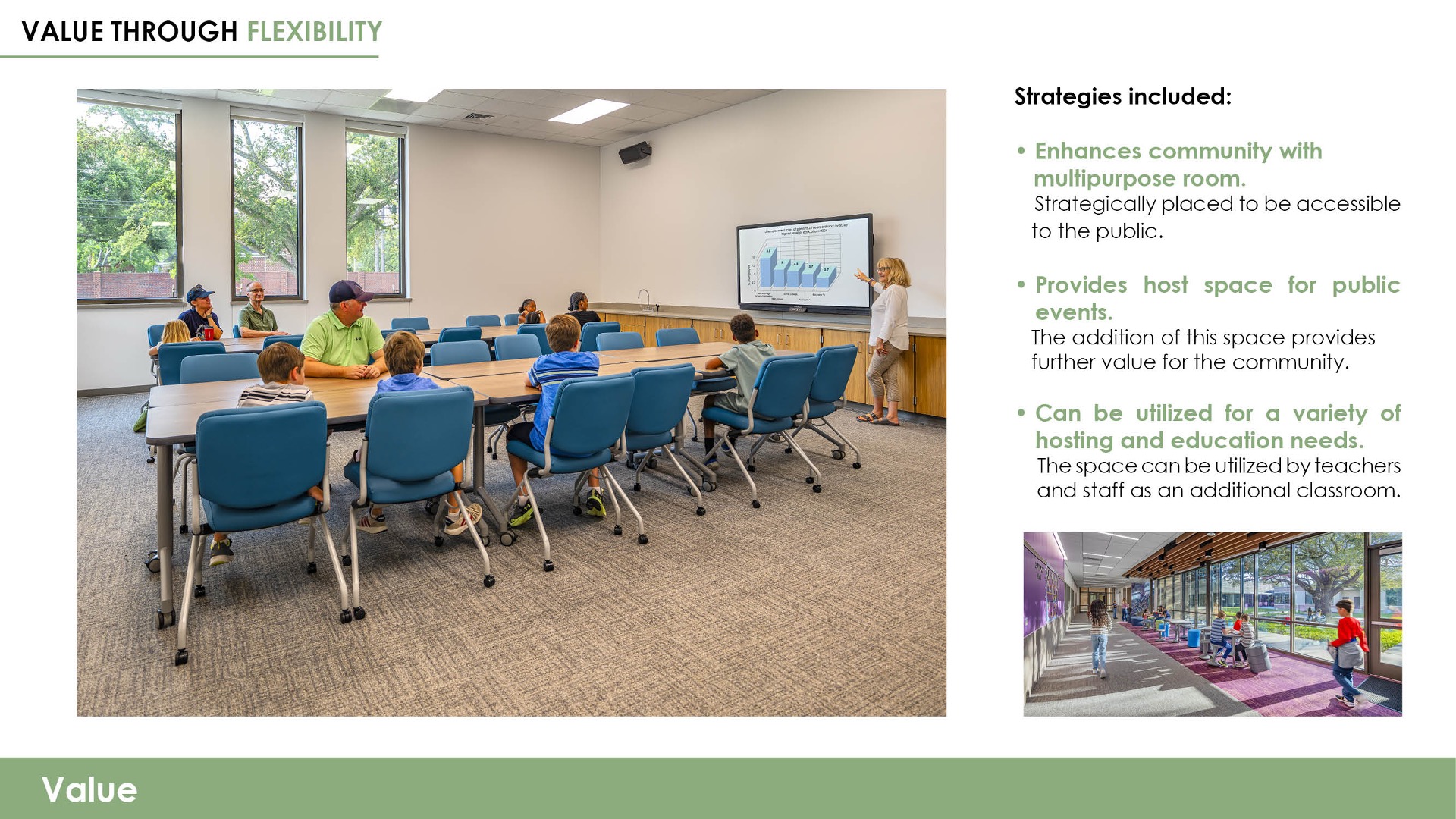
- Enhances community with multipurpose room that is strategically placed to be accessible to the public.
- Provides host space for public events. The addition of this space provides further value for the community.
- Can be utilized for a variety of hosting and education needs. The space can be utilized by teachers and staff as an additional classroom.
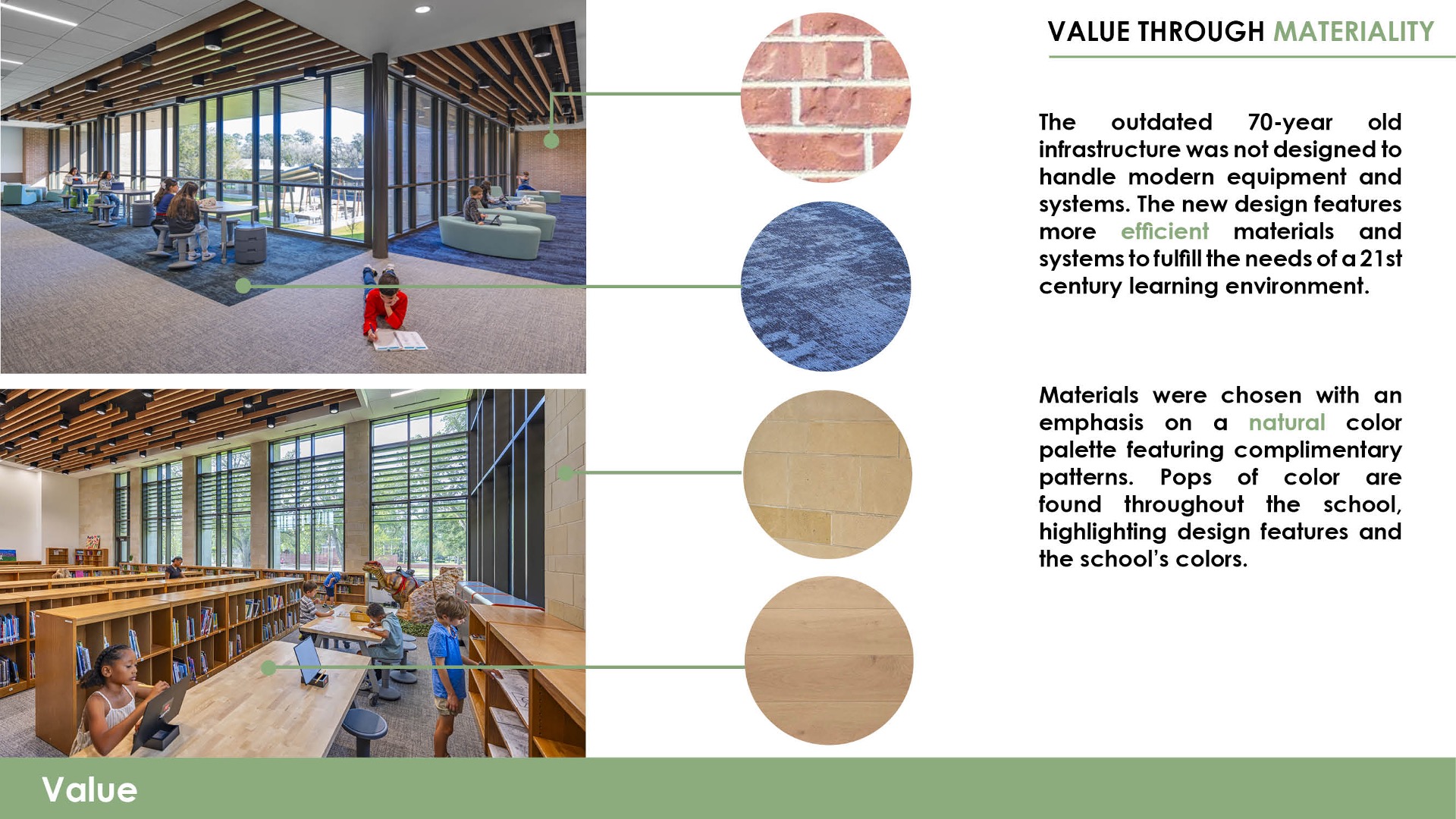
- Value Through Materiality:
The outdated 70-year old infrastructure was not designed to handle modern equipment and systems. The new design features more efficient materials and systems to fulfill the needs of a 21st century learning environment.
Materials were chosen with an emphasis on a natural color palette featuring complimentary patterns. Pops of color are found throughout the school, highlighting design features and the school’s colors.
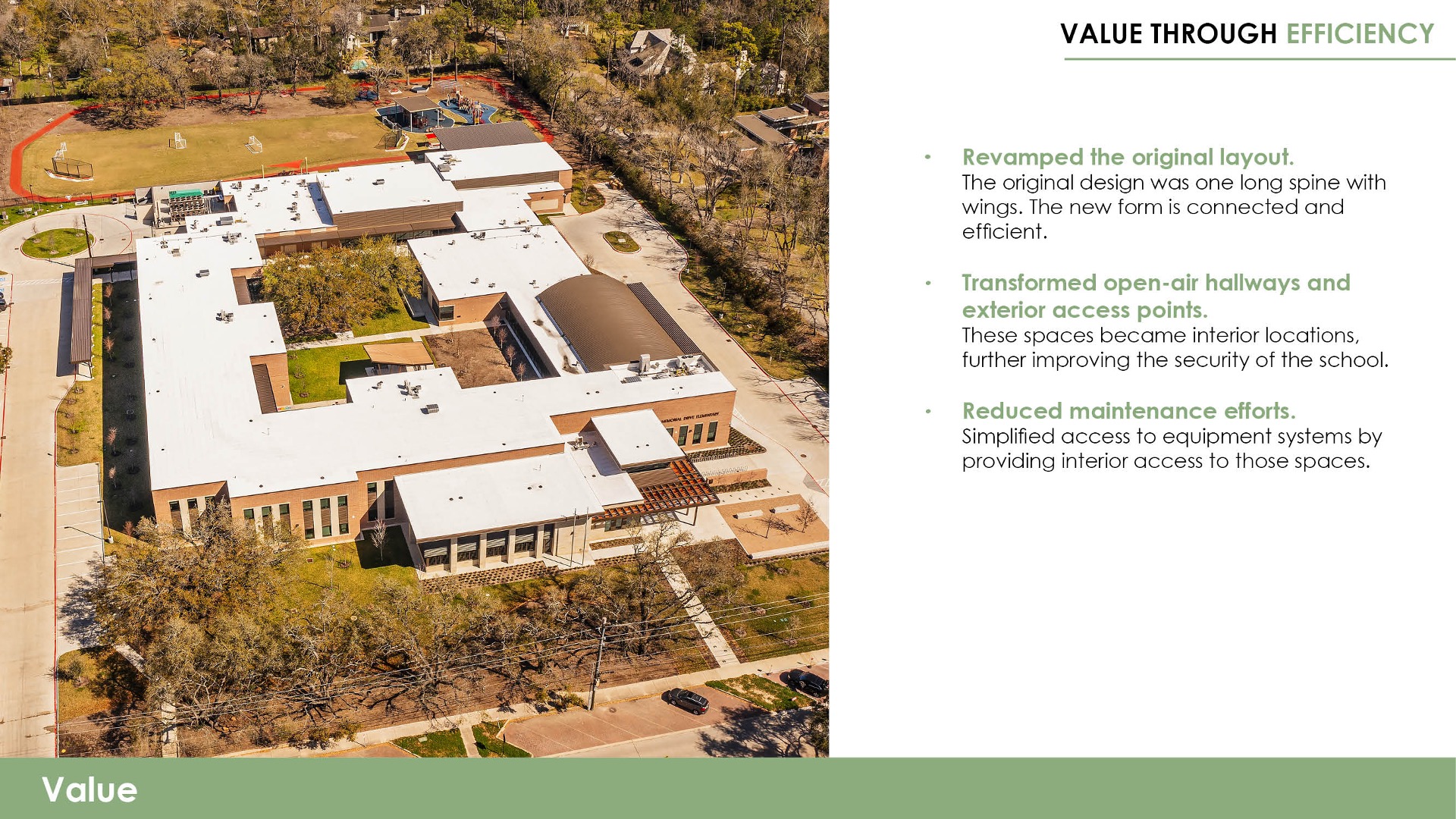
Value Through Efficiency:
- Revamped the original layout: The original design was one long spine with wings. The new form is connected and efficient.
- Transformed open-air hallways and exterior access points: These spaces became interior locations, further improving the security of the school.
- Reduced maintenance efforts: Simplified access to equipment systems by providing interior access to those spaces.”
Wellness
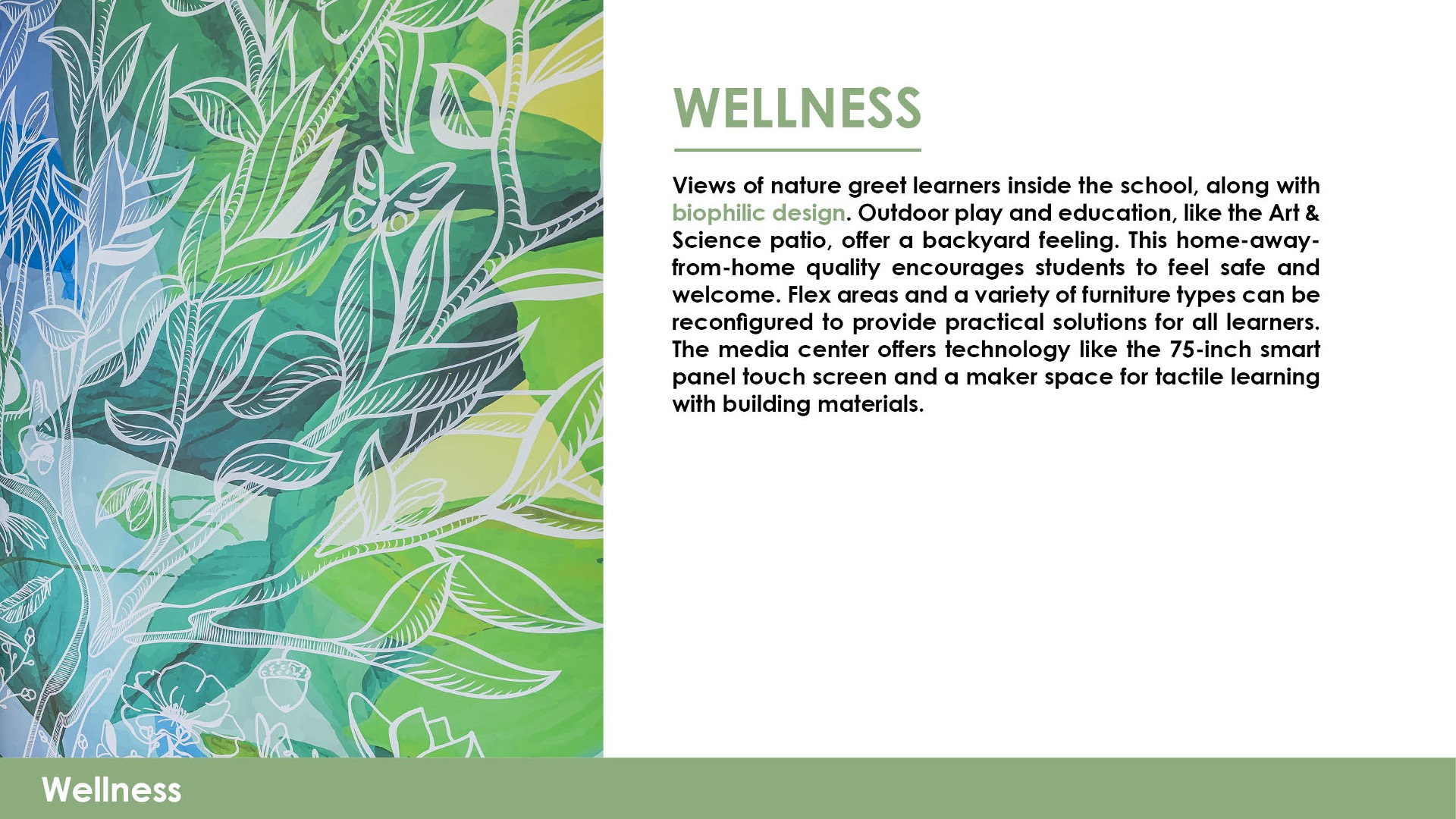
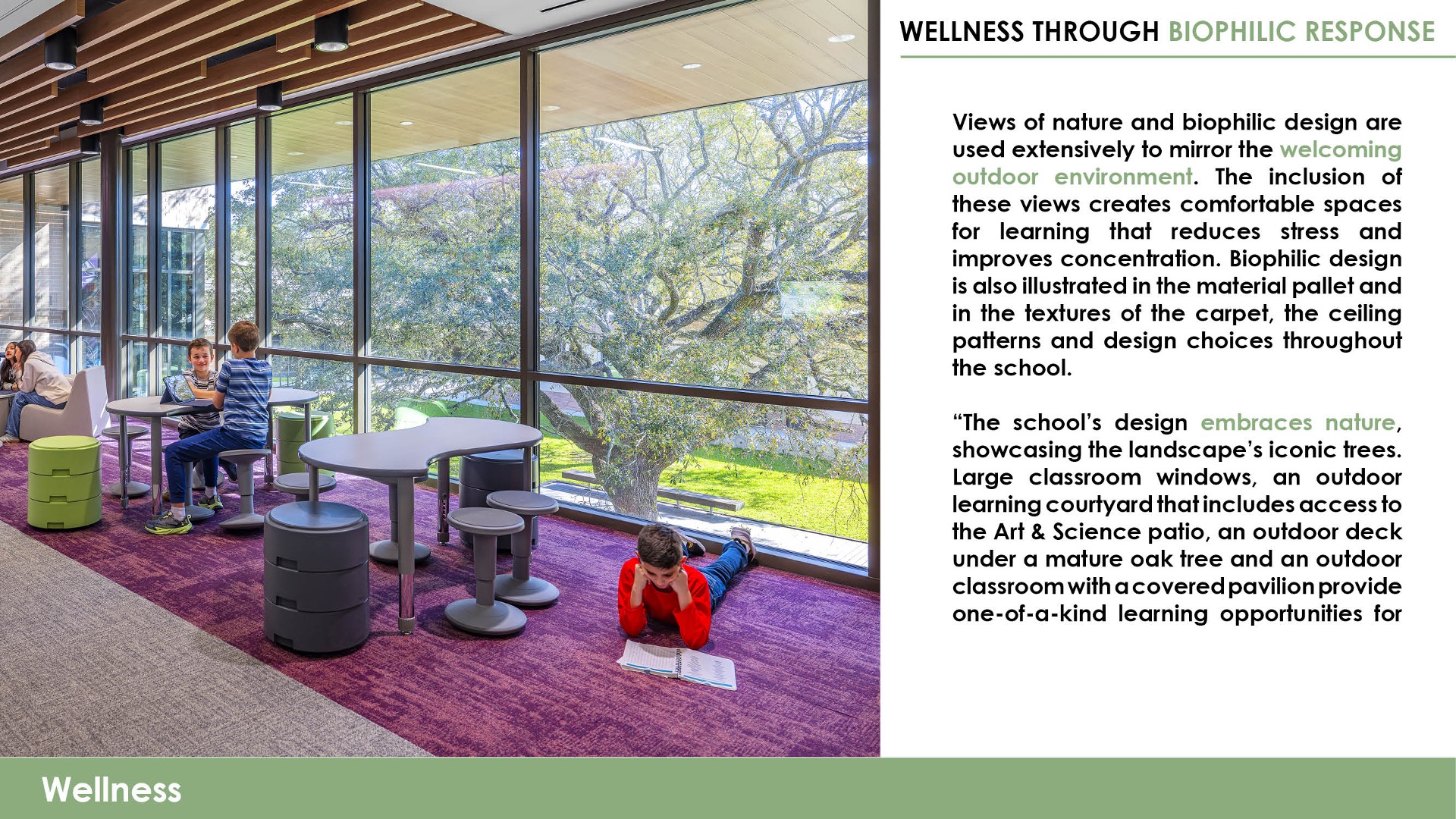
“Views of nature greet learners inside the school, along with biophilic design. Outdoor play and education, like the Art & Science patio, offer a backyard feeling. This home-away-from-home quality encourages students to feel safe and welcome. Flex areas and a variety of furniture types can be reconfigured to provide practical solutions for all learners. The media center offers technology like the 75-inch smart panel touch screen and a maker space for tactile learning with building materials.
Wellness Through Biophilic Response:
Views of nature and biophilic design are used extensively to mirror the welcoming outdoor environment. The inclusion of these views creates comfortable spaces for learning that reduces stress and improves concentration. Biophilic design is also illustrated in the material pallet and in the textures of the carpet, the ceiling patterns and design choices throughout the school.
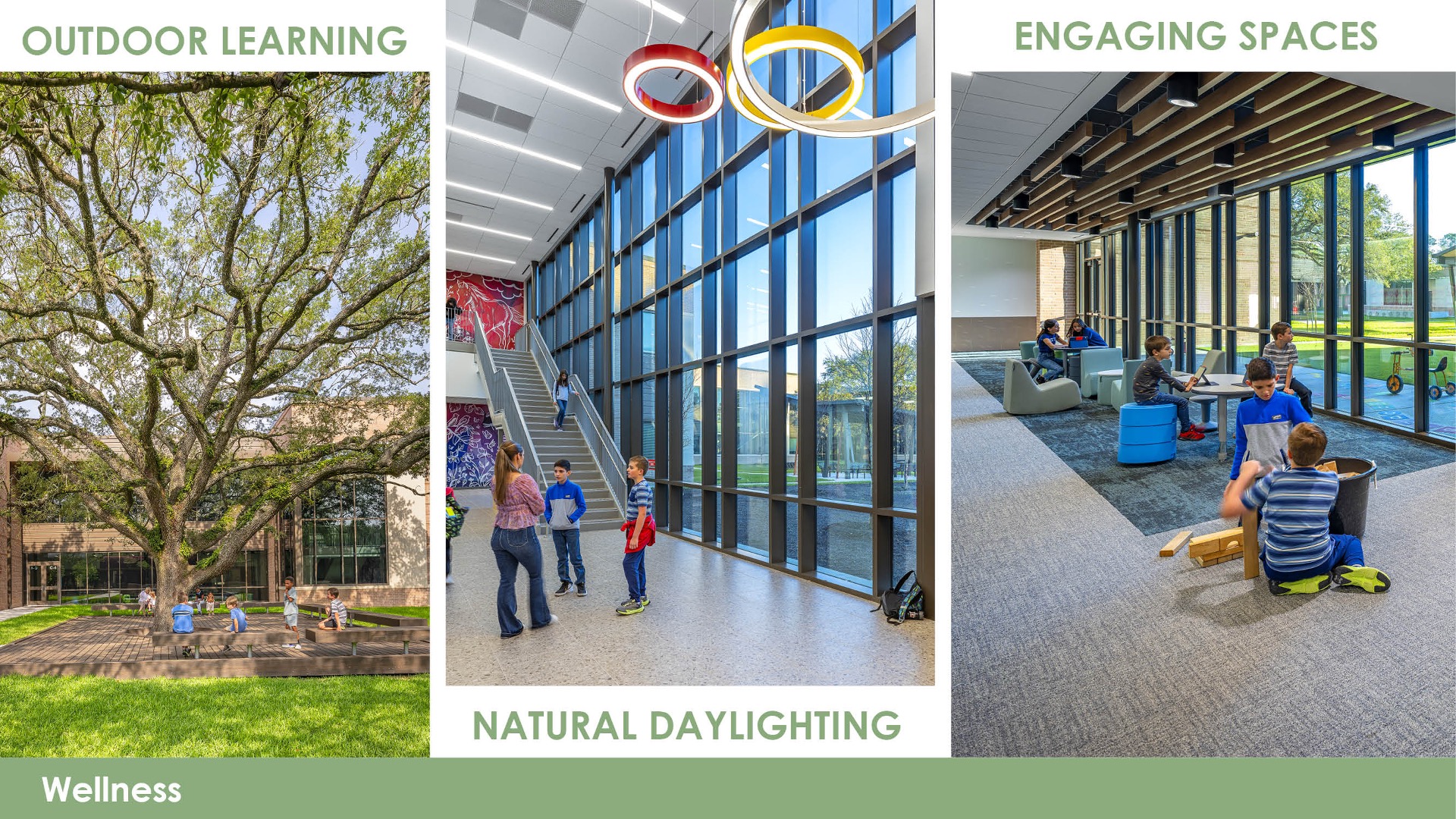
“The school’s design embraces nature, showcasing the landscape’s iconic trees. Large classroom windows, an outdoor learning courtyard that includes access to the Art & Science patio, an outdoor deck under a mature oak tree and an outdoor classroom with a covered pavilion provide one-of-a-kind learning opportunities for our community.” – School Principal
Wellness Through Connection:
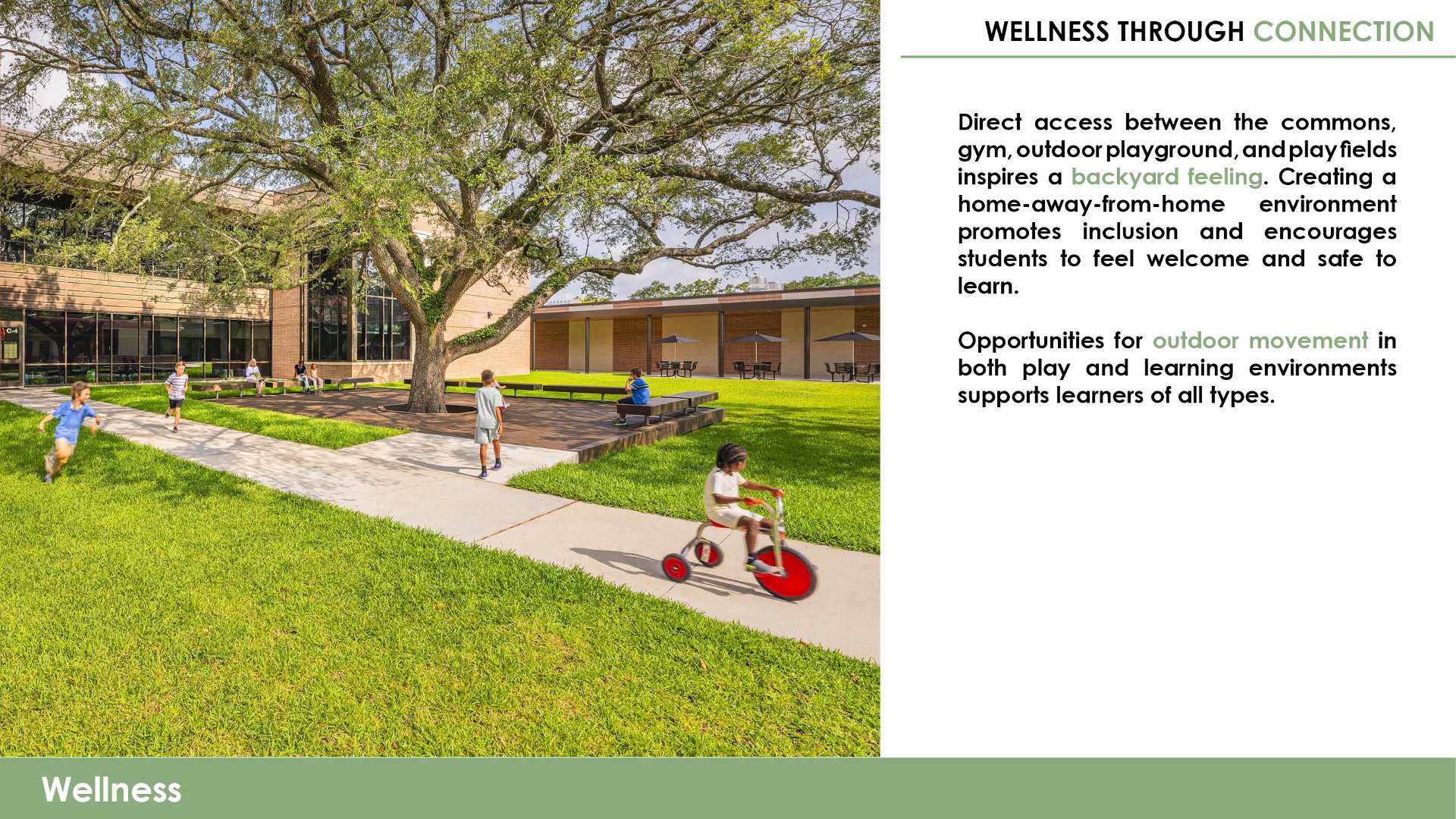
Direct access between the commons, gym, outdoor playground, and play fields inspires a backyard feeling. Creating a home-away-from-home environment promotes inclusion and encourages students to feel welcome and safe to learn. Opportunities for outdoor movement in both play and learning environments supports learners of all types.
Wellness in the Learning Environment:
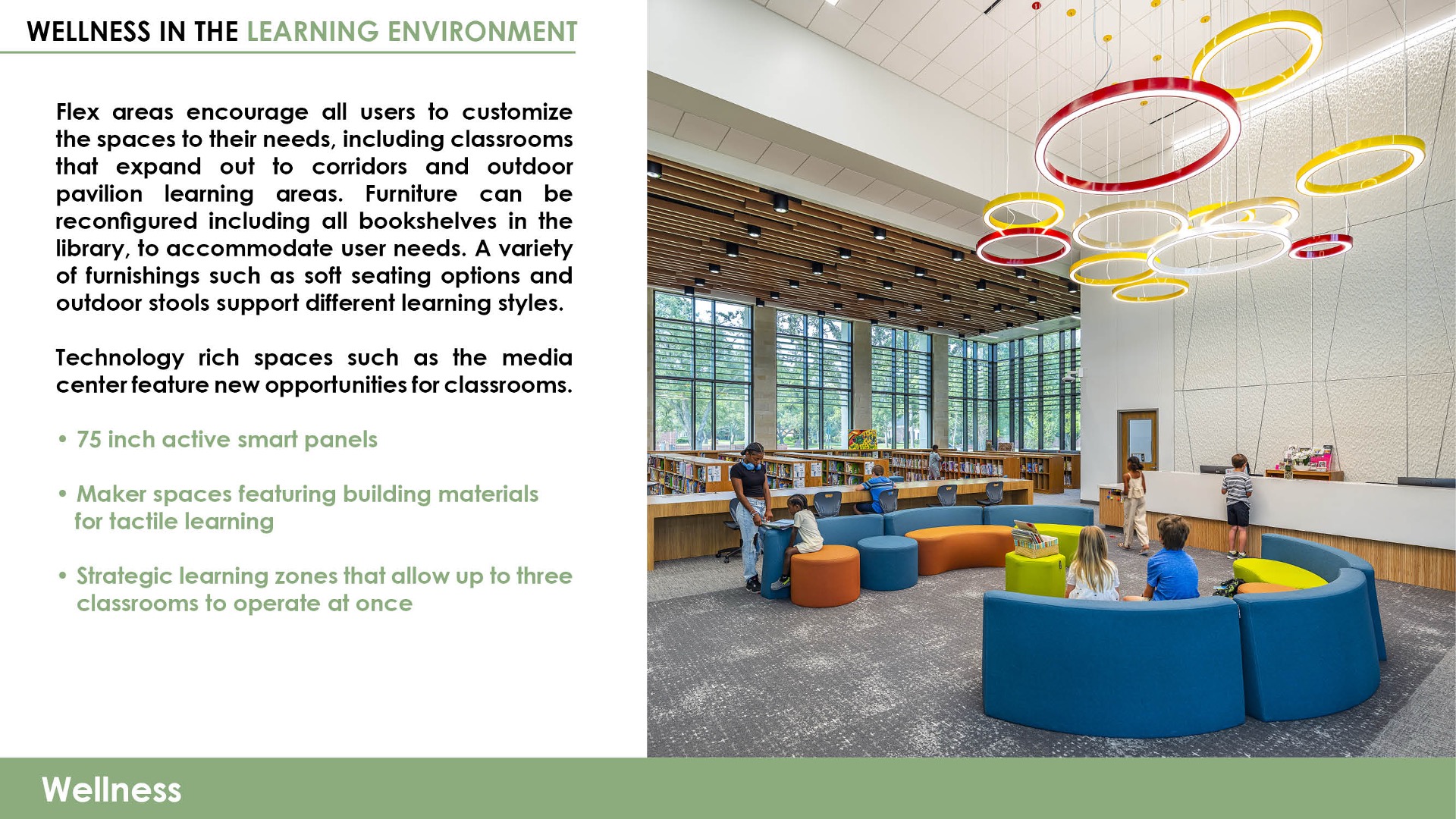
Flex areas encourage all users to customize the spaces to their needs, including classrooms that expand out to corridors and outdoor pavilion learning areas. Furniture can be reconfigured including all bookshelves in the library, to accommodate user needs. A variety of furnishings such as soft seating options and outdoor stools support different learning styles.
Technology rich spaces such as the media center feature new opportunities for classrooms.
- 75 inch active smart panels
- Maker spaces featuring building materials for tactile learning
- Strategic learning zones that allow up to three classrooms to operate at once”
 Community
“Boasting second- and third-generation students, the school serves a passionate, invested community. The design embraced the legacy of this tight-knit neighborhood committed to protecting its natural beauty—an enclave of mature trees that echo the community’s deep roots. This involved collaborating with a Project Advisory Team (PAT) to explore layout and design, hosting community information sessions, and a robust PTA that helped fund $1 million in enhancements to foster a sense of belonging.
Communal Spaces:
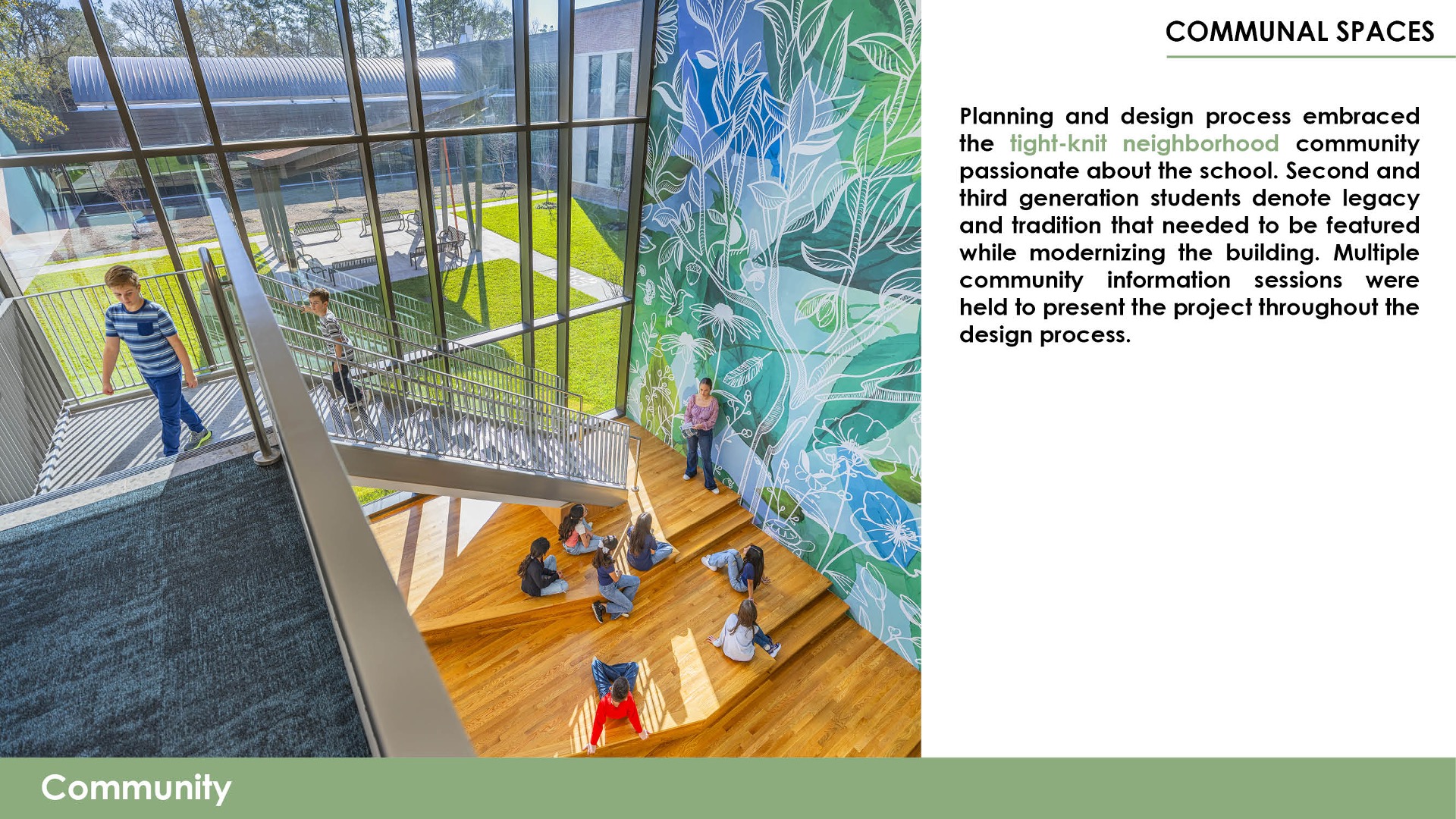
Planning and design process embraced the tight-knit neighborhood community passionate about the school. Second and third generation students denote legacy and tradition that needed to be featured while modernizing the building. Multiple community information sessions were held to present the project throughout the design process.
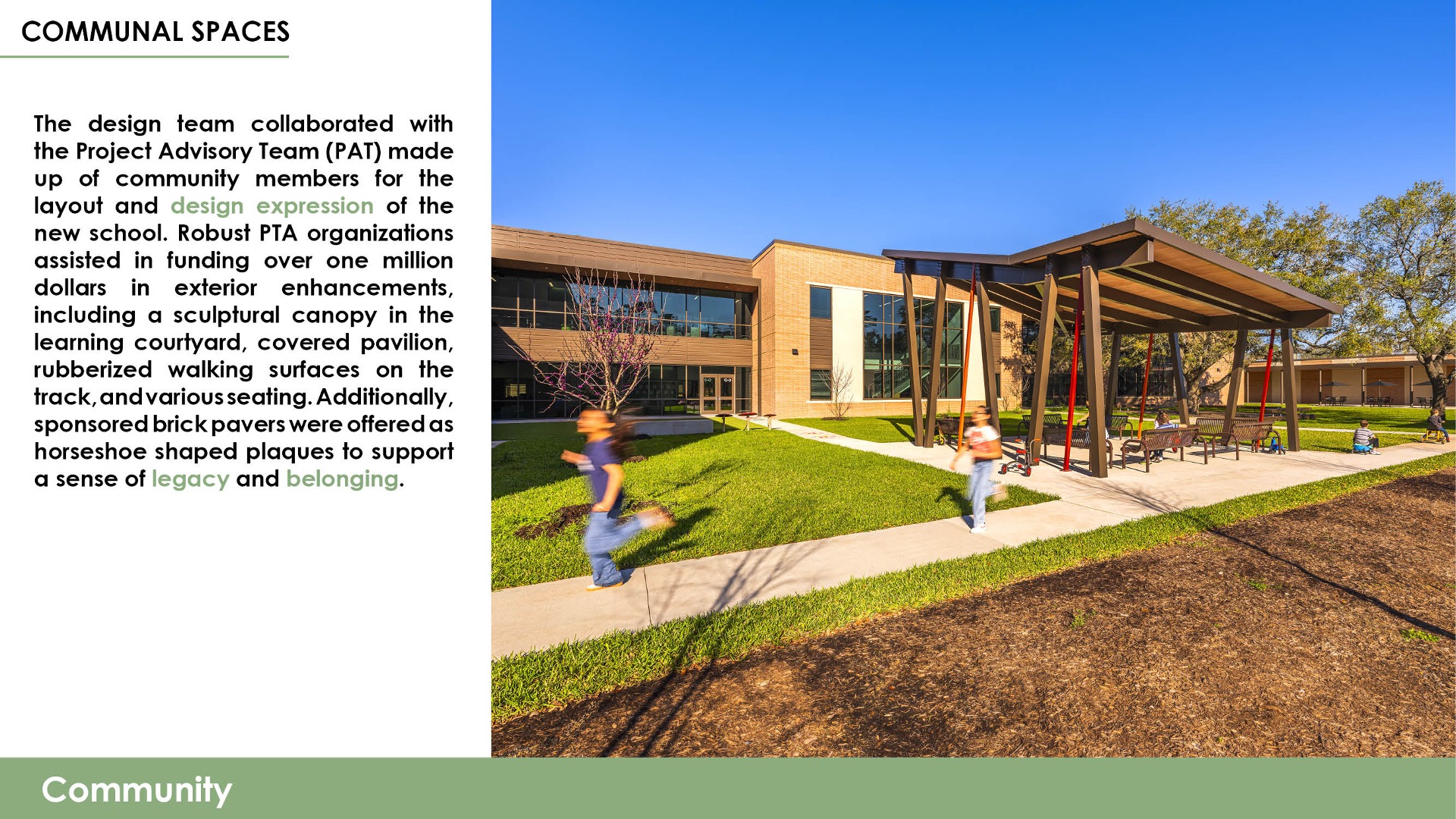
The design team collaborated with the Project Advisory Team (PAT) made up of community members for the layout and design expression of the new school. Robust PTA organizations assisted in funding over one million dollars in exterior enhancements, including a sculptural canopy in the learning courtyard, covered pavilion, rubberized walking surfaces on the track, and various seating. Additionally, sponsored brick pavers were offered as horseshoe shaped plaques to support a sense of legacy and belonging.
Nature & Preservation:
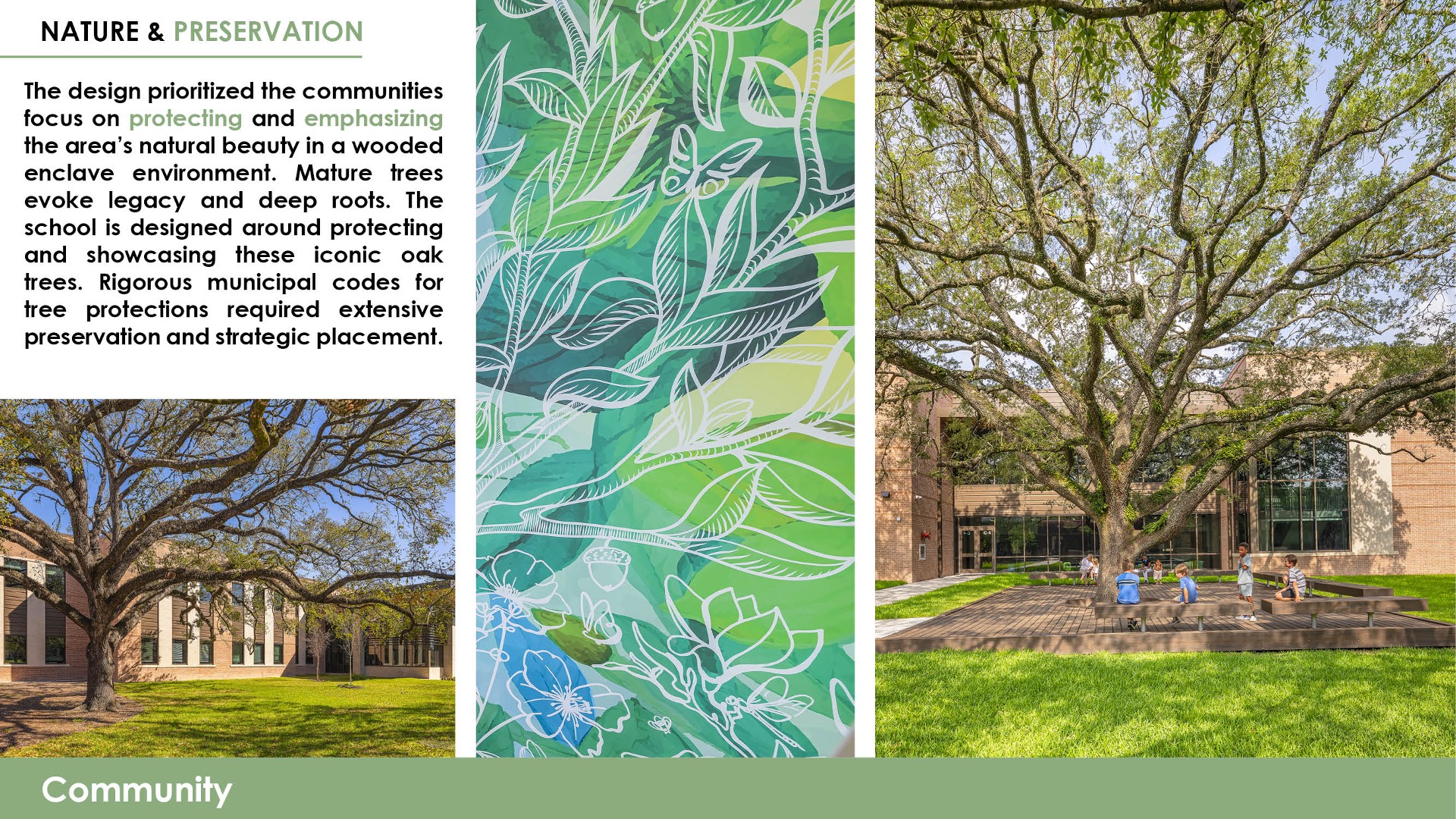
The design prioritized the communities focus on protecting and emphasizing the area’s natural beauty in a wooded enclave environment. Mature trees evoke legacy and deep roots. The school is designed around protecting and showcasing these iconic oak trees. Rigorous municipal codes for tree protections required extensive preservation and strategic placement.
Cultural Cornerstone:
The small neighborhood population seeks to retain its intimate community by embracing broader trends and modern ideas. The design inspires a sense of belonging by representing the communities’ values. Guiding principles established during the PAT meetings are:
- Engage the intimate natural setting
- Celebrate our MDE community
- Support and promote a caring close-knit family environment that fosters connection among students, staff, and parents during and after school.
- Perpetuate our traditions.\
- Keep the qualities of tradition, community and family in the new design with active hands-on teaching and learning spaces indoors and outdoors.
- Demonstrate our values.
- Focus on building student character and promoting the development of the individual as a future citizen.”
 Planning
“Conceptualize, explore, develop, and refine—these planning steps guided the new school’s design. This involved collaboration among the stakeholders, principal, and campus user groups to understand the school’s overall character and education needs. A Project Advisory Team (PAT) of 20 members shared ideas at several sessions before and after schematic design discussing the site, functional relationships, program space types and attributes, and architectural expression.
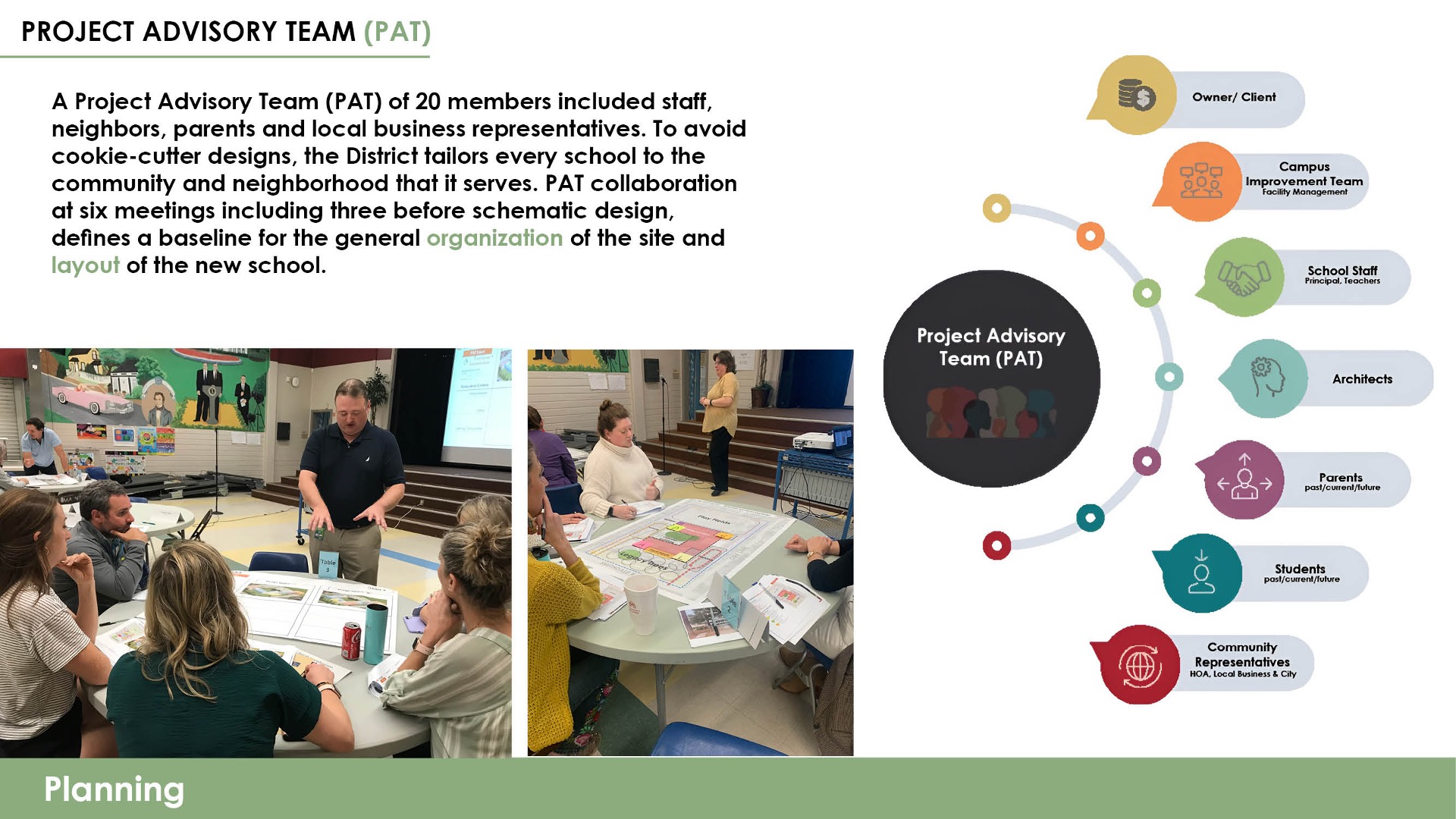
A Project Advisory Team (PAT) of 20 members included staff, neighbors, parents and local business representatives. To avoid cookie-cutter designs, the District tailors every school to the community and neighborhood that it serves. PAT collaboration at six meetings including three before schematic design, defines a baseline for the general organization of the site and layout of the new school.
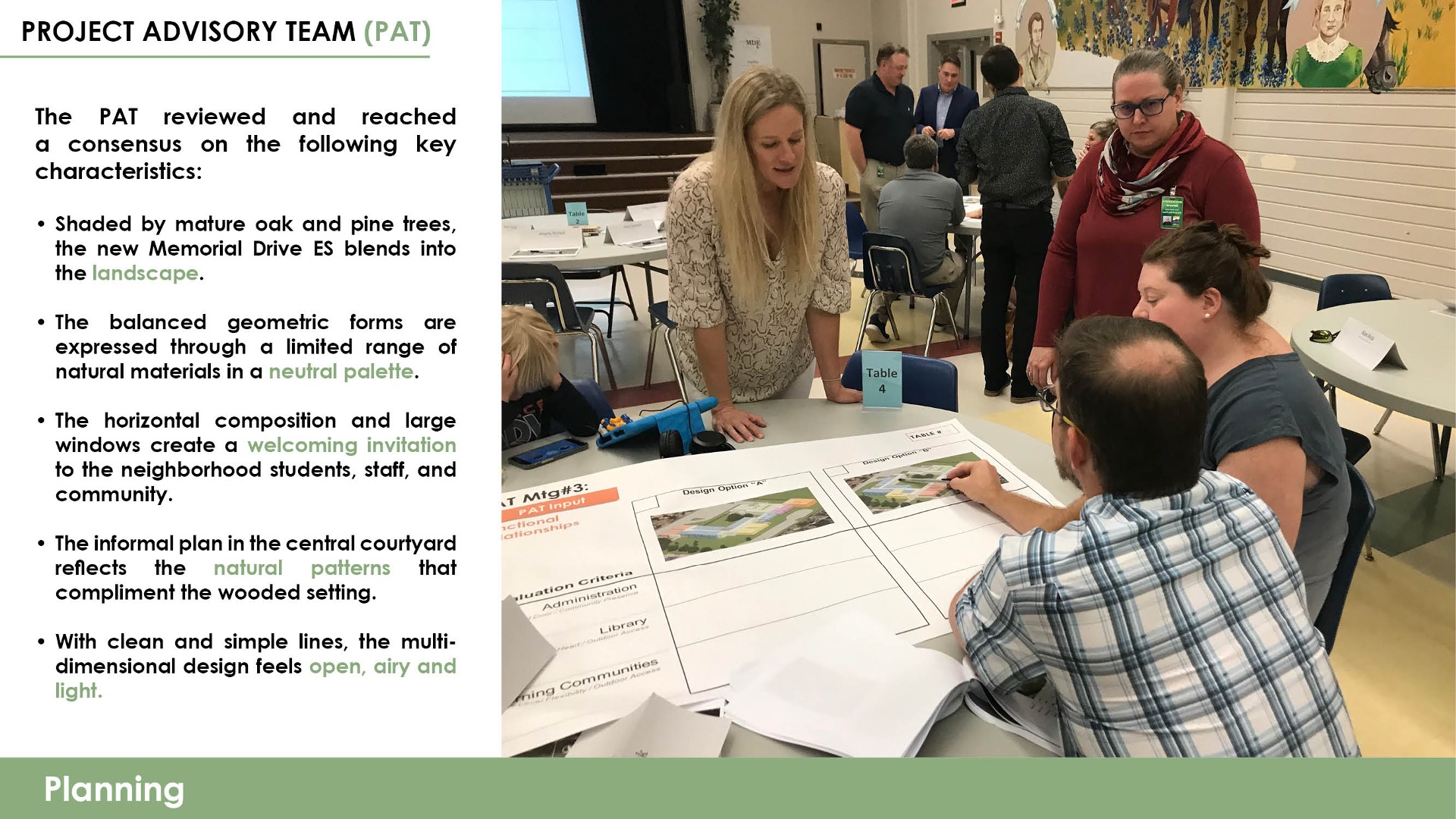
The PAT reviewed and reached a consensus on the following key characteristics:
- Shaded by mature oak and pine trees, the new elementary school blends into the landscape.
- The balanced geometric forms are expressed through a limited range of natural materials in a neutral palette.
- The horizontal composition and large windows create a welcoming invitation to the neighborhood students, staff, and community.
- The informal plan in the central courtyard reflects the natural patterns that complement the wooded setting.
- With clean and simple lines, the multidimensional design feels open, airy and light.
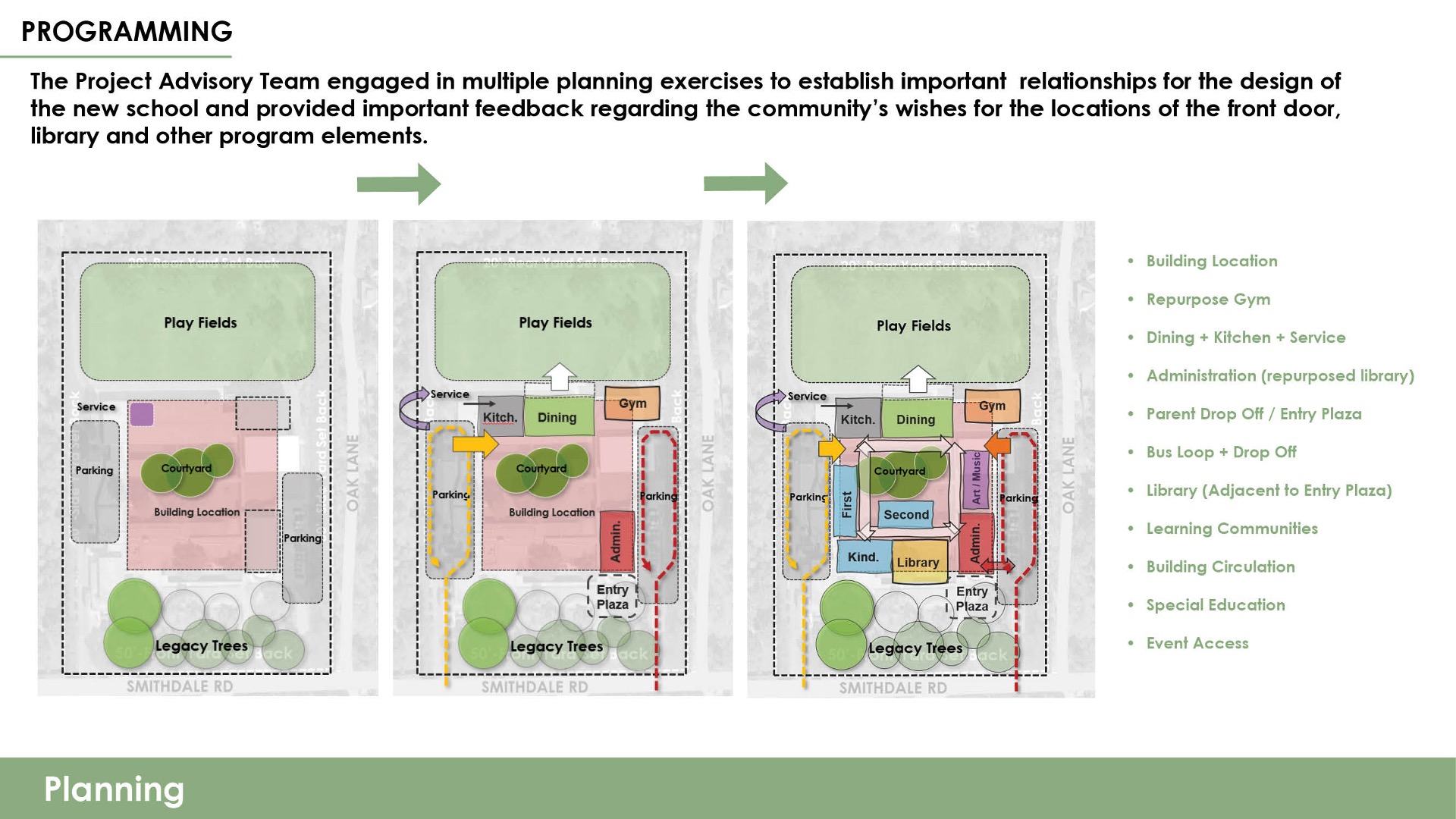
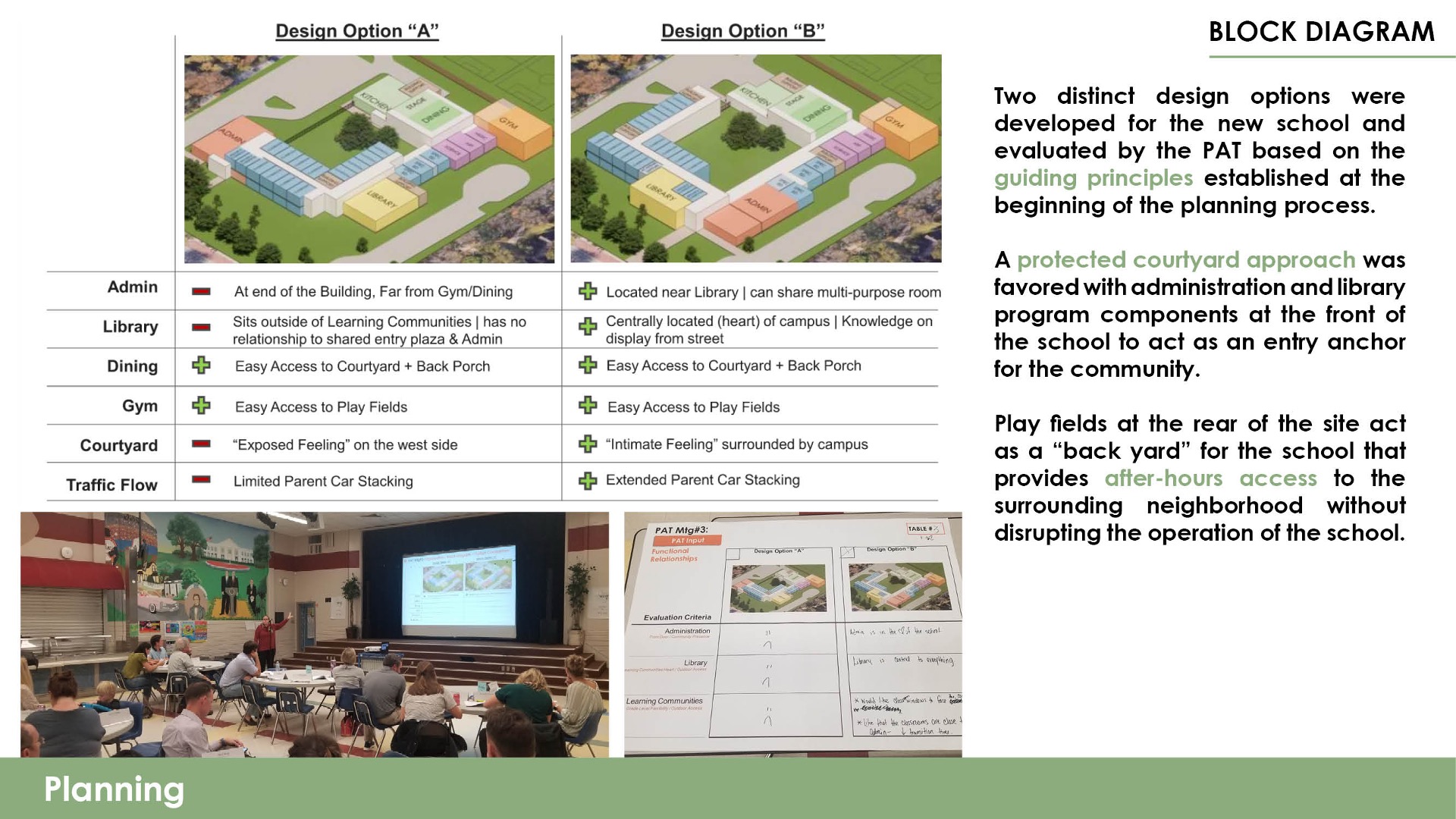
Programming: The PAT engaged in multiple planning exercise to establish important relationships for the design of the new school and provided important feedback regarding the community’s wishes for the locations of the front door, library and other program elements.
Block Diagram: Two distinct design options were developed for the new school and evaluated by the PAT based on the guiding principles established at the beginning of the planning process. A protected courtyard approach was favored with the administration and library program components at the front of the school to act as an entry anchor for the community. Play fields at the rear of the site act as a “back yard” for the school that provides after-hours access to the surrounding neighborhood without disrupting the operation of the school.”
 School Transformation
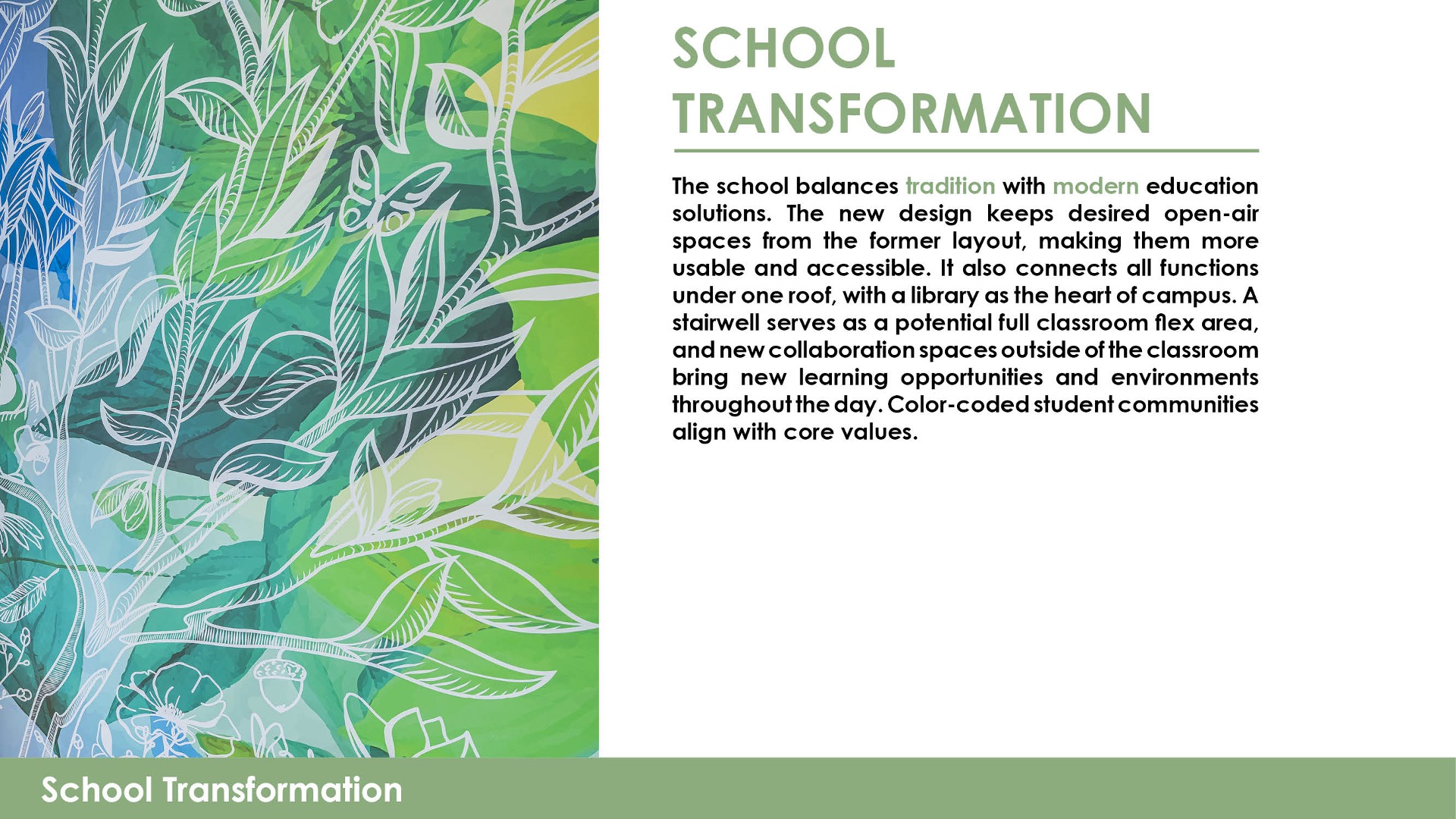
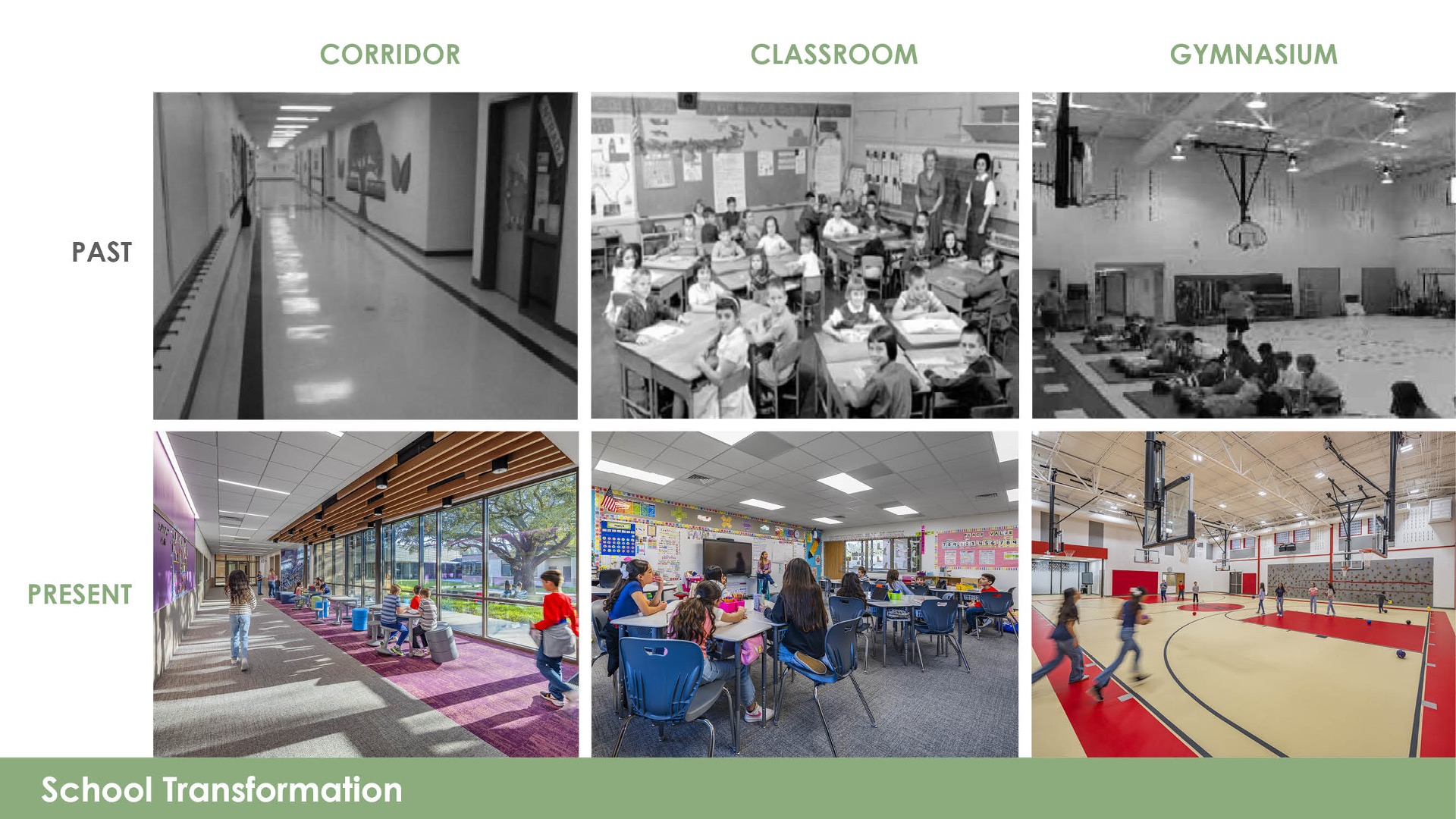
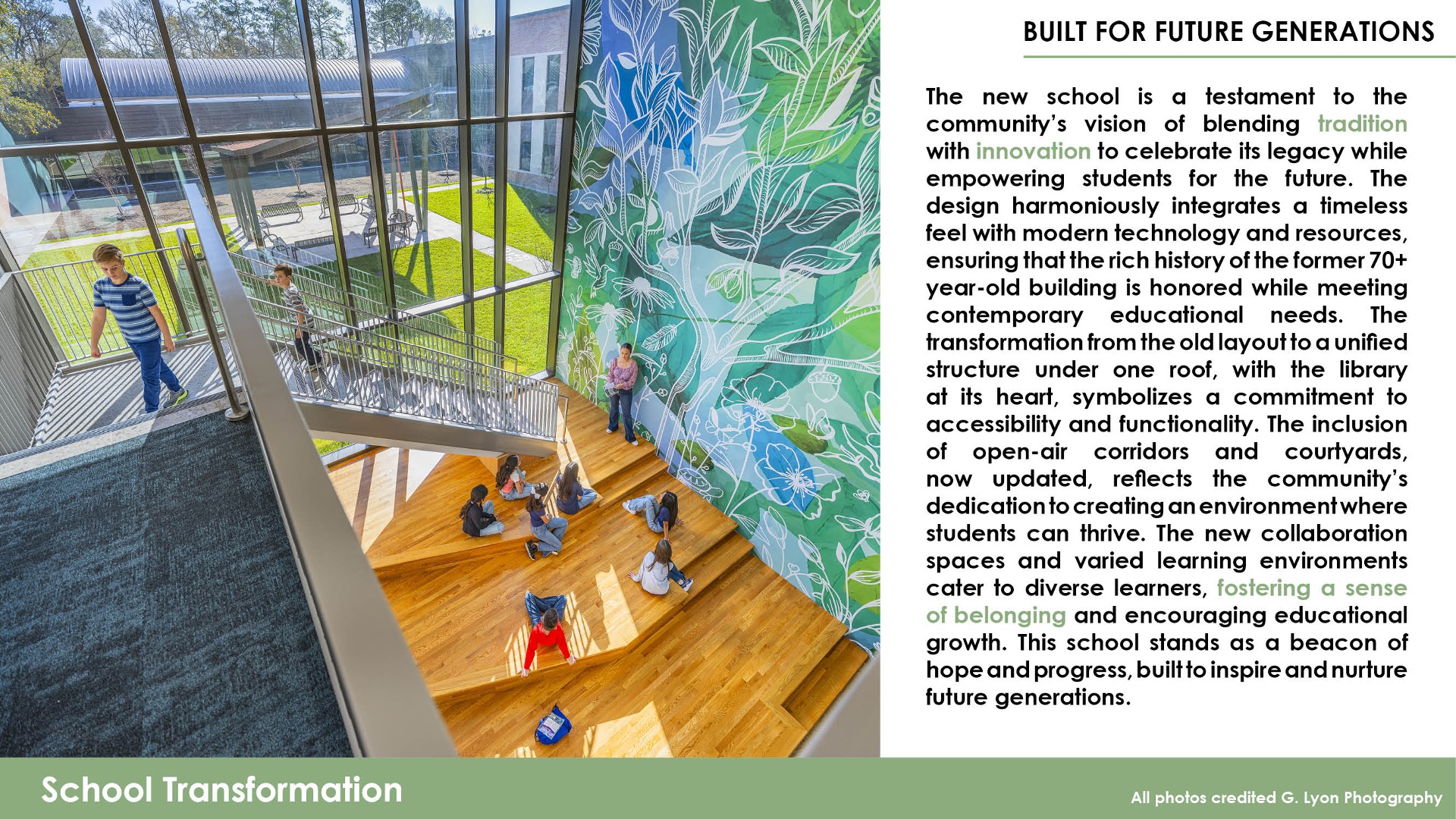
“The school balances tradition with modern education solutions. The new design keeps desired open-air spaces from the former layout, making them more useable and accessible. It also connects all functions under one roof, with a library as the heart of campus. A stairwell serves as a potential full classroom flex area, and new collaboration spaces outside of the classroom bring new learning opportunities and environments throughout the day. Color-coded student communities align with core values.
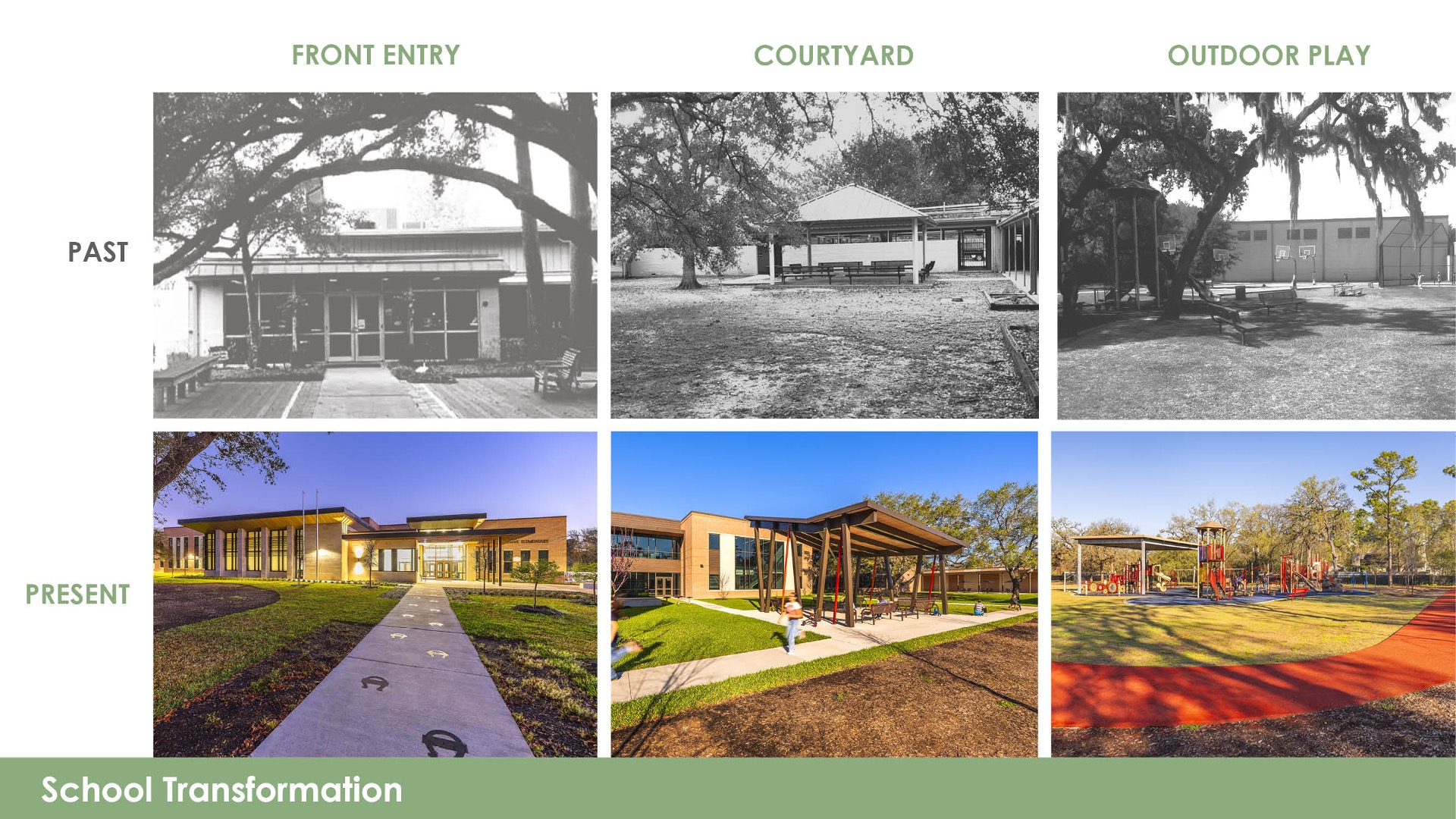
Transformation Through History: The community requested a combination of new and old to celebrate legacy and empower students’ futures. Design focused on providing a traditional and timeless feel with modern technology and resources. The former building was over seventy years old and needed spaces that met the needs of a 21st century learning environment. These spaces include:
- Learning stair with views to the courtyard and serves as a flexible classroom.
- Color coded areas that define learning communities within the school student with graphics to match them.
- New collaboration spaces outside of the classroom provide expanded education opportunities.
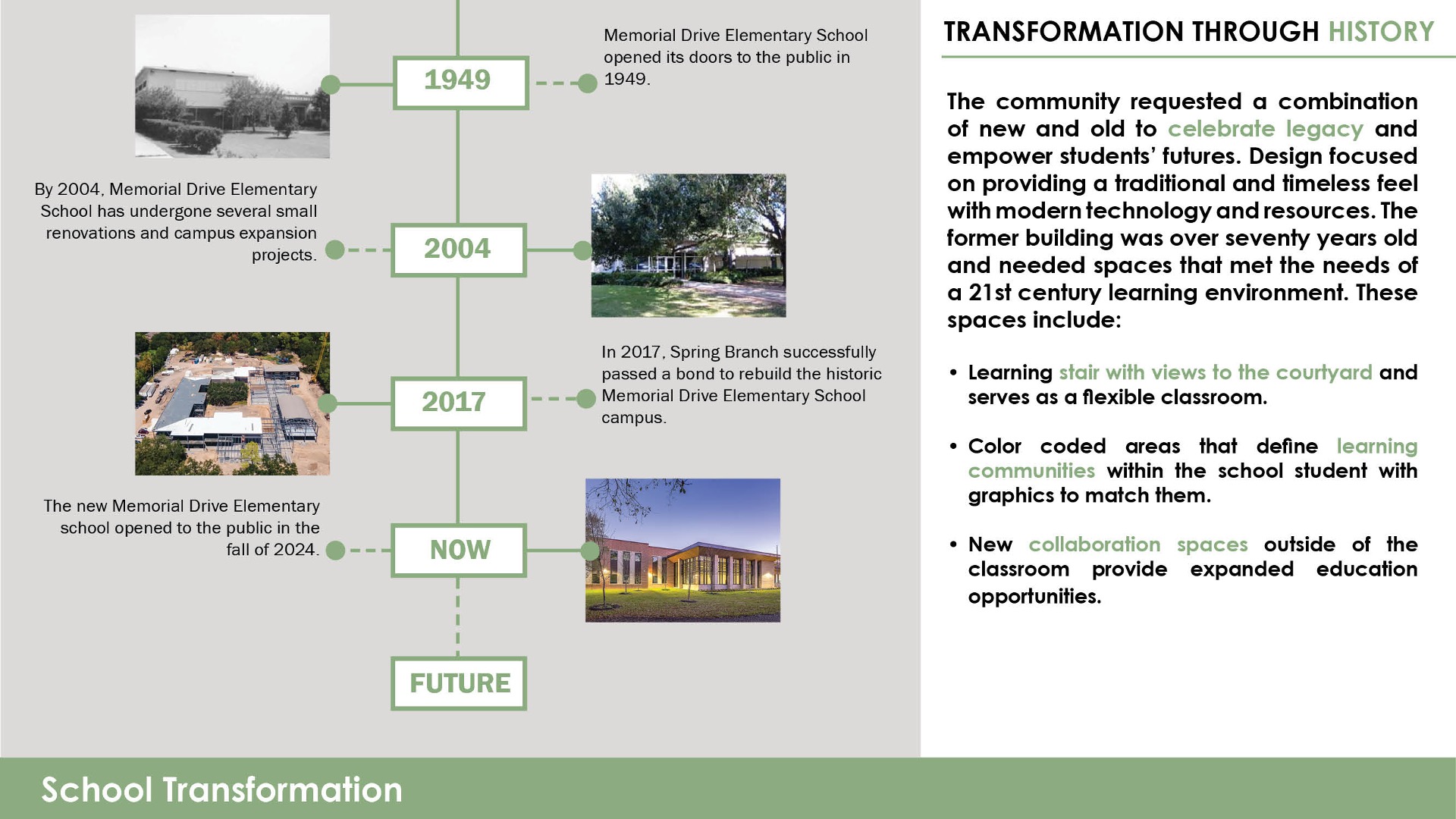
1949-the school opened its doors to the public.
2004-by this year, the school had undergone several small renovations and expansion projects.
2017-the district successfully passed a bond to rebuild the historic campus.
NOW-the new elementary school opened to the public in the fall of 2024
The new school is a testament to the community’s vision of blending tradition with innovation to celebrate its legacy while empowering students for the future. The design harmoniously integrates a timeless feel with modern technology and resources, ensuring that the rich history of the former 70+ year-old building is honored while meeting contemporary educational needs. The transformation from the old layout to a unified structure under one roof, with the library at its heart, symbolizes a commitment to accessibility and functionality. The inclusion of open-air corridors and courtyards, now updated, reflects the community’s dedication to creating an environment where students can thrive. The new collaboration spaces and varied learning environments cater to diverse learners, fostering a sense of belonging and encouraging educational growth. This school stands as a beacon of hope and progress, built to inspire and nurture future generations.”
 Star of Distinction Category Winner